
40k 11th Ed. Rules: Is This Evolution, or Just More Of The Same?
The 11th Edition core rules for Warhammer 40,000 are out, with Games Workshop touting them as an evolution. We dissect the new mechanics and lore to see if they truly advance the game, or if the skepticism from tournament players is warranted.
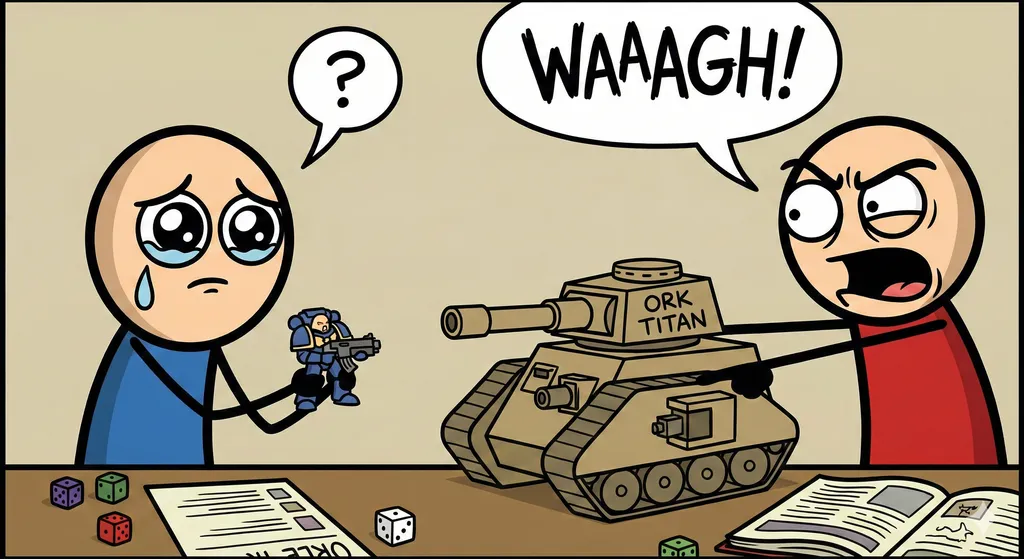
The Crit Sheet Exclusive: Games Workshop has officially released the core rules for Warhammer 40,000 11th Edition as a free PDF download, heralding this iteration as a significant evolution of the grimdark future's premier tabletop wargame. Yet, the initial whispers from the competitive circuit suggest a different narrative: one of cautious skepticism, perhaps even disappointment. As veteran players and GMs, we're not interested in corporate platitudes; we want to know what this means for the table. Is this a genuine leap forward for Warhammer 40,000, or merely a lateral shuffle in power armor?
Let's cut straight to the crunch. The 11th Edition ruleset, while familiar in its foundational structure, introduces a series of subtle yet impactful refinements designed to streamline gameplay and enhance tactical depth. The core phases—Command, Movement, Shooting, Charge, Fight, and Morale—remain intact, but the devil, as always, is in the details. The Command Phase, for instance, sees a slight re-evaluation of Command Point generation, encouraging more judicious use of stratagems rather than an abundance. This isn't a radical overhaul, but a tightening of the economy, forcing players to prioritize their tactical activations. We're seeing a slight rebalancing of unit profiles, particularly in the realm of AP values and damage characteristics, which subtly shifts the meta's resilience. Infantry units, in particular, appear to have gained a touch more survivability against high-AP weaponry, potentially nudging the game away from an overwhelming focus on vehicle and monster spam. The most notable 'evolution' lies in the revised interaction of certain keywords and the nuanced rules for objective control, which now reward sustained presence over fleeting dominance. This isn't a new engine, but rather a finely tuned gearbox on an existing chassis. For competitive players, the 'disagreement' likely stems from this very point: while the changes are positive, they may not address the deeper meta imbalances or offer the dramatic strategic shifts many hoped for from a new edition.
From a lore perspective, these mechanical tweaks offer interesting implications for the narrative of the 41st millennium. The subtle shift in unit resilience and the emphasis on sustained objective control paints a picture of increasingly desperate, protracted engagements. No longer is victory solely about overwhelming firepower; it's about holding the line, enduring the unendurable, and making every sacrifice count. This aligns perfectly with the grimdark ethos of an Imperium constantly teetering on the brink. The refined rules for new Codex supplements also hint at more granular faction identities, allowing the unique combat doctrines of Space Marines, Necrons, or Tyranids to manifest more distinctly on the battlefield. It's less about rewriting the lore and more about having the mechanics better reflect the established narrative, deepening the immersion for those who cherish the rich tapestry of the setting. The feel of a desperate, grinding war of attrition, where every unit matters, resonates strongly with the spirit of Warhammer 40,000.
So, is this a good thing for the game? The verdict, for 'The Crit Sheet,' is a cautious but optimistic 'yes,' with a significant caveat for the tournament scene. For the vast majority of players—casual enthusiasts, narrative campaigners, and hobbyists—the 11th Edition offers a more refined, slightly faster, and arguably more balanced experience. The iterative changes improve the flow without demanding a complete re-learning of the game, making it accessible for newcomers while rewarding veterans with nuanced strategic choices. However, for the highly competitive tournament player, the 'evolution' might feel more like a lateral adjustment than a revolutionary leap. While some problematic interactions may be smoothed out, the core strategic puzzles might remain largely unchanged, potentially leading to a familiar meta. This edition feels like Games Workshop listened to feedback and made sensible, albeit conservative, improvements. It's not a radical reinvention, but a solid iteration that aims to polish the rough edges of its predecessor, enhancing the overall table feel without alienating the established player base. It sets a strong foundation, and we look forward to seeing how the community leverages these refined tools for both narrative glory and competitive excellence.
Top Pick: Warhammer 40,000 Core Rulebook (11th Edition)
Essential for understanding the new tactical landscape and building effective armies.
Check Price on Amazon →Related Stories
40k's 11th Edition Combat Patrol: A New Era for Skirmishes
Games Workshop unveils the 11th Edition Combat Patrol Companion, a refined format promising streamlined, balanced skirmishes for Warhammer 40,000. This strategi
11th Edition 40k Terrain: Reality Hits the Battlefield
Games Workshop's pre-painted 11th Edition 40k terrain, seen at UK Games Expo, deviates significantly from its online reveal. We break down what this means for g
11th Edition 40k: The Quiet Drop That Shakes the Galaxy
Games Workshop's sudden reveal of Warhammer 40k 11th Edition's release date has ignited player speculation. This move signals a significant shift, demanding a c