
The Art of the Public Shelf: Mastering Game Curation
Tabletop Bellhop's 'Playing Librarian' episode offers a robust framework for building community-focused game collections. This approach balances diverse tastes with practical considerations for public play.
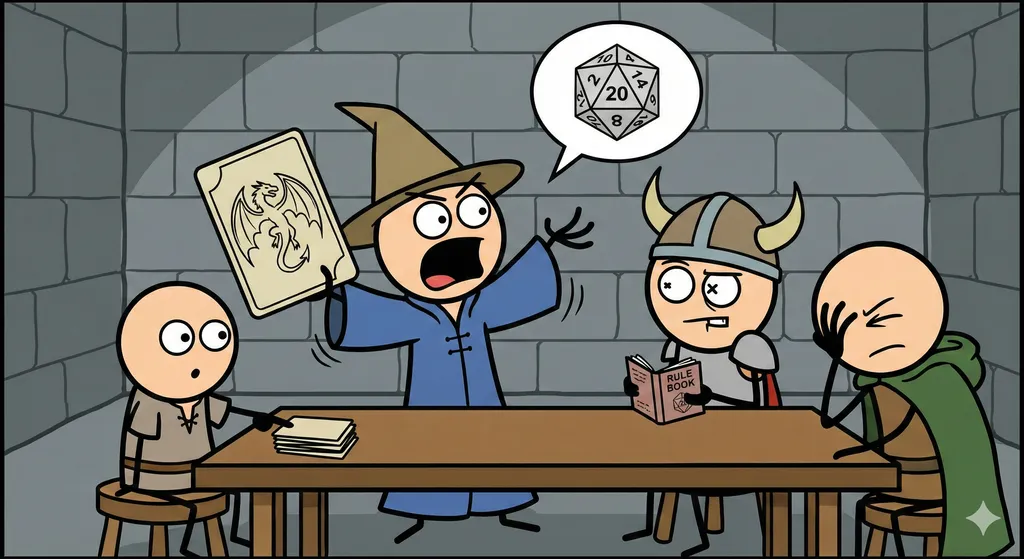
The Tabletop Bellhop Gaming Podcast, in its recent Episode 303, 'Playing Librarian,' has presented a fascinating framework for anyone aspiring to cultivate a truly impactful game collection for public use. This isn't just about accumulating cardboard; it's about strategic curation, a skillset as vital to a thriving game night as a well-balanced encounter is to a TTRPG session.
At its core, the ‘Playing Librarian’ philosophy treats a game collection not as a static hoard, but as a dynamic, living library designed for optimal player engagement. The podcast highlights the necessity of balancing diverse experiences, citing the “meaty Vienna” alongside the “super quick 5 Minute Dungeon” as prime examples of the spectrum a public collection must cover. This immediately brings to mind several crucial ‘mechanics’ for any aspiring game curator:
First, there’s the **Diversity Quotient (DQ)**: Are you catering to hardcore strategists, casual family players, or both? This isn't just about genre, but also game weight, player count flexibility, and even aesthetic appeal. A high DQ ensures no player feels left out. Second, **Accessibility (A11y Score)**: How steep is the learning curve? Can a game be taught in five minutes, or does it require an hour-long rules explanation? For public play, a strong mix of high and low A11y scores is paramount. Third, **Durability (Component HP)**: Public games take a beating. Are the components robust? Can cards be sleeved, or boards withstand repeated setup and teardown? This is often overlooked but critical for the longevity of your investment. Finally, **Replayability (R-Value)**: Does the game offer fresh experiences with each play, or does it quickly grow stale? Variable setups, modular components, and emergent narratives contribute to a high R-Value.
Beyond the raw mechanics, the ‘Playing Librarian’ approach delves into the ‘lore’ of communal play. This isn't about dragons and spaceships, but the social narrative woven by shared experiences. A well-curated collection fosters a welcoming environment, transforming a simple game night into a genuine community hub. The 'librarian' isn't merely a custodian of games; they are a facilitator, a guide, an architect of shared joy. They understand their 'patrons,' anticipating needs and suggesting adventures, much like a seasoned Game Master knows their players and crafts tailored encounters. This creates a powerful meta-narrative where the collection itself becomes a character, evolving and growing with the community it serves. It’s about creating a space where discovery is encouraged, where a newcomer might stumble upon a gateway game like Ticket to Ride and begin a lifelong hobby.
The verdict from The Crit Sheet is clear: this ‘Playing Librarian’ strategy is not just good for the game; it’s essential for the health and vibrancy of the entire tabletop hobby. It elevates the role of the game night host from mere organizer to a true curator of experiences. By applying thoughtful metrics to game acquisition and presentation, we combat choice paralysis, foster inclusivity, and ensure that our shared passion remains accessible and engaging for everyone. It encourages us to think beyond personal preference and consider the broader impact of our collections, building bridges between different player types and nurturing the next generation of gamers. This strategic approach ensures that every game on the shelf has a purpose, contributing to a richer, more diverse, and ultimately more rewarding tabletop landscape.
Related Stories
Paizo's Layoffs: A Chilling Warning for Tabletop Distribution
Paizo's recent layoffs, directly linked to Diamond Comic Distributors' bankruptcy, highlight a precarious distribution landscape. This development isn't just ab
Skulls 2024: Digital Lore, Tabletop Impact?
Games Workshop's Warhammer Skulls event showcased a decade of digital adaptations, sparking discussion on how these video games enrich the tabletop experience.
The Armageddon Anomaly: How GW Finally Delivered on 40k
Games Workshop's recent Warhammer 40,000 Armageddon launch defied expectations, delivering product smoothly to retailers. This unexpected success signals a pote