
11th Ed Battle-shock: Morale's Evolution on the 40k Table
Games Workshop's 11th Edition for Warhammer 40,000 introduces a refined Battle-shock mechanic. This deep dive explores how the new system impacts tactical play and narrative immersion.
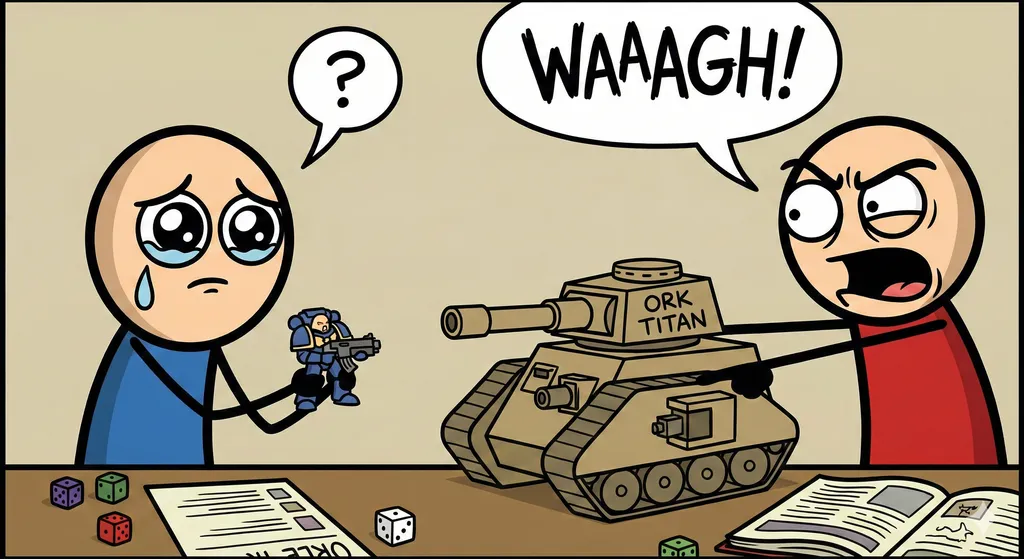
Games Workshop, ever keen to evolve the battlefield, has unveiled early details for Warhammer 40,000 11th Edition, and the Battle-shock mechanic is already sparking fervent discussion. From the initial leaks and rules previews, it’s clear that the venerable system of units breaking under pressure is undergoing a significant overhaul, promising to reshape how we think about army resilience and battlefield control.
At its core, the 11th Edition Battle-shock mechanic appears to be a more nuanced and impactful iteration of its predecessors. Gone are the days of simple morale tests that often felt like an afterthought for elite units or a death knell for chaff. The new system, as interpreted from the latest Ruleshammer analyses, seems to tie directly into a unit’s ability to perform critical battlefield functions, particularly objective control and secondary mission scoring.
Initial reports suggest that when a unit is Battle-shocked, it suffers a tangible penalty beyond mere morale reduction. This might include a significant reduction in its Objective Control (OC) value, making it easier for opposing forces to seize vital points. Furthermore, there are indications that Battle-shocked units could be prevented from performing certain actions, such as declaring charges or even benefiting from specific aura abilities. This isn't just about units fleeing; it's about their combat effectiveness being severely degraded. It forces players to consider not just a unit's raw damage output or durability, but its psychological fortitude. The system, therefore, becomes a crucial vector for strategic disruption, allowing players to target enemy cohesion rather than just their health pool. Imagine a pivotal turn where a key objective is denied not by outright destruction, but by a well-timed Battle-shock forcing a unit to cede ground it physically occupies. This adds a layer of tactical depth that elevates the psychological aspect of war beyond a simple pass/fail roll.
From a lore perspective, this refined Battle-shock mechanic is a stroke of grimdark genius. Warhammer 40,000 has always been a setting defined by overwhelming odds, existential dread, and the sheer horror of the galaxy. A simple 'failed morale test' never quite captured the psychological toll of fighting against daemons, ravenous Tyranids, or the implacable advance of Necron legions. The new system, by impacting objective control and action economy, more accurately represents the breaking of a unit's will to fight effectively. It’s not just about running away; it's about being paralyzed by fear, unable to follow orders, or losing the mental fortitude to hold a position against unimaginable horrors.
This mechanic elevates the narrative stakes. A unit isn't just a stat block; it's a collection of individuals whose resolve can be shattered. It paints a more vivid picture of Cadian Shock Troopers seeing their comrades vaporized by a Daemon Prince, or Space Marines momentarily faltering as a psychic scream tears through their minds. It grounds the abstract mechanics in the brutal reality of the 41st Millennium, making the grimdark feel even grimmer and the battles more desperate. It emphasizes that even the most hardened warriors have limits, and that the war for humanity is as much a psychological one as it is a physical one.
For the seasoned General, the implications of this Battle-shock overhaul are profound. List building will inevitably shift to account for unit resilience against psychological attacks, favoring units with high leadership or abilities that mitigate Battle-shock. Moreover, it introduces a whole new axis of attack: instead of solely focusing on eliminating enemy units, players now have a viable strategy to disrupt their opponent's game plan by targeting their morale. This could lead to more dynamic games where surgical strikes against leadership or psychic attacks that induce fear become as crucial as heavy weapon fire.
However, with greater complexity comes potential pitfalls. The balance will be critical; an overly punishing Battle-shock mechanic could lead to frustrating 'death spirals' where a single failed test cripples a unit beyond recovery, making comebacks feel impossible. Conversely, if it's too easily mitigated, it risks becoming another forgotten rule. The elegance will lie in its integration: does it feel like an organic part of the game, or an tacked-on complication? If implemented thoughtfully, Battle-shock could foster a more engaging and strategically rich battlefield, rewarding players who master not just firepower, but the art of psychological warfare. It encourages a more thoughtful approach to unit positioning and the protection of key leaders, making the battlefield feel more alive and less like a simple damage race. This is a game where every decision, from deployment to target priority, will now carry the weight of potential psychological collapse. Warhammer 40,000 Core Rulebook (10th Edition) The meta is about to get a whole lot spicier.
Top Pick: Codex: Astra Militarum
For understanding how human resilience (or lack thereof) can be represented on the table, especially with these new morale mechanics
Check Price on Amazon →Related Stories
The Crimson Tide: 40k's Marine Mirror Match & Drukhari's Dark Glee
The competitive Warhammer 40,000 meta sees an unusual prevalence of Space Marine mirror matches, highlighting specific faction strengths and weaknesses. Meanwhi
40k 11th Ed Movement: The Tactical Dance of the Grimdark
Goonhammer's "Ruleshammer" hints at 11th Edition's movement changes, introducing "Strategic Advance" and refining verticality. This analysis breaks down how the
Aeldari's Grip & Dark Angels' Rise: 40K's Shifting Competitive Tides
Goonhammer's latest competitive report unveils Aeldari's continued dominance in Warhammer 40,000, juxtaposed with the surprising ascent of a Dark Angels detachm