
11th Ed Battle-shock: The Grimdark's New Psychological Edge
Warhammer 40,000's upcoming 11th Edition is set to redefine Battle-shock, making its effects more pervasive and strategically significant. This shift promises to open new tactical avenues for armies designed to break enemy morale.
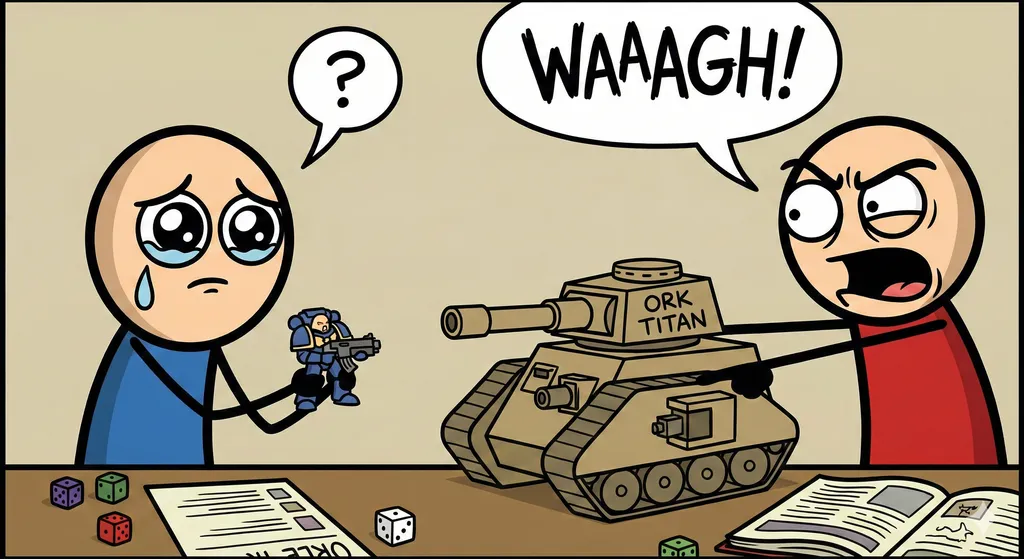
The Crit Sheet has received word that Games Workshop’s upcoming Warhammer 40,000 11th Edition is poised to significantly overhaul its Battle-shock rules, promising a more impactful and persistent psychological element to the game. This isn't merely a tweak; it's a strategic reorientation that could redefine how armies engage and objectives are contested, elevating the art of fear and attrition.
In 10th Edition, Battle-shock was a critical, if sometimes ephemeral, mechanic. A unit failing its Leadership test became Battle-shocked, losing Objective Control (OC), suffering halved Advance and Charge rolls, and being unable to use Stratagems. The issue, for many strategists, was its transient nature; a unit often shook off the effect by the next turn, or could be moved out of danger. The Wargamer's report suggests 11th Edition will make Battle-shock "harder to shake," a phrase pregnant with implications for competitive play. This could manifest in several ways: perhaps the test itself becomes more difficult, with higher thresholds or cumulative negative modifiers. Or, more intriguingly, the condition might persist for multiple turns, or require a specific action or Stratagem to remove, rather than simply disappearing at the start of the controlling player's next turn. Imagine a crucial objective being held by a unit that simply cannot score it for two consecutive turns because they are locked in a state of terror. This isn't just an inconvenience; it's a systemic denial of primary points, forcing players to commit more resources to reinforce or replace the beleaguered unit, or to pivot their entire strategy.
This mechanical shift profoundly impacts the strategic layer of Warhammer 40,000. Armies that excel at inflicting morale penalties, such as Chaos Daemons, certain Tyranid biomorphs with their Shadow in the Warp, or the terror-focused legions of the Night Lords, suddenly find a potent new lever. No longer is Battle-shock a minor speed bump; it becomes a genuine weapon. A well-placed unit with a -1 Leadership aura, combined with sustained fire, could effectively neutralize an enemy holding a critical position without needing to destroy them outright. This introduces a layer of psychological warfare that has long been present in the lore but often felt underdeveloped in the crunch. It elevates the role of units that debuff enemy morale, making them not just support pieces, but potential linchpins of an army’s strategy. Furthermore, it forces players to consider not just raw damage output, but also the resilience of their units against such mental assaults. Investing in character abilities or unit upgrades that grant immunity or bonuses to Leadership tests might become far more valuable. Understanding these core interactions will be vital for any player looking to master the upcoming ruleset.
From a narrative perspective, this refinement of Battle-shock is a resounding success. The 41st Millennium is a setting defined by existential dread, unspeakable horrors, and the constant threat of psychological collapse. Whether facing the soul-devouring Warp entities, the mind-shattering Shadow in the Warp, or the methodical terror tactics of the Astartes renegades, the idea that a soldier's will can break before their body is quintessential 40k. Making Battle-shock more difficult to shrug off isn't just a balance change; it's a thematic enhancement. It brings the grimdark reality of the setting to the tabletop with greater fidelity. A squad of Guardsmen witnessing a Bloodthirster tear through their comrades should be more than momentarily shaken; their will to fight should be fundamentally compromised, leaving them vulnerable and ineffective. This change promises to make those moments of terror feel genuinely impactful, fostering more cinematic and narratively resonant games.
For the table, this is a net positive, provided Games Workshop executes the balance with precision. While some might fear a meta dominated by "morale bomb" armies, the potential for increased strategic depth and diverse army archetypes is far more exciting. It encourages players to think beyond simple line-of-sight and wound allocation, adding a crucial third dimension of psychological resilience. Competitive Warhammer 40,000 could see a fascinating evolution, with players needing to build lists that either exploit Battle-shock or are robust enough to withstand it. It promises to make games less about static attrition and more about dynamic control, tempo, and the breaking of enemy resolve. This isn't just about making "scary armies" scarier; it's about making every tactical decision surrounding morale a weighty one, forcing players to adapt and overcome. The landscape of the 41st Millennium is about to become a far more terrifying, and strategically rich, place.
Top Pick: Warhammer 40,000 Core Rules (11th Edition)
To master the foundational changes to the game's strategic depth
Check Price on Amazon →Related Stories
World Eaters in 11th Edition: Unchanged, Unstoppable, Unbroken
Games Workshop has confirmed the World Eaters' rules remain largely consistent for Warhammer 40,000's 11th Edition. This decision preserves their identity as un
11th Ed. GSC Detachments: The Broodmind's New Arsenal
Games Workshop has unveiled three new Genestealer Cults detachments for 11th Edition, promising to redefine how the insidious xenos operate on the tabletop. The
Chaos Unleashed: 10th Edition's Unpredictable Competitive Edge
The latest Warhammer 40,000 10th Edition meta analysis reveals a fascinating surge in chaotic configurations, defying traditional list-building logic. These unp