
40K 11th Ed: Armageddon Unleashes Core Rule Overhaul
Games Workshop has unveiled Warhammer 40,000 11th Edition, launching with the 'Armageddon' box set featuring Orks and Blood Angels. This new edition promises a significant shake-up to the game's core mechanics, demanding a fresh look at how we wage war in the 41st Millennium.
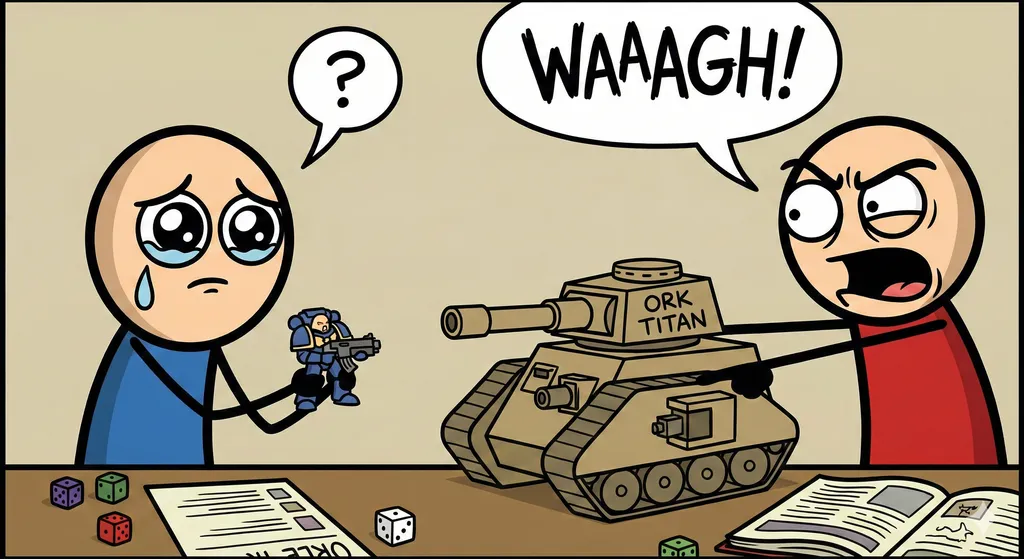
Games Workshop has just pulled back the veil on Warhammer 40,000 11th Edition, launching with the iconic 'Armageddon' box set that pits the relentless Orks against the noble, yet cursed, Blood Angels. This isn't merely a faction refresh or a new wave of models; the announcement explicitly points to "massive rules changes," suggesting a fundamental re-evaluation of how the grimdark future's premier tabletop wargame is played. For veterans of the 41st Millennium, this isn't just news; it's a call to re-learn, re-strategize, and re-engage with the very fabric of our beloved hobby.
The initial revelations, while scarce on explicit detail, imply a significant overhaul to the game’s core mechanics. The term “massive changes” often signals a shift beyond simple points adjustments or minor stratagem tweaks. We could be looking at a redesigned command phase, a more fluid turn structure, or even a complete re-imagining of how unit profiles interact with the battlefield. Imagine a system where the traditional Ballistic Skill and Weapon Skill values are abstracted into a more narrative-driven opposed roll, or where Toughness and Strength are less about direct comparison and more about synergistic keywords. Given the focus on Armageddon, a theater known for its brutal close-quarters combat and environmental hazards, it's not unreasonable to speculate on enhanced rules for terrain interaction, perhaps even dynamic environmental effects that shift the tactical landscape turn by turn. Will we see a renewed emphasis on objectives that aren't just about 'hold 2, kill more,' but rather achieving narrative milestones that unfold as the battle progresses? This could mean a more integrated mission system, where victory conditions are less static and react to player actions, pushing for a more dynamic and less predictable game flow. Furthermore, the interplay between unit types—infantry, vehicles, monsters—might be refined, potentially balancing the current dominance of certain archetypes or opening up new list-building avenues that reward combined arms tactics. The very essence of what makes a unit 'good' could be redefined, forcing players to reconsider their long-held assumptions about tactical efficiency and list optimization. For those who remember the radical shifts between editions, this feels like a moment akin to the leap from 7th to 8th, rather than the more iterative updates of 9th to 10th. It demands a thorough re-evaluation of every unit, every stratagem, and every core interaction, making the Warhammer 40,000 Core Rulebook an absolute necessity for competitive and casual players alike.
Lore-wise, the choice of Armageddon, and the eternal clash between Orks and Blood Angels, is not accidental. This is a setting steeped in 40K history, a planetary warzone that perfectly encapsulates the brutal, unending conflict of the Imperium. The Orks, with their insatiable WAAAGH! and ramshackle technology, represent unbridled, chaotic aggression. The Blood Angels, noble and tragic, fighting with the shadow of the Black Rage and the Red Thirst, embody the grim heroism and inherent flaws of the Space Marines. A new edition launching here isn't just showcasing new models; it's grounding the rules changes in a narrative context of desperate, visceral combat. Perhaps the new mechanics will better reflect the Orks’ unpredictable nature, granting them greater momentum in the face of heavy losses, or the Blood Angels’ angelic fury, allowing them to carve through foes with unmatched ferocity in close combat. The lore isn't just backdrop; it’s the fuel for the mechanics, and Games Workshop often uses these iconic clashes to highlight the thematic strengths of a new ruleset, making the crunch feel like a natural extension of the fluff.
So, what does this mean for the table? The verdict, while awaiting specifics, leans heavily towards rejuvenation. A "massive rules change" can be daunting, but it also represents an opportunity. It shakes up entrenched metas, forcing veteran players to innovate and preventing the game from stagnating. For new players, it creates a more level playing field, as everyone starts learning the new system simultaneously. The risk, of course, is alienating a segment of the player base comfortable with the existing rules, but the potential for a more streamlined, balanced, or narratively engaging experience often outweighs this. If Games Workshop can deliver a system that maintains strategic depth while reducing complexity, or one that truly captures the cinematic feel of 40K battles, then 11th Edition could be a monumental success. It demands a period of adaptation, undoubtedly, but the promise of a fresh, revitalized game that encourages diverse list building and dynamic battlefield decisions is a prospect that should excite every denizen of the 41st Millennium. The meta will reset, new champions will emerge, and the community will once again engage in the joyous, furious debate that accompanies every major evolution of this venerable game.
Top Pick: Warhammer 40,000: Armageddon Launch Set
Essential for experiencing the new edition's core mechanics and narrative from day one.
Check Price on Amazon →Related Stories
40k 11th Ed: Mission Archetypes Reshape Galactic Warfare
Warhammer 40,000's 11th Edition promises a radical overhaul of mission mechanics. New army archetypes will fundamentally redefine how factions achieve victory,
11th Edition's 2-Inch Melee: A Tactical Evolution on the Tabletop
Games Workshop's 11th Edition introduces a pivotal 2-inch engagement range, fundamentally reshaping the Warhammer 40,000 fight phase. This deep dive explores th
11th Edition Layouts: The Defiler's New Dance Floor?
Games Workshop is testing new Warhammer 40,000 mission layouts for 11th Edition, significantly impacting unit viability and tactical depth. We analyze how these