
40K 11th Ed Team Play: A Strategic Leap for the Grimdark
Goonhammer's preview of 11th Edition team play hints at a fundamental shift for Warhammer 40,000. We dissect the mechanics, lore implications, and how this could redefine competitive and casual tables.
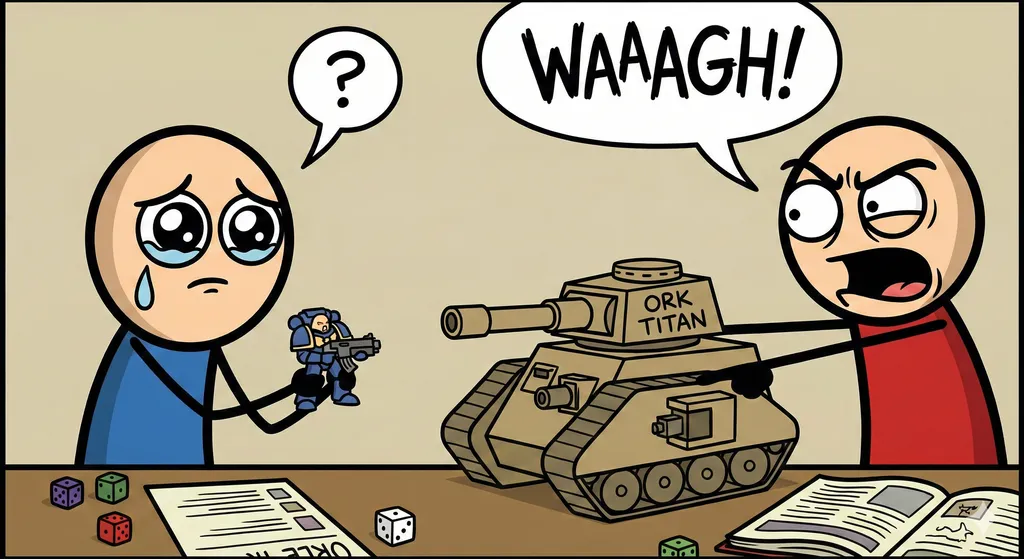
The grim darkness of the 41st Millennium has always been a theatre for grand, individualistic conflict, but a recent piece from Goonhammer, "Squad Tactics: Introduction to Teams in 11th Edition," suggests a compelling evolution for Warhammer 40,000: competitive team play. This isn't just about aggregating individual scores; it's about a fundamental shift in how we approach large-scale engagements, moving from solitary generalship to coordinated strategic partnerships.
When we talk about 'competitive teams play' in the context of Warhammer 40K 11th Edition, we're not simply discussing a team tournament where individual players duke it out and their scores are tallied. Isaac Terada's insights point to a more integrated experience, one where multiple players actively collaborate on the same side of the table against an opposing team. Imagine two players, each commanding a 1000-point force, working in concert to achieve shared objectives against another pair. The core mechanics would likely revolve around a shared Command Point pool, allowing for a collective strategic resource that demands communication and foresight. Instead of each general hoarding their CP for critical moments, the team must decide who deploys a crucial stratagem, when, and where. This necessitates a level of inter-player synergy rarely seen outside of narrative campaigns or bespoke house rules. We might see rules for 'Team Commanders' – perhaps one player's Warlord grants an aura to their ally's units, or a unique "Team Stratagem" becomes available only when specific unit types from both players are on the field. Objective control could shift from individual player responsibility to a collective team effort, where any unit from the allied forces contributes to holding a point. This elevates the game from a tactical puzzle for one mind to a symphony of coordinated actions, demanding a meta-strategy that encompasses two distinct forces acting as one cohesive war machine. This new paradigm demands a comprehensive understanding of the core game, making the Warhammer 40,000 Core Rules an even more critical resource for aspiring team generals.
From a lore perspective, the concept of combined arms and multi-force operations is utterly intrinsic to the grimdark. The Imperium of Man rarely fights a war with just Space Marines; they are often the spear tip, supported by the endless legions of the Imperial Guard, the arcane might of the Adeptus Mechanicus, and the zealous fury of the Sisters of Battle. Xenos factions, too, often form temporary or uneasy alliances – think of the greenskin Waaagh! swelling with various clans, or the insidious machinations of Chaos cults drawing on disparate daemonic and mortal forces. Team play in 11th Edition provides a mechanical representation of these grander conflicts, allowing players to embody the multi-faceted nature of warfare in the 41st Millennium. It’s no longer just about one Chapter Master leading a single strike force; it’s about a planetary defense force coordinating with an incoming Imperial fleet, or a Necron Dynasty awakening to find itself allied with a resurgent T'au Sept against a common Tyranid threat. This format provides a canvas for truly epic, cinematic engagements that feel more congruent with the scale of the setting's conflicts, moving beyond the isolated skirmishes we often simulate.
The implications for the table are profound. For the competitive circuit, this is a breath of fresh air. It mitigates the 'bad matchup' syndrome that can plague individual tournaments, as a teammate's army can often shore up weaknesses in another's. It elevates the strategic ceiling, rewarding players who can not only pilot their own force expertly but also communicate and synergize with an ally under pressure. The social aspect is undeniable; sharing victories and defeats, strategizing between turns, and celebrating clutch plays with a partner adds a layer of camaraderie that solo play simply cannot replicate. For casual players, it offers a fantastic way to introduce new players or for veterans to try out experimental lists without the full weight of a 2000-point game on their shoulders. It also opens doors for narrative campaigns, allowing GMs to craft scenarios where players are part of a larger, coordinated offensive or desperate defense. However, it's not without its challenges. Game length will inevitably increase, requiring more dedicated time slots. The potential for 'alpha gaming' – where one player dominates the strategic decisions – is real and will require teams to establish clear communication protocols. Furthermore, it demands a shared understanding of rules and intent, which can be a hurdle. Yet, the sheer potential for dynamic, evolving gameplay and the rich narrative tapestry it weaves makes this concept incredibly exciting. It promises a deeper, more collaborative engagement with the game, transforming individual battles into true team efforts.
Top Pick: Warhammer 40,000 Core Rules
To fully grasp the tactical depth of team play and how it integrates with existing systems
Check Price on Amazon →Related Stories
The Crimson Tide: 40k's Marine Mirror Match & Drukhari's Dark Glee
The competitive Warhammer 40,000 meta sees an unusual prevalence of Space Marine mirror matches, highlighting specific faction strengths and weaknesses. Meanwhi
40k 11th Ed Movement: The Tactical Dance of the Grimdark
Goonhammer's "Ruleshammer" hints at 11th Edition's movement changes, introducing "Strategic Advance" and refining verticality. This analysis breaks down how the
Aeldari's Grip & Dark Angels' Rise: 40K's Shifting Competitive Tides
Goonhammer's latest competitive report unveils Aeldari's continued dominance in Warhammer 40,000, juxtaposed with the surprising ascent of a Dark Angels detachm