
40k Legends: Honouring the Past, Shaping the Future?
Games Workshop's 40k Legends initiative brings back classic models with new rules. This article dissects how these legacy units impact competitive play and casual collections, examining the nuanced balance of preservation and progression.
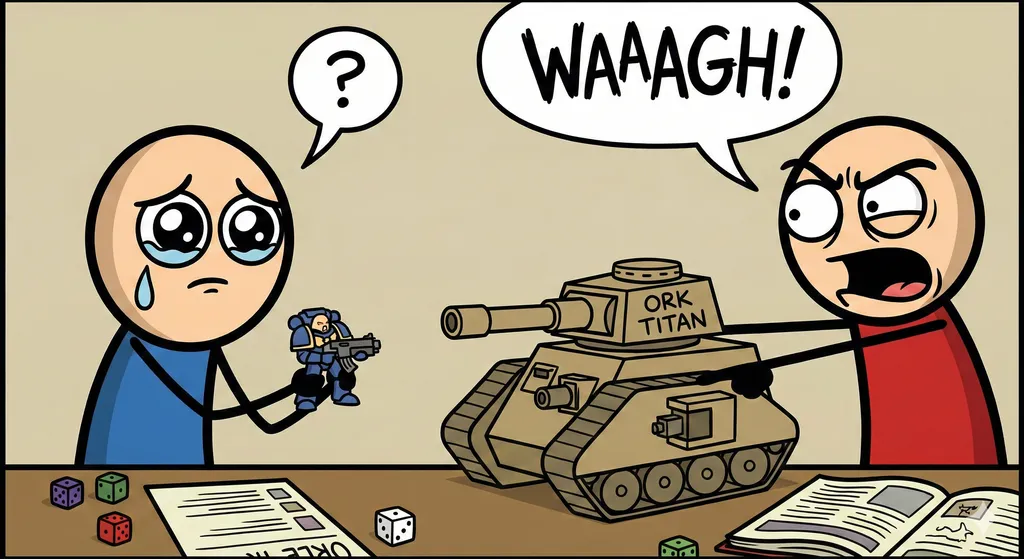
The recent formalization and expansion of Warhammer 40,000 Legends by Games Workshop is more than just an archival update; it's a profound statement on the game's evolving legacy and the careful tightrope walk between innovation and tradition. As initially highlighted by guides like the one from Spikey Bits, this system provides official datasheets for models no longer in production, allowing veteran players to field their cherished, often irreplaceable, miniatures.
At its core, the Warhammer 40k Legends system is a series of official PDF datasheets, freely available, that grant rules to units Games Workshop no longer actively sells or supports in their main product lines. This isn't just about old Space Marine designs or forgotten Imperial Guard regiments; it encompasses a vast array of units, from specific character variants to entire vehicle types that have been superseded by newer iterations or removed from the lore’s spotlight. Mechanically, these datasheets function much like any other, detailing movement, weapon profiles, special abilities, and points costs. However, a critical distinction separates them from current codex units: they are explicitly designed for narrative and casual play, generally disallowed in official Games Workshop tournaments and most competitive circuits. This separation is crucial for the health of the competitive meta, preventing the need to balance an ever-growing pool of legacy units against new releases, and allowing designers to push boundaries without legacy interactions breaking the game. For those seeking to dust off their classic models, a comprehensive guide detailing these new rules can be found here: Spikey Bits' 40k Legends Guide.
From a lore perspective, the concept of a unit becoming a “Legend” fits perfectly within the sprawling, war-torn galaxy of Warhammer 40,000. The Imperium is a vast, ancient, and often stagnant empire; it makes absolute sense that countless patterns of vehicles, unique regiments, or specialized combat doctrines would fade from common use, only to be found in forgotten armories or deployed by desperate frontier worlds. A venerable dreadnought pattern, a specific Ork Mek’s custom Stompa, or an archaic Eldar Wraithlord design might no longer be mass-produced, but their continued existence in the lore, even as a rarity, enriches the setting. It allows for players to tell deeply personal stories with their armies, representing specific historical conflicts, obscure detachments, or forces that simply haven't updated their equipment in millennia. This narrative flexibility is a powerful tool for Game Masters and players who value deep immersion over pure competitive optimization.
So, is this good for the game? The verdict from the Crit Sheet is a resounding, albeit nuanced, yes. For the casual player and the collector, Warhammer 40k Legends is an absolute boon. It validates their investment in older models, provides a clear pathway to field them with official rules, and dramatically expands the possibilities for thematic army building. It encourages kitbashing and creative conversions without the pressure of competitive legality, fostering a vibrant hobbyist community. However, for the competitive scene, it draws a necessary line in the sand. While some lament the exclusion of their favorite units from the tournament table, this segregation allows Games Workshop to iterate on 5th Edition and newer rulesets without the crushing burden of backward compatibility for every single unit ever produced. The primary drawback remains the lack of ongoing balance updates for Legends units, often leaving them mechanically stagnant against the constant evolution of current codexes. Yet, this is a compromise many veterans are willing to make to keep their beloved relics of past editions on the tabletop.
Top Pick: Warhammer 40,000 Core Rulebook
Essential foundation for all 40k play
Check Price on Amazon →Related Stories
40k's New Army Customization: A Deep Dive into Tactical Identity
Games Workshop has unveiled an intriguing new system for army customization in Warhammer 40,000, promising to redefine how we build and play our forces. This de
Squad Marks Future-Proofs Your 40k Terrain for 11th Edition
Squad Marks has released an essential 11th Edition Warhammer 40,000 terrain conversion guide, ensuring your existing 10th Ed layouts remain battle-ready. This c
The Forge vs. The Printer: GW's Evolving Stance
Games Workshop's latest announcements hint at a shifting strategy regarding 3D printing. We dissect the implications of their new Armageddon releases and promot