
40K's Endless War: Navigating GW's Cyclical Meta
Warhammer 40,000 players constantly face rules revisions and meta shifts. This deep dive examines how Games Workshop's cyclical approach impacts the game's mechanics, lore, and player experience.
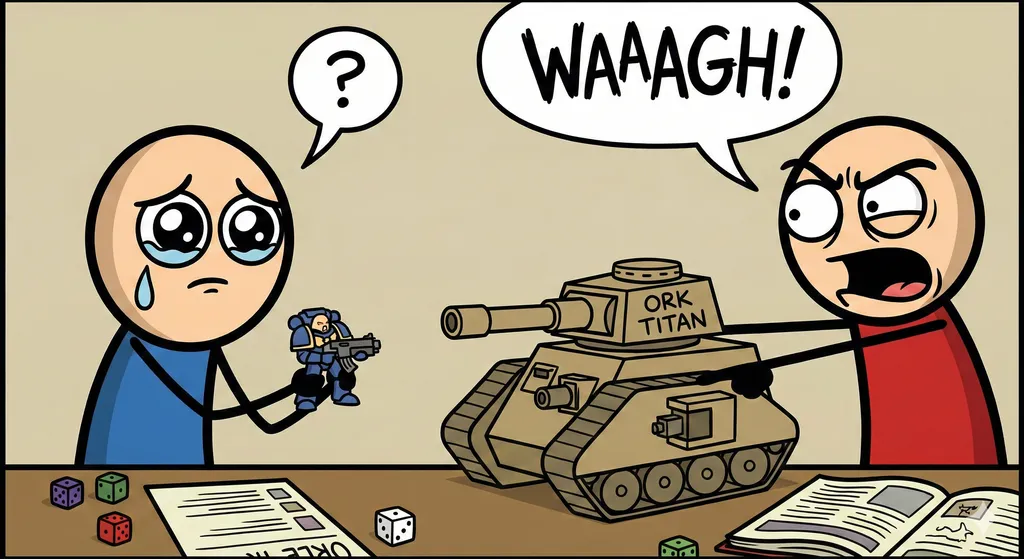
The Imperium of Man may cling to tradition, but Games Workshop, the venerable publisher of Warhammer 40,000, certainly does not. For decades, players have navigated a relentless tide of rules revisions, codex updates, and meta shifts, a cyclical rhythm that defines the very essence of the game. It's an endless war not just on the tabletop, but within the rulebooks themselves, prompting veteran GMs and strategists to constantly re-evaluate their understanding of the grim darkness of the far future.
At the heart of this cycle lies the biennial (or so it seems) edition change, fundamentally altering core mechanics from movement and shooting to morale and objective play. Each new edition of Warhammer 40,000 arrives promising streamlined play or deeper tactical engagement, often delivering both while simultaneously invalidating years of accumulated player knowledge and list-building paradigms. Beyond the grand sweeps of new editions, the insidious creep of *Codex Astartes* updates, xenos faction rulebooks, and the ever-present *Munitorum Field Manual* punctuate the calendar. A unit that was a cornerstone of your strategy last season might be rendered obsolete by a simple points hike or a new keyword interaction. The competitive scene, particularly, becomes a frantic dance of adaptation, with top-tier armies shifting with the frequency of planetary invasions. We've seen entire playstyles rise and fall within months, from the dominance of 'shooty' armies to the resurgence of aggressive melee builds, all dictated by the latest balance pass or the strategic weight of a new Stratagem. It's a constant re-education, a perpetual learning curve that demands dedication not just to painting, but to the meticulous dissection of rule interactions and errata documents. For those wishing to truly understand the current landscape, delving into the latest Core Rules is paramount.
While the rules are the engine, the lore provides the grimdark canvas. Interestingly, this constant mechanical churn is often mirrored, or even justified, by the ever-escalating narrative of the 41st Millennium. New editions frequently launch with universe-shaking events – the Indomitus Crusade, the Great Rift – providing narrative cover for new unit types, redesigned factions, and the shifting power dynamics reflected in the rules. The impermanence of the ruleset paradoxically strengthens the setting's core theme of unending war and entropy. When a faction receives a powerful new codex, it’s not just a numbers buff; it's often accompanied by lore depicting their ascendancy, a new strategic imperative, or a particularly brutal campaign. Conversely, a faction that languishes in the competitive wilderness might be seen as 'struggling' in the lore, even if the narrative hasn't explicitly stated it. This symbiotic relationship between crunch and fluff means that the meta isn't just about winning games; it’s about participating in the evolving story of the galaxy. The perception of a Primarch’s might, for instance, is inextricably linked to their datasheet performance.
So, is this ceaseless cycle a boon or a bane for the average Warhammer 40,000 player? For Games Workshop, it’s a clear strategy: it keeps the game fresh, encourages new model purchases, and maintains engagement. For players, the answer is far more nuanced. On one hand, the constant updates prevent stagnation. There’s always something new to learn, a new strategy to master, and the promise of a revitalized army. This 'living game' approach can be incredibly exciting, injecting new life into campaigns and competitive circuits. However, the cost of entry, both financially and in terms of time investment, is substantial. Veteran players, especially those with multiple armies, face the daunting task of re-learning rules, re-evaluating their collections, and potentially purchasing new units to remain competitive or even just current. The feeling of 'rules fatigue' is real, as is the frustration of seeing a beloved army's competitive viability plummet overnight. For the casual player, simply keeping up with the core rules and their chosen faction's latest iteration can be a significant hurdle. The 'endless cycle' fosters a dynamic, evolving game, but it also creates a treadmill where staying still means falling behind. The key for a veteran GM and player is to understand this rhythm and decide how deeply they wish to engage with the ebb and flow. Do you chase the meta, or do you find joy in mastering your chosen faction, regardless of its current competitive standing? The beauty of Warhammer 40,000 often lies not in optimal builds, but in the narrative and personal investment, something that transcends mere numbers on a datasheet. It's about finding your equilibrium in the chaos.
Top Pick: Codex: Space Marines (10th Edition)
Essential for understanding the current baseline of power and design principles.
Check Price on Amazon →Related Stories
Ork Wave vs. Firstborn Fate: GW's Trust on the Tabletop Edge
A new wave of Ork Boyz hits Warhammer 40,000, bringing fresh sculpts and chaotic energy to the greenskin legions. However, these releases arrive amidst growing
Space Marine Codex: Elite Shift Redefines 40k Battlefield
The new Space Marine Codex overhauls how the Imperium's finest operate, making each model significantly tougher and more potent. This shift towards smaller, eli
Space Marine Detachments: A Return to Chapter Identity
Games Workshop's new Space Marine detachments for 11th Edition promise a resurgence of distinct chapter identity. This deep dive explores how these rules echo t