
40k's Many Fronts: Is GW's Skirmish Focus a Strength or Strain?
Games Workshop's increasing investment in Warhammer 40k's myriad 'side games' sparks debate among the community. This article dissects how a diversified product line impacts the core game's mechanics, lore, and overall table experience for veteran players.
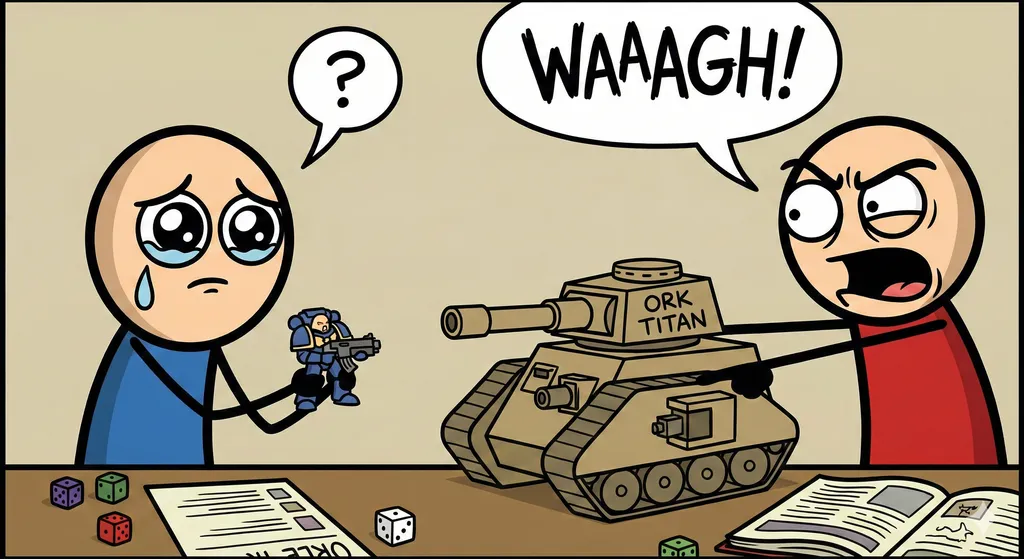
The Imperium of Man, in its vast, unending war, finds itself fighting on countless fronts. Similarly, Games Workshop's development strategy for Warhammer 40k has increasingly diversified, pushing significant resources into what many players affectionately, or perhaps critically, refer to as 'side games.' From the grim corridors of Necromunda to the brutal skirmishes of Kill Team, the publisher's expanding portfolio beyond the core 40,000 game raises a critical question: is this fragmentation a strategic masterstroke, or is it diluting the very essence of the galaxy's most iconic tabletop wargame?
From a purely mechanical standpoint, the proliferation of these sub-systems presents a fascinating design challenge. Each 'side game' – be it the focused squad combat of Kill Team 2024, the strategic dogfights of Aeronautica Imperialis, or the claustrophobic skirmishes of Boarding Actions – often features streamlined, purpose-built rule sets. This can be a boon. Kill Team, for instance, offers a tactical depth far exceeding its model count, allowing for intricate positioning and ability synergy that the grand scale of Warhammer 40,000 often abstracts. The downside, however, is the sheer cognitive load placed upon players. To truly engage with the breadth of the 40k universe, one might need to master multiple distinct rulesets, each with its own nuances, FAQs, and meta. This isn't just about learning more rules; it's about internalizing different design philosophies. For a new player, the gateway offered by a Combat Patrol box can quickly lead to a labyrinth of choices, potentially overwhelming them before they even commit to a single army for the main game. For veterans, it means constantly re-tooling their mental database of rules, a process that can feel less like expanding their hobby and more like maintaining a complex software suite.
The narrative implications of this multi-front approach are equally profound. While the core Warhammer 40,000 game delivers epic, galaxy-spanning conflicts, the side games excel at drilling down into the granular, personal stories that often get lost in the larger narrative. Necromunda vividly portrays the class struggles and gang warfare of the underhives, offering a gritty, character-driven perspective on Imperial life. Kill Team allows for focused exploration of specific operatives and their desperate missions, adding texture to the vast, anonymous armies of the Imperium. This diversification enriches the overall lore, painting a more complete picture of the 41st Millennium. We see the grimdark not just in grand crusades, but in the desperate struggles of a single Deathwatch veteran or the brutal politics of a Genestealer Cult cell. The risk, of course, is narrative fragmentation. Keeping track of the overarching plot threads across disparate game lines can be challenging, and while each game offers compelling microcosms, ensuring they contribute to a cohesive macro-narrative requires deliberate effort from the lore masters at Games Workshop. When done well, it’s a masterclass in worldbuilding; when rushed, it risks feeling like disjointed vignettes.
So, is this a good thing for the game and its community? At the table, the feeling is undeniably one of abundance. More ways to play, more opportunities to use our cherished miniatures, and more avenues for narrative exploration. For the casual player or those with limited time and budget, a skirmish game like Kill Team: Into the Dark offers a complete, engaging experience without the commitment of a full 2000-point army. For the veteran, it provides welcome variety, a chance to explore different facets of their collection or even entirely new factions without diving headfirst into another primary army. However, this abundance comes with a cost. The core Warhammer 40,000 game, the flagship that drew so many of us in, sometimes feels like it's competing for attention and development resources. Balance patches for the main game can feel slower, new editions might lack the revolutionary punch of previous iterations, and the focus on smaller, self-contained releases can sometimes overshadow the grand narrative campaigns we once saw. Ultimately, Games Workshop's side-game strategy is a double-edged sword. It offers unparalleled breadth and depth to the 40k universe, fostering diverse communities around specific playstyles. But it also demands a more discerning player base, one willing to navigate a complex ecosystem of rulesets and narratives. The future of Warhammer 40,000 isn't just about the main game; it's about how gracefully all these disparate elements interact, and whether the sum of its parts truly elevates the grimdark experience.
Top Pick: Warhammer 40,000 Core Book
To understand the foundational mechanics and lore that underpin all of GW's grimdark offerings, providing essential context for its diverse side games.
Check Price on Amazon →Related Stories
The $69 Mystery Box: Value or Vaporware for Your Miniatures?
The return of the $69 Mystery Miniatures Box from various vendors promises up to $135 in value. We dissect if this gamble genuinely benefits the discerning warg
Combat Patrol: A Masterstroke for Warhammer 40,000's Future
Games Workshop's free Combat Patrol rules, missions, and datasheets are a game-changer for accessibility. This initiative brilliantly lowers the barrier to entr
Artel W's Anniversary: Independent Minis & Tabletop Impact
Artel W Miniatures' ninth-anniversary sale isn't just a discount; it's a testament to the thriving independent scene. We analyze how these high-quality resin sc