
40k's New Army Customization: A Deep Dive into Tactical Identity
Games Workshop has unveiled an intriguing new system for army customization in Warhammer 40,000, promising to redefine how we build and play our forces. This deep-dive explores the mechanical implications and lore context of these strategic shifts.
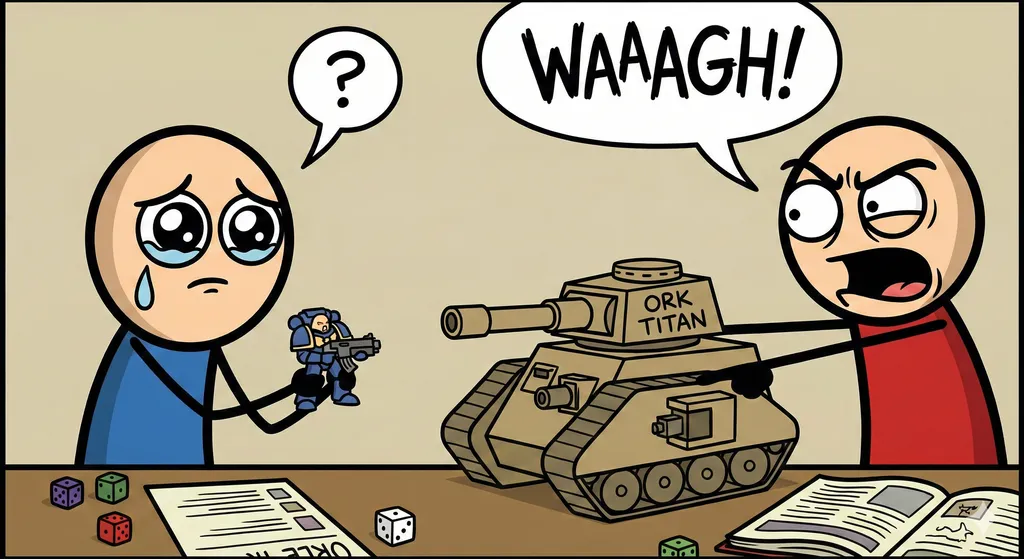
Games Workshop has, yet again, stirred the primordial soup of the galaxy with a significant update for Warhammer 40,000, introducing what they're calling 'Adaptive Doctrine Protocols' – a revolutionary approach to army customization that promises to reshape the very identity of our forces on the tabletop. While the whispers of an '11th Edition' might have been premature or a misnomer for the sheer scope of these changes, the accompanying comprehensive FAQs confirm that this isn't just a minor tweak; it's a foundational shift for 10th Edition.
At its core, the Adaptive Doctrine Protocols layer a new strategic choice onto the existing Detachment system. Players will still select a primary Detachment, such as the Gladius Task Force for Space Marines or the Waaagh! Tribe for Orks, granting their foundational army rules. However, *after* this selection, they can choose one or more 'Doctrine Protocols' that apply granular, themed buffs across specific unit types or even individual units within their army. These Protocols aren't free; they might cost a portion of your army's points budget, or perhaps require dedicating a certain number of Command Points per battle round to activate, creating a dynamic resource management challenge. For example, a 'Rapid Advance' Protocol might grant all INFANTRY and BIKER units +1 to their Advance and Charge rolls for the first two battle rounds, while a 'Fortified Line' Protocol could give VEHICLE and MONSTER units a 5+ Feel No Pain against ranged attacks while wholly within your deployment zone. This system moves beyond the broad strokes of a Detachment, allowing players to truly specialize their force's tactical role for a given mission. It’s a level of bespoke army construction we’ve not seen in Warhammer 40,000 for some time, offering a genuinely new way to customize armies and respond to the evolving meta, as evidenced by the concurrent release detailing the top 40k factions now.
From a lore perspective, these Adaptive Doctrine Protocols make perfect sense within the grimdark setting. The Imperium, constantly fighting on a million fronts, cannot afford monolithic strategies. A Space Marine Chapter might adhere to the Codex Astartes, but the specific demands of a particular campaign – be it an urban siege, a jungle ambush, or a void war – necessitate tactical flexibility. These Protocols represent the field-level adaptations, the specialized training, or the unique blessings (or curses) a commander might bring to bear. For Xenos factions, it could symbolize the ever-evolving nature of a Tyranid Hive Fleet adapting to prey, the sudden cunning of an Ork Warlord, or the ancient, inscrutable strategies of the Aeldari. It enriches the narrative potential of every force, allowing players to build armies that tell a more specific and compelling story, rather than just being a generic representation of their faction.
So, what does this mean for the table? The verdict is, cautiously, overwhelmingly positive. The sheer depth of tactical choice these protocols offer is immense, encouraging deep list-building and rewarding players who truly understand their units’ synergies. It has the potential to revitalize forgotten units, giving them a niche where a specific Doctrine Protocol might elevate them from shelf-warmers to key tactical pieces. For the hobbyist, it’s a dream – imagine modeling an entire force around a 'Deep Strike Assault' Protocol, every model posed for a rapid insertion. The downside, of course, is complexity. New players might find the additional layer of rules daunting, and Games Workshop will have a monumental task balancing these Protocols across all factions and detachments, making the '11th Edition FAQs' (or rather, comprehensive 10th Edition clarifications) absolutely critical. However, for veteran players seeking to push the boundaries of their strategic thinking and inject fresh life into their Warhammer 40,000 games, this is a truly exciting development. The competitive scene will undoubtedly explode with new strategies and counter-strategies, making every game a unique puzzle to solve. To truly leverage these changes, players will want to stay updated with all new Codex supplements as they release, as the synergy between new units and these protocols will be key.
Top Pick: Warhammer 40,000 App
For managing complex army lists and doctrine selections on the fly
Check Price on Amazon →Related Stories
Waaagh! Rising: Decoding the Rumored Ork Resurgence in Warhammer 40,000
Games Workshop's latest whispers suggest a monumental shift for the Orks in Warhammer 40,000. We dissect the potential mechanical and lore implications of a gre
40k's 11th Edition Combat Patrol: A New Era for Skirmishes
Games Workshop unveils the 11th Edition Combat Patrol Companion, a refined format promising streamlined, balanced skirmishes for Warhammer 40,000. This strategi
11th Edition 40k: The Quiet Drop That Shakes the Galaxy
Games Workshop's sudden reveal of Warhammer 40k 11th Edition's release date has ignited player speculation. This move signals a significant shift, demanding a c