
Alchemy's Paper Problem: Bridging the Digital-Physical Divide
Magic: The Gathering's Alchemy Arena offers digitally-exclusive cards with mechanics impossible in paper. We dissect the design challenges and propose how some unique concepts could transition to the tabletop.
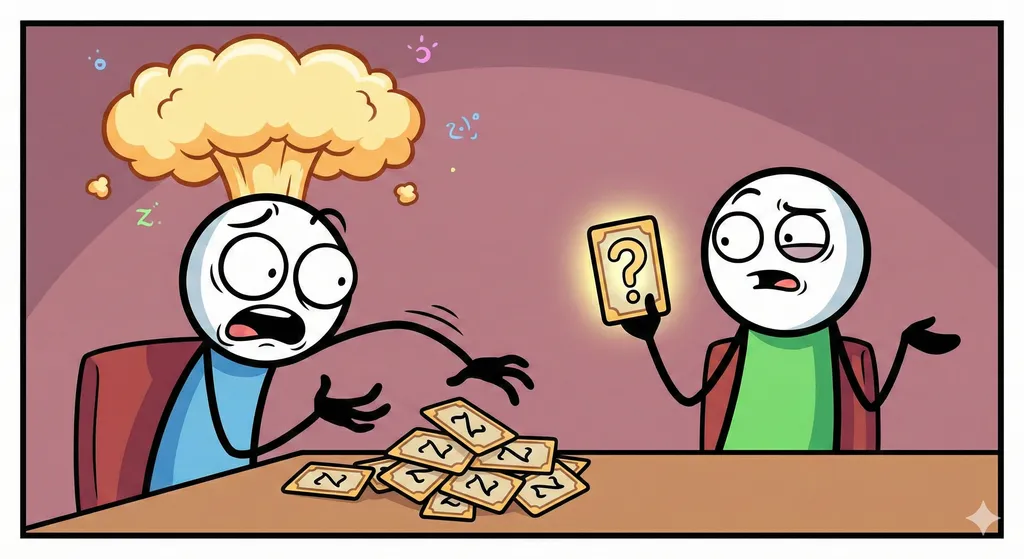
The digital frontier of Magic: The Gathering, specifically its Alchemy Arena format, continues to challenge the very definition of what a trading card game can be, a bold experiment from Wizards of the Coast that begs the question: what if these digital-exclusive mechanics could grace our paper tables?
"The Crit Sheet" has always championed innovation, but also the tactile, social experience of tabletop gaming. Alchemy, by its very nature, often leverages the computer as an unbiased, instantaneous arbiter of complex rules interactions. The Card Kingdom blog recently touched upon this, identifying a desire for select Alchemy cards to make the leap to paper. This isn't just a casual wish; it’s a design challenge worth exploring for any veteran player who understands the elegance of Magic's core rules.
At its core, Alchemy introduces several categories of mechanics that are either difficult or outright impossible to replicate in paper without a significant rules overhead or external tools. "Perpetual" effects, for instance, modify a card's stats or abilities permanently, even across zones. Imagine a creature that gains +1/+1 perpetually from a spell; tracking this on a physical card as it moves from battlefield to graveyard, hand, or even exile, becomes a logistical nightmare. While Un-sets have explored stickers, the competitive integrity of a perpetual effect would demand something more robust. Perhaps a physical counter that sticks to the card, or a transparent sleeve that allows for dry-erase notes? This introduces a level of physical interaction not currently present in competitive Magic, which, if streamlined, could be quite engaging.
Then there’s "Conjure," which creates a card from outside the game directly into your hand or onto the battlefield. In digital, this is seamless. In paper, it requires either pre-printed tokens for every conjurable card (which quickly becomes unwieldy) or a new rule allowing players to search a designated "Conjure Pool" – essentially a mini-sideboard of specific cards. Similarly, "Seek" effects, which intelligently tutor for a specific type of card (e.g., "seek a nonland card with mana value 3 or less"), would devolve into a slow, manual deck search in paper. A potential tweak could involve a limited "reveal X, choose Y" mechanic, or restricting the seek to specific, smaller zones like the top few cards of the library or a pre-defined mini-deck, akin to how some games handle specific keyword searches.
From a lore perspective, Alchemy cards often feel like an exploration of magical anomalies or experimental spellcraft within established planes. They rarely introduce new settings or characters but rather push the boundaries of what magic *can do* in the Multiverse. A perpetual enchantment might represent a lingering curse that truly binds to a being, defying conventional dispelling. A conjured creature could be a manifestation of pure will, brought into existence from the æther itself. These mechanics, while digitally facilitated, resonate with the grand, often chaotic, narratives of Magic. They don't dilute the lore; they offer new ways for spells to manifest their power, creating unique micro-narratives within a single game state. The thought of a character having a permanent, lore-driven buff or debuff that follows them through their journey could be quite compelling for a casual Commander game, for example, adding a layer of persistent storytelling rarely seen in the format. Magic: The Gathering Commander Masters Booster Box
So, is this good for the game? The verdict on translating Alchemy to paper is nuanced. For competitive play, the rules overhead and potential for slow play or misinterpretation are significant hurdles. The joy of paper Magic lies in its clear, immutable rules and the tactile interaction with components. Introducing mechanics that rely on a computer to manage complexity risks eroding that clarity. However, for casual formats like Commander or even kitchen table play, selective adaptation could inject fresh life and unique play patterns. Imagine a "Kitchen Table Alchemy" variant where players agree to use stickers or custom tokens to track perpetual effects, embracing the quirky, experimental nature. It could foster a new layer of community creativity and house rules, much like how the Commander format itself evolved from player ingenuity.
Ultimately, the digital design space of Alchemy is invaluable for testing the limits of card mechanics. But the soul of Magic resides in the physical cards, the shuffled deck, and the shared table. While not every digital innovation can or should cross over, the very discussion of how to adapt them sparks important conversations about game design, player experience, and the future of our beloved hobby.
Top Pick: Commander Preconstructed Decks
Excellent entry point for complex Magic mechanics
Check Price on Amazon →Related Stories
MTG's Competitive Edge: Is The Gathering Losing Its Way?
Magic: The Gathering faces an existential challenge in competitive play as agile newcomers like One Piece Card Game and digital disruptors gain traction. We dis
Standard's Shifting Sands: WotC's Off-Season Intervention Reshapes the Arena
Wizards of the Coast has delivered a seismic shift to the Magic: The Gathering Standard format, banning key cards like Badgermole Cub and Gran-Gran. This unexpe
Grizzly Grit: Can $100 Bears Conquer The Hobbit Standard?
We dissect the audacious challenge of a budget 'Bears' deck against the powerful Magic: The Gathering 'Hobbit Standard' meta. This analysis explores mechanics,