
Beyond the Dice: The Mechanics of Collective Pride in TTRPGs
We delve into 'Aetheria: Chronicles of the Confluence' by Mythos Forge Games, a system designed to mechanically cultivate the often-overlooked group chemistry and shared pride that truly defines a memorable TTRPG campaign. Discover how its innovative rules foster collective narrative and lasting player bonds.
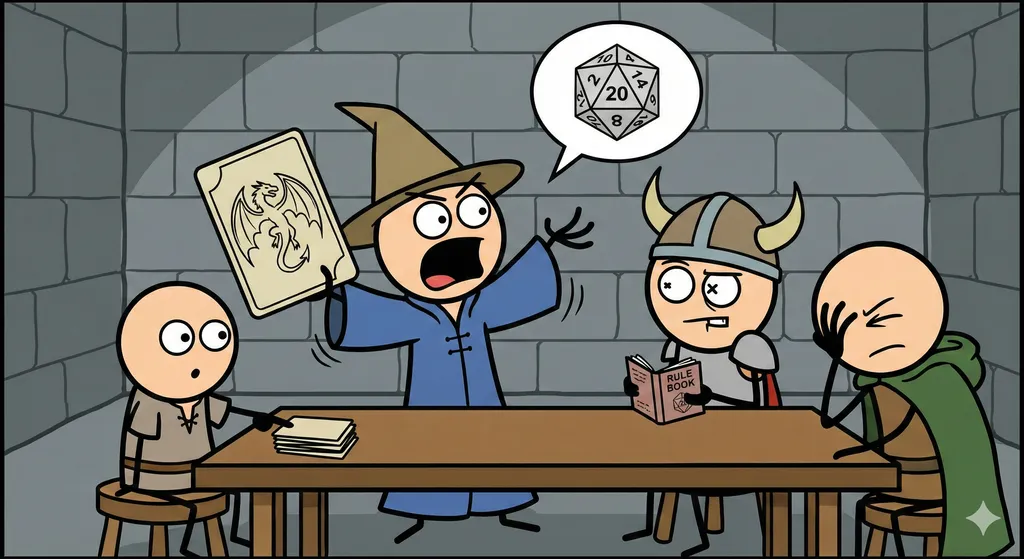
Forget the latest monster manual or the gleaming new set of polyhedrals for a moment. True success at the table isn't always measured in critical hits or slain dragons. It's in the shared laughter, the collaborative gasps, and the collective sense of accomplishment that emerges when a group truly *clicks*. This profound, out-of-character pride, often the most cherished takeaway from any campaign, is precisely what the innovative design of Aetheria: Chronicles of the Confluence by Mythos Forge Games seeks to codify and reward. It’s a bold move, pushing past the traditional boundaries of character-centric mechanics to embrace the very meta-game that makes TTRPGs so unique.
Mythos Forge isn't just paying lip service to 'player agency'; they’ve built a system around it. The core of this lies in 'Confluence Points,' a meta-currency awarded not for individual feats of heroism, but for contributions that elevate the *entire* table's experience. Did your character make a selfless sacrifice that opened a new narrative path for another player? Confluence Points. Did you brilliantly weave in a forgotten piece of lore from another player's backstory to enrich the current scene? Confluence Points. These aren't personal power-ups; they're communal resources. Players can collectively spend Confluence Points to introduce 'Narrative Anchors' – shared truths about the world that weren't there before, or even to activate 'GM Interrupts' that allow the group to collaboratively steer a scene’s direction, not to negate the GM's authority, but to *amplify* the shared storytelling. It's a system that actively rewards thinking beyond your character sheet.
Further reinforcing this, Aetheria includes a 'Shared Lore Codex.' This isn't just a world bible; it’s a living document where players can, between sessions, add details, expand on established lore, or even introduce minor NPCs and locations, provided they align with the GM's overarching vision and the existing narrative. Each contribution, once approved and integrated, grants a small bounty of Confluence Points. This isn't just worldbuilding; it's *ownership*. It’s a stark contrast to many 5th Edition games where the world is largely a static backdrop provided by the GM; here, it’s a canvas we all paint on.
Then there are the 'Resonance Bonds.' While many systems abstract character relationships, Aetheria provides mechanical incentives. If your character has a strong Resonance Bond with another player character, certain cooperative actions (like defending each other, or succeeding on a joint skill challenge) grant bonus dice or even temporary inspiration. It’s not just flavor; it's crunch that encourages the very chemistry we’re discussing.
The lore of Aetheria itself mirrors this collaborative ethos. The world, known as the 'Confluence of Shards,' is said to be a fractured reality, constantly being rewoven by the collective dreams and stories of its inhabitants. Ancient civilizations believed that powerful narratives literally shaped the landscape and solidified the laws of physics. When a group of adventurers embarks on a quest, they aren't just interacting with the world; they are, in a very real sense, *defining* it. The 'Veil-Weavers,' the enigmatic elders of the Confluence, teach that shared belief strengthens reality, while discord can lead to 'Narrative Fractures' – unpredictable, dangerous shifts in the world's fabric. This deep integration of meta-game mechanics into the very fabric of the setting makes every player contribution feel profoundly meaningful, anchoring their out-of-character pride directly into the in-game consequences.
So, does this actually work at the table? Absolutely. What Mythos Forge Games has done with Aetheria: Chronicles of the Confluence is provide a robust framework for something Game Masters have been striving for since the early days of roleplaying: genuine, shared narrative ownership. It shifts the focus from 'my character's story' to 'our story,' fostering a level of investment and collaborative spirit that transcends individual character arcs. The pride a player feels when a piece of lore they contributed becomes central to the plot, or when a tactical decision they made, not just for their own character but for the benefit of the whole group, yields a bounty of Confluence Points, is palpable. This isn't just about winning; it's about crafting a *legacy* together. It elevates the TTRPG experience from a series of encounters to a truly collective act of creation, making those out-of-character moments of group chemistry not just happenstance, but an intended outcome of intelligent design. I’ve seen this system transform hesitant players into enthusiastic world-builders and siloed adventurers into a cohesive, unstoppable force. It’s a testament to what happens when designers truly understand the social contract of the table. For GMs looking to cultivate deeper engagement and truly memorable campaigns, this is a system worth exploring, a masterclass in elegant mechanics serving powerful narrative. The Crit Sheet's Guide to Collaborative Worldbuilding offers excellent advice on integrating player contributions into your campaigns, regardless of your chosen system.
Top Pick: Aetheria: Chronicles of the Confluence Core Rulebook
Essential for GMs seeking to foster deep player engagement and collaborative world-building.
Check Price on Amazon →Related Stories
Glyphbound's Shifting Labyrinth: A Dungeon Crawl Reinvented
Labyrinthine Press unveils Glyphbound: Labyrinth of Echoes, introducing a unique species and a groundbreaking rotating dungeon mechanic. This innovative system
Beastkin Bonds: Ironclad Forges Deeper TTRPG Companionship
Ironclad Games' new Beastkin Bonds supplement for Aethelgard Chronicles promises a robust, tactical companion system. We break down the innovative mechanics and
The Indie Ascent: Forge Your Own RPG Legacy
EN World's 'RPG Evolution' isn't just a headline; it's a call to arms for creators, democratizing game design and publishing. This deep dive explores how launch