
Collaborative Worlds: Unlocking Player Agency at the Table
Gnomecast's 'Worldbuilding in the Moment' offers GMs a potent framework for player-driven narrative. This deep dive explores how leveraging player input enriches game mechanics and lore, fostering unparalleled immersion.
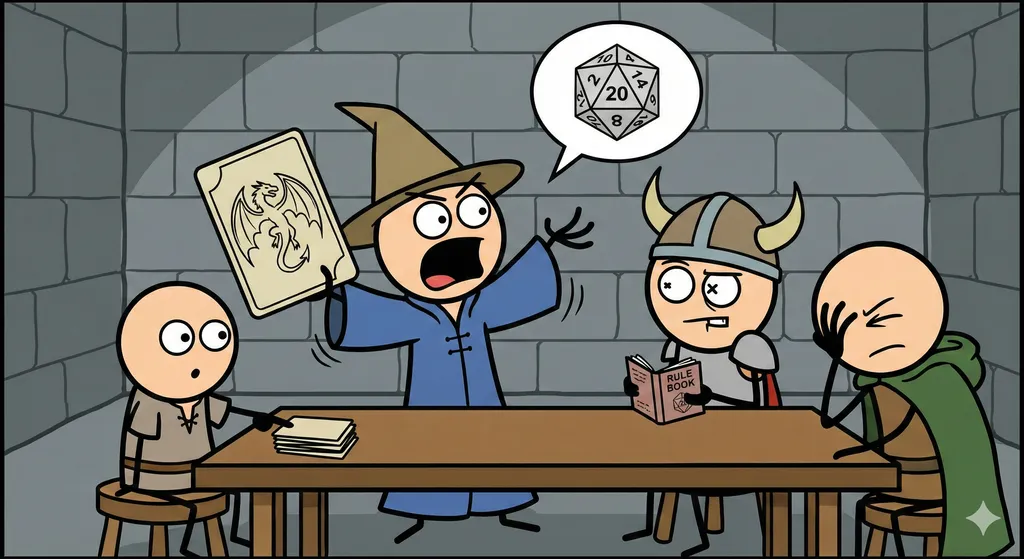
The latest episode of Gnomecast, "Worldbuilding in the Moment," from the seasoned storytellers at Gnome Stew, isn't just another podcast; it's a masterclass in fundamental Game Mastering philosophy. Ang, Jared, and Josh delve into the art of coaxing players from mere action declarations to deep, character-driven narrative immersion. This isn't about offloading prep, but about elevating the entire table experience by weaving player creativity directly into the fabric of your campaign world.
At its core, "worldbuilding in the moment" is a mechanical shift away from the GM as sole arbiter of reality. Instead, it posits a collaborative reality where player input isn't just acknowledged but actively solicited and integrated. Consider the simple prompt: "Your character grew up in this town; what's one peculiar local custom you remember?" This isn't fluff; it's crunch. It directly creates a piece of game world lore that the GM can then leverage. Suddenly, a generic village gains a unique identity, a new plot hook, or a cultural nuance that might inform future encounters. Games like *Powered by the Apocalypse* (PbtA) titles, such as *Dungeon World*, bake this directly into their playbooks and GM moves, requiring players to define elements of the world as part of character creation or during critical moments. Even in more traditional frameworks like D&D 5th Edition, a savvy GM can use character bonds, ideals, flaws, and backgrounds as springboards. "Your fighter remembers a specific rivalry from their mercenary days – who was it, and what did they do to earn your ire?" This isn't just backstory; it's a living part of the world, ready to manifest as an NPC, a quest giver, or a sudden antagonist. The mechanical implication is clear: the more player buy-in, the richer the world, and the less the GM has to invent from whole cloth. It's an iterative design process, where each player contribution is a new design element, a rule, or a constraint that shapes future play. Dungeon World
From a lore perspective, this approach transforms a static backdrop into a vibrant, living entity. When players contribute to the world, they don't just inhabit it; they *own* a piece of it. That peculiar local custom isn't just a GM's arbitrary detail; it's *their* character's memory, imbued with personal significance. The rival isn't just a name on a sheet; they are a figure from *their* past, whose motivations and actions are now part of the shared narrative tapestry. This method bypasses the common pitfall of player disinterest in pre-written lore dumps. Instead of being told, they are *discovering* and *creating* simultaneously. The world's history becomes a mosaic of shared memories and experiences, not just the GM's meticulously crafted tome. This profound sense of co-authorship fosters a deeper emotional connection to the setting, making stakes feel more personal and victories more resonant. It bridges the gap between character and setting, making them inextricable.
So, is this good for the game? Unequivocally, yes. The table feel shifts dramatically when players are empowered to contribute meaningfully to the world. Roleplaying naturally flourishes because characters aren't just reacting to a world; they are actively shaping it. The classic problem of players "telling" the GM what their character does, rather than embodying the character, often stems from a lack of genuine agency beyond tactical choices. By inviting them to imbue the world with their character's history, desires, and observations, GMs provide a direct conduit for immersive roleplay. Furthermore, this technique alleviates GM burden, transforming prep from a solitary act of creation into a collaborative brainstorm. It fosters a dynamic, responsive narrative that feels organic and alive, ensuring that the campaign world isn't just a stage for adventure, but a character in its own right, continually evolving through the collective imagination of everyone at the table. It's a powerful tool for any GM looking to elevate their craft beyond mere rule adjudication to true collaborative storytelling.
Top Pick: The Lazy Dungeon Master's Guide
For practical, actionable advice on integrating player input and reducing prep time while enhancing your campaign.
Check Price on Amazon →Related Stories
Campaign Pitches: The Unsung Art of the GM
Gnome Stew's 'Pitching Campaigns' offers a masterclass in engaging players from session zero. We dissect the crucial mechanics and lore behind a truly effective
Infernal Descent: When Hell Becomes Alien
Umbral Codex Games unleashes 'Infernal Descent,' a TTRPG supplement that twists Dante's classic journey into a terrifying cosmic horror odyssey. This deep dive
Journeys & Trials: D&D 5e's Bold New Wilderness
Wizards of the Coast's 'Journeys & Trials' handbook promises to redefine exploration in D&D 5th Edition, transforming travel from a mere transition to a core pi