
Commander's Character Arc: All Legends, All At Once
MTGGoldfish's latest Commander Clash explores a variant where players command every version of a chosen legend. This deep dive examines the mechanical chaos and narrative richness of playing all your character's cards from the command zone.
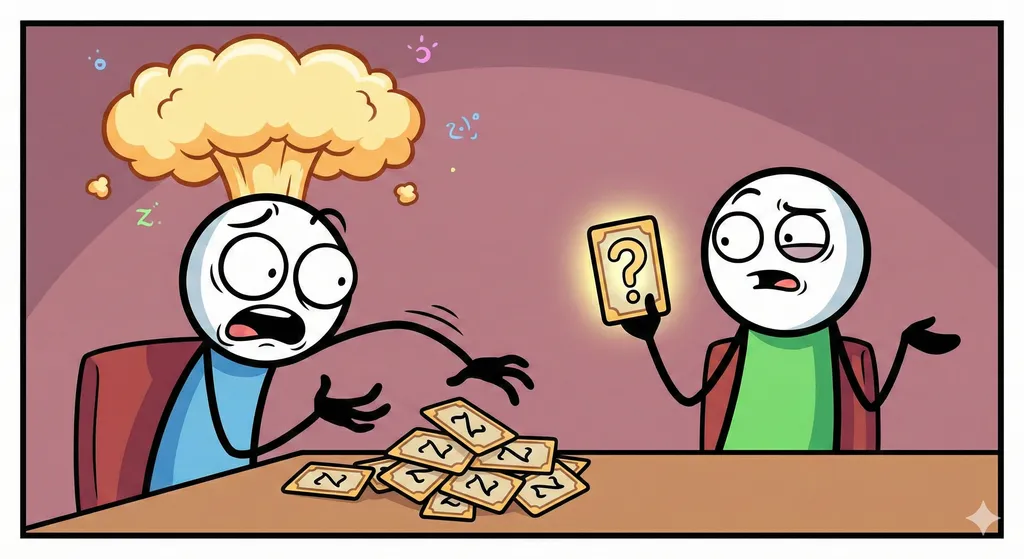
The hallowed halls of the command zone have seen countless strategies, but a recent MTGGoldfish Commander Clash episode, "Commander, but Everyone Gets All Versions of Their Legend," proposes a variant that shatters traditional notions of identity and power. This isn't just a casual house rule; it's a profound re-evaluation of how we interact with Magic: The Gathering's most iconic characters, turning a single legend into a veritable pantheon of power from the very start.
At its core, this variant is elegantly simple yet mechanically explosive: players select a specific legendary character—think Jace Beleren, Ajani Goldmane, or Liliana Vess—and every single printed legendary creature or planeswalker card featuring that character becomes part of their command zone. No longer confined to a single iteration, your chosen hero arrives with their entire printed history at their fingertips. This immediately raises a cascade of fascinating rules questions. Firstly, your commander count skyrockets. A Jace player, for instance, might start with eight or more distinct commanders, each representing a different facet of the character's journey.
The implications for color identity are equally profound. Your deck's color identity isn't just that of one card, but the union of all your chosen character's versions. For mono-colored legends like Jace, this is straightforward. But for characters like Ajani, whose cards span White, Green, and even Red, your deck's identity instantly becomes Selesnya or Naya, opening up a vast pool of possibilities. Commander damage, that often-overlooked win condition, takes on a terrifying new dimension. Each of your legendary cards is a commander, meaning each can deal lethal commander damage independently. Facing down a Jace player means tracking eight separate 21-point clocks, though the more practical concern is the sheer volume of card advantage and board control they can generate. Similarly, the commander tax applies to each card individually, but the ability to cycle through different versions from the command zone offers an unparalleled toolbox, allowing players to adapt to almost any board state. Need removal? Cast the Chandra that bolts. Need card draw? Cast the Jace that brains. The strategic depth is immense, but so is the complexity.
From a narrative perspective, this variant is a triumph. It allows players to fully embody the character arc of their chosen legend. Instead of picking a single snapshot, you're experiencing their entire saga. This isn't just Jace the Telepath; it's Jace the Mind Sculptor, Jace Cunning Castaway, and Jace, Unraveler of Secrets, all at once. It’s a meta-narrative made manifest on the tabletop, showcasing the evolution of a character through their various mechanical representations. It feels like unlocking the "true form" of a character, allowing them to bring their full repertoire of abilities to bear. For those who connect deeply with Magic's lore, this is a beautiful way to celebrate the iconic figures of the multiverse. It transforms the game into a personal narrative of heroism and power.
So, is this a good thing for the Commander format? Absolutely, but with caveats. This variant pushes Commander into an entirely new realm of high-powered, explosive play. Games will be faster, more decisive, and demand a keen understanding of your chosen character's entire toolkit. It's a fantastic option for groups looking for a chaotic, celebratory experience, especially those who struggle with "commander paralysis"—the agony of choosing just one version of their favorite legend. It fosters incredible creative deckbuilding around a character's entire history, encouraging players to find synergies across different iterations. It's a perfect fit for casual, "kitchen table" play or themed event nights where fun and spectacle trump strict competitive balance.
However, this power surge comes at a cost. The inherent balance of traditional Commander is shattered. Some characters, like Jace or Liliana, boast a vast array of powerful planeswalker and creature cards, while others, particularly older or less prominent legends, might only have one or two versions. This creates a significant power disparity that could lead to an uneven playing field. The increased complexity of tracking multiple commanders, their individual taxes, and separate commander damage totals might overwhelm newer players or those who prefer a more streamlined experience. While it's a brilliant community-driven experiment that leans into the "hero fantasy," it's certainly not a replacement for the nuanced strategy and varied power levels of traditional Commander. It's a fantastic way to rekindle excitement and explore new facets of your favorite legends, but best enjoyed with a clear understanding among your playgroup of the chaos that awaits. For those seeking to delve deeper into the lore and mechanics that define these legendary figures, exploring the full range of their cards is a rewarding journey. Magic: The Gathering offers many entry points into the format.
Top Pick: Commander Legends: Battle for Baldur's Gate
Excellent for character-focused legends and multi-commander synergies
Check Price on Amazon →Related Stories
Strixhaven's Final Scrolls: Unearthing Arcane Power
The final wave of Secrets of Strixhaven spoilers has dropped, revealing potent mythics and rares that promise to reshape spellcasting strategies across formats.
Strixhaven's 'Recall' Echo: Genius Design or Clever Distraction?
Wizards of the Coast's latest Secret Lair, Secrets of Strixhaven, introduces a new card drawing buzz, with 'Strixhaven Divination' sparking comparisons to a Pow
Strixhaven's Hidden Synergies: New Commander Decks Revealed
Wizards of the Coast has unveiled the 'Secrets of Strixhaven Commander Decklists,' promising fresh takes on the beloved magical academy. These new preconstructe