
Commander's True North: Beyond Casual Jams to Intentional Victory
A recent analysis of Commander strategy reveals that intentional deckbuilding, centered on a clear win condition, is paramount. We dissect why understanding your path to victory elevates the entire table experience.
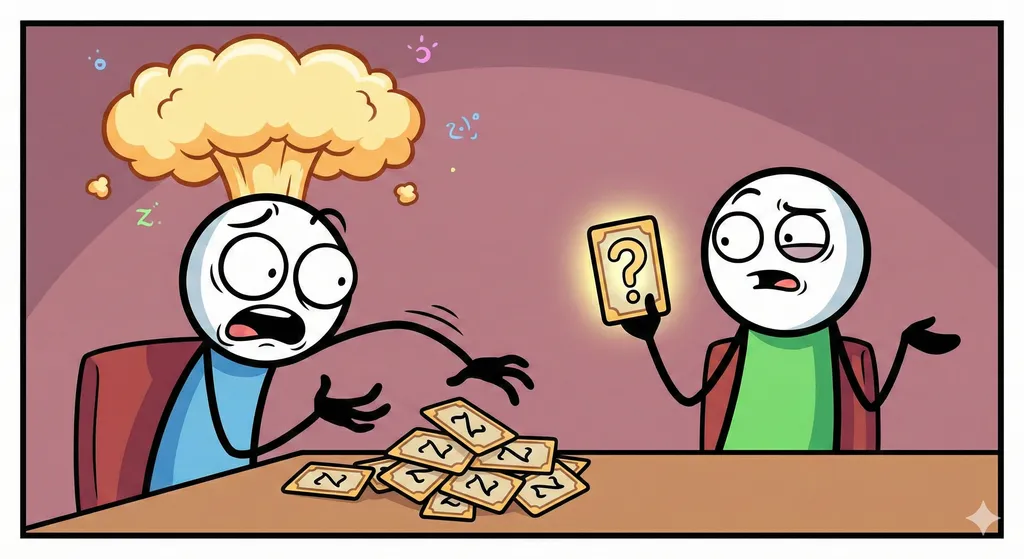
The Card Kingdom blog post, "How to Get Good at Commander," recently cut through the prevalent notion that Magic: The Gathering's most popular casual format is solely about "jamming cards you like." As veteran Game Masters, we've seen countless tables devolve into aimless attrition because players lacked a fundamental understanding of how their deck intended to *win*. This isn't about crushing your friends; it's about clarity of purpose, a guiding star that elevates every decision from deck construction to in-game play.
The core insight here is deceptively simple: identify your win condition. Too often, players focus on the *enablers* – ramp, card draw, removal – as if these are victories in themselves. They are not. They are the scaffolding for your actual strategy. A deck heavy on mana rocks and tutors without a definitive payload is a Ferrari without an engine.
The article wisely categorizes these strategies into meta-archetypes: Aggro, Midrange, and Control/Combo. An Aggro deck in Commander isn't just about turning creatures sideways; it's about consistent, overwhelming pressure, often leveraging combat tricks or evasive threats to eliminate opponents one by one before they can stabilize. Think Krenko, Mob Boss or Edgar Markov.
Midrange, on the other hand, aims for resilience and adaptability. It seeks to out-value opponents over several turns, building a robust board state that can pivot between offense and defense. These decks often excel at resource denial while incrementally advancing their own position, perhaps with a powerful commander like Najeela, the Blade-Blossom or Yarok, the Desecrated.
Finally, Control and Combo decks are the architects of the late game. Control seeks to deny opponents their primary avenues of victory until it can establish a lock or assemble a decisive combination. Combo, the ultimate expression of a singular win condition, pieces together specific cards to achieve an instant victory, often requiring precise tutoring and protection. Consider a Thassa's Oracle combo or a Kiki-Jiki, Mirror Breaker infinite loop.
Regardless of your chosen archetype, every single card inclusion, every land drop, every spell cast, must contribute to advancing your chosen path to victory. Is this land helping you cast your win condition earlier? Is this removal spell clearing a path or protecting your combo piece? This intentionality is the bedrock of strategic play in Commander.
While Commander doesn't have a single overarching narrative in the way an Adventure Path does, each game crafts its own unique story. The "lore" of Commander emerges from the interactions of legendary creatures, the epic spells, and the shifting allegiances at the table. When you build a deck with a clear win condition, you're not just assembling cardboard; you're casting your character in this emergent narrative. Are you the relentless warlord, the cunning sorcerer, or the patient schemer?
The original "Elder Dragon Highlander" format was steeped in the legendary creatures of Magic's early days, each a powerful entity with its own place in the Multiverse. Modern Commander retains this spirit, inviting players to embody these legends. Knowing *how* your legendary creature will lead you to victory provides context to every card choice. It transforms a collection of "good stuff" into a cohesive faction. This also ties into the social contract of Commander; a player with a clear plan, even a powerful one, often leads to more engaging play than someone just reacting to threats without their own agenda. It creates tension, forces decisions, and ultimately, a more memorable story. For those looking to start with a solid foundation, Commander preconstructed decks offer excellent starting points that embody specific strategies.
So, is "getting good" at Commander antithetical to its casual roots? Absolutely not. In fact, it's quite the opposite. A table where players understand their own win conditions, and crucially, are aware of their opponents' potential paths to victory, leads to far more dynamic and satisfying games. No one wants to sit through a game where victory feels arbitrary or accidental.
When every player has a clear objective, the game becomes a strategic dance. You're not just playing cards; you're executing a plan, interacting with other plans, and making meaningful decisions. This intentionality reduces frustration, creates more memorable moments, and ultimately fosters a healthier competitive-casual balance. It transforms "just playing Magic" into a truly engaging multiplayer experience, where every turn feels impactful. Understanding your deck's "true north" doesn't diminish the fun; it amplifies it, providing a framework for epic, unpredictable clashes of strategy and skill. This isn't about power-level escalation for its own sake, but about the profound satisfaction of thoughtful, deliberate play.
Top Pick: Commander Legends: Battle for Baldur's Gate Draft Booster Box
Excellent source of Commander staples and legendary creatures for expanding your options.
Check Price on Amazon →Related Stories
The Tapped Land Dilemma: Commander's Shifting Mana Philosophy
The once-ubiquitous enters-tapped lands in Magic: The Gathering's Commander format now face scrutiny. We dissect how the game's accelerating pace has redefined
Maralen, Fae Ascendant: A Masterclass in Commander Manipulation
Maralen, Fae Ascendant, from Magic: The Gathering's Lorwyn block, offers a unique twist on drawing cards, turning every draw into a targeted tutor. This deep di
Radha, Heir to Keld: The Unsung Gruul General from Planar Chaos
Magic: The Gathering's Planar Chaos set, a temporal anomaly from 2007, delivered more than just iconic staples. It also gifted Commander players an often-overlo