
Crafting the Narrative: Mastering Published Adventures
Gnome Stew's Gnomecast 231 unpacks the art of running pre-written campaigns. We dissect the nuances of adapting modules for your table, balancing designer intent with player agency.
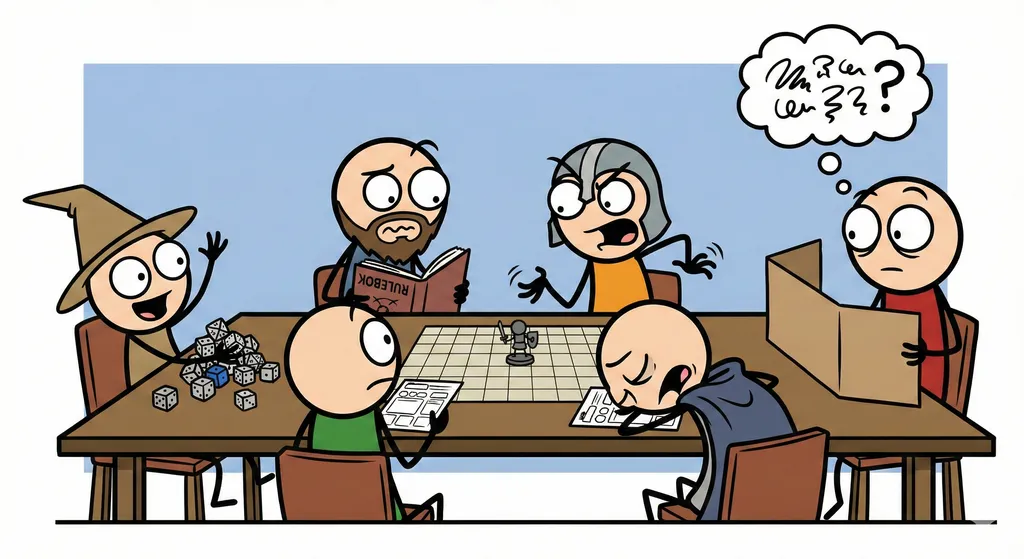
The latest deep dive from Gnome Stew’s Gnomecast 231, "Running Published Adventures," tackles a foundational yet often debated aspect of our hobby: the pre-written module. For decades, Game Masters have navigated the delicate balance between a designer’s vision and the organic chaos of a live table. This episode, featuring Ang, Josh, and JT, cuts through the noise, offering a candid exploration of whether published adventures simplify or complicate a GM’s life, and crucially, how to make them truly sing. As veterans of countless campaigns, we know the allure of a meticulously crafted world and the terror of a party veering wildly off the rails. The question isn't *if* you use published material, but *how* you wield it.
The core mechanical challenge of a published adventure isn't in understanding the rules, but in adjudicating the interaction between fixed narrative elements and player freedom. The Gnomecast discussion rightly points out that a module isn't a script; it's a blueprint. Successful implementation, then, becomes a masterclass in preparation and improvisation. Before the dice even hit the table, a GM must perform a "pre-flight check": read the adventure thoroughly, not just for plot, but for its *structure*. Identify the critical path, yes, but also the branches, the dead ends, and the crucial NPCs. What are the module's fail states? Its victory conditions? Where are the narrative pressure points where player choice genuinely matters?
Consider the practicalities: how do you integrate player backstories into a predefined setting without derailing the main plot? This often involves minor surgical alterations to NPC motivations, location details, or even the nature of the antagonist. JT’s D&D Tools, explicitly mentioned in the podcast, exemplify the utility of external resources for GMs looking to streamline monster stats, encounter balance, or even random table generation—all vital when you’re adapting on the fly. When the party inevitably decides to investigate the seemingly innocuous baker instead of the looming dark tower, your "crunch" isn't about the stat block of the baker, but about how you *mechanically* pivot the adventure's hooks to emerge from that unexpected interaction. Are there hidden cultists in the bakery? Does the baker know a secret related to the dark tower’s macguffin? This is where the GM's skill truly shines, transforming a rigid structure into a dynamic experience. JT's D&D Tools provides excellent resources for this kind of on-the-fly adjustment.
Beyond the mechanics, the discussion around published adventures delves into the very philosophy of TTRPG design and play. What is the "lore" of a published adventure beyond its specific setting? It's the inherent narrative contract between the designer, the GM, and the players. Early modules for games like the original D&D were often sparsely detailed dungeons, relying heavily on the GM to flesh out the world and its inhabitants. Modern adventure paths, particularly those for D&D 5th Edition or Pathfinder, offer rich, sprawling narratives and detailed worlds. The "fluff" here is about respecting the *spirit* of the adventure. Does the module aim for high fantasy, gritty realism, cosmic horror, or a swashbuckling romp? Understanding this tone allows the GM to imbue their delivery and adaptations with the correct thematic resonance.
The podcast touches on the concept of "easier or harder." For many, a published adventure offers an accessible entry point into worldbuilding without the daunting task of creating everything from scratch. It provides a shared mythology, a common ground for the table to explore. The lore, in this context, becomes a collaborative canvas. The published text provides the initial brushstrokes, but the players' actions and the GM's interpretations add vibrant new layers, creating a unique history for *that* specific table. It's the difference between reading a novel and collectively writing one with a strong outline.
So, is running a published adventure "easier or harder"? The Gnomecast crew, wisely, concludes it's a nuanced answer. It removes the burden of initial world creation and major plot development, which is undeniably "easier" for a time-strapped GM. However, it introduces a different kind of challenge: the art of adaptation, of making a generic story feel personal and reactive. This is where the "harder" part comes in—the mental gymnastics required to integrate player choices without breaking the adventure's core premise.
Ultimately, a well-run published adventure can be an incredibly rewarding experience. It fosters a shared journey, allowing players to engage with professionally crafted narratives and settings. For new GMs, it’s an invaluable training ground, a chance to learn pacing, encounter design, and narrative flow from experienced designers. For veterans, it’s an opportunity to focus on the performance and improvisational aspects of GMing, rather than the foundational design. The "table feel" of a published adventure, when handled adeptly, is one of cohesion and shared discovery, a robust framework upon which unforgettable stories are built. It empowers GMs to deliver compelling campaigns with confidence, knowing they have a solid foundation to build upon.
Top Pick: The Alexandrian Remixing Adventures
For transforming published adventures into dynamic, player-driven experiences
Check Price on Amazon →Related Stories
Goblin Bathwater: A Level 1 Dive into D&D's Darker Depths
Marius Brunner's 'The Goblin Bathwater Incident' on DMs Guild offers a compelling low-level adventure. It transforms a tavern brawl into a dire magical threat,
Neon Odyssey: Can Legends of Avantris Launch 5E to the Stars?
Legends of Avantris unveils 'Neon Odyssey,' a bold 5E space opera project. This editorial dives deep into how 5th Edition's mechanics and lore could adapt to th
Sly Flourish's Core Drives: Fueling TTRPG Quests
Sly Flourish's 'Greed, Heroism, Wonder' framework offers Game Masters a robust toolkit for crafting compelling character motivations. Discover how these core dr