
Crafting the Welcome Mat: Beginner Commander Design
Card Kingdom's advice on beginner Magic: The Gathering Commander choices highlights crucial design principles for player onboarding. We dissect why these mechanical and social considerations are vital for a thriving tabletop experience.
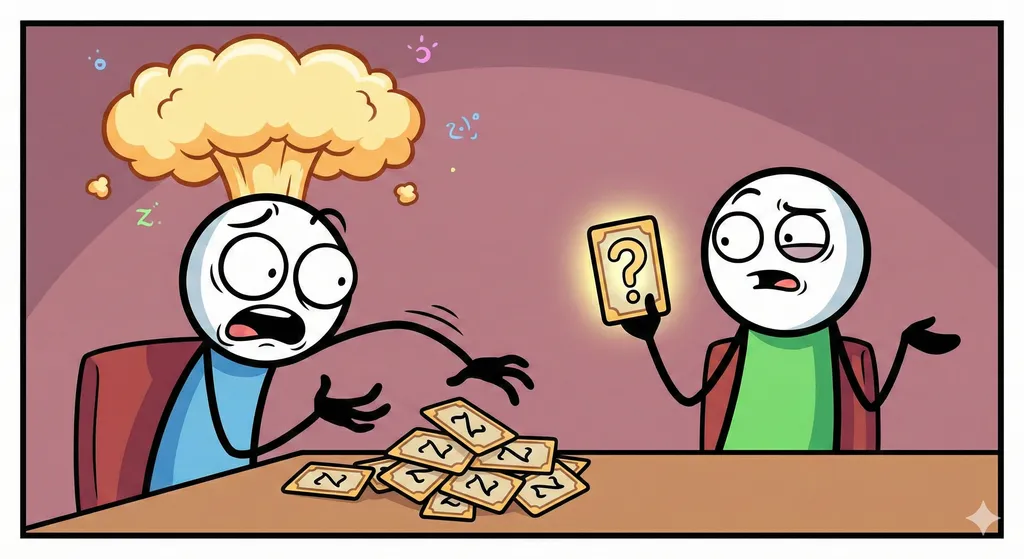
The ever-shifting landscape of Magic: The Gathering's Commander format is a vibrant ecosystem, constantly evolving with new sets and player innovation. Card Kingdom's recent blog post, "5 Great Commanders for Beginners," isn't just a list; it’s an insightful, if perhaps understated, primer on fundamental game design principles for onboarding new players. As veteran GMs, we understand that a player's first experience can make or break their engagement with a system, and Commander, with its rich complexity and social contract, is no exception. This isn't about power rankings; it's about crafting an inviting gateway.
The article outlines five key mechanical tenets for a beginner-friendly commander, and each resonates deeply with the core philosophy of good tabletop game design. First, "cheap to cast and easy to cast with a budget manabase." This isn't merely about financial accessibility, though that's crucial. Mechanically, a low casting cost ensures the player can actually *play their commander* multiple times throughout the game. There’s nothing more frustrating for a new player than having their centerpiece locked in the command zone, out of reach. It's akin to a first-time TTRPG player having their character's signature ability gated behind an obscure, late-game questline. Accessibility in cost translates directly to agency in play.
Next, "a fun effect to build around" that "doesn’t require focused linear deckbuilding to the point the deck 'solves itself'." This is where player creativity truly blossoms. A commander with a clear, synergistic ability provides a compass for deck construction without dictating every card choice. It encourages exploration and experimentation, allowing a nascent player to discover their own unique strategies. Contrast this with commanders that demand a specific 10-card combo to function or offer such an open-ended ability that a new player feels lost in the vastness of the card pool. The design here is about guided discovery, not rote instruction.
The third and fourth points, "don’t require too much management of tokens and outside of the game effects" and "above all, they are not kill-on-sight," speak volumes about managing cognitive load and fostering positive social dynamics. Commander, at its heart, is a social format. A new player grappling with a complex board state, tracking dozens of tokens, or navigating intricate trigger stacks is likely to become overwhelmed. Good game design for beginners minimizes such friction. Furthermore, a commander that draws immediate, overwhelming aggro from the table effectively removes a new player from the game. It’s a harsh lesson in threat assessment that can sour the entire experience. A beginner needs to feel like their chosen "avatar" gets to exist and contribute, not just be a lightning rod for removal. This is the equivalent of a GM designing an encounter where a new player’s character is singled out and incapacitated on turn one, without any chance to engage. It breaks the implicit social contract of shared enjoyment.
From a lore perspective, a good beginner commander often has a straightforward, resonant identity. Think of a simple, powerful spellcaster or a stoic warrior. Their abilities usually align directly with their flavor, making them intuitive to understand and embody. The narrative of "a creature that grows stronger by attacking" is much easier to grasp than "a legendary artifact that cares about the number of artifacts in graveyards and has a triggered ability when an opponent casts their second spell each turn." Simple, evocative lore paired with mechanics creates a cohesive experience, helping a player connect with their chosen champion. While Magic's lore can be incredibly deep, the entry point should be clear and digestible.
The verdict for the table feel is unequivocally positive. These criteria aren’t just suggestions; they are foundational principles for cultivating a healthy, welcoming Commander community. By guiding new players towards commanders that allow them to participate meaningfully, learn the rhythm of the game, and experiment without being immediately shut down or overwhelmed, we ensure they have a *good time*. A positive first impression is paramount. It reduces the barrier to entry, fosters confidence, and encourages continued engagement. This isn't about dumbing down the game; it's about intelligent scaffolding, allowing players to build their skills and understanding organically. As GMs, we know the power of a well-crafted introductory adventure; these commander picks serve a similar purpose, setting the stage for countless future games.
Top Pick: Commander Legends: Battle for Baldur's Gate
Excellent set for new Commander players seeking classic fantasy flavor and accessible commanders.
Check Price on Amazon →Related Stories
Erode: Commander's Calculated Gift and Political Power Play
Erode from Secrets of Strixhaven redefines one-mana white removal in Commander. This instant offers not just creature exile but a unique opportunity for strateg
Hexhaven's Shadow: Reality Fracture Warps MTG's Core Identity
Magic: The Gathering's upcoming set, Reality Fracture, plunges players into Hexhaven, a dark mirror of Strixhaven. This set promises good and evil variants of b
The Hobbit Trolls: Universes Beyond's Busted New Commander?
The new Magic: The Gathering card, Tom, Bert, and William, from Universes Beyond: The Lord of the Rings, presents a formidable threat. Its unique mechanics hint