
Crafting Worlds: The Art of Complex Newness in TTRPGs
Campaign Mastery's 'The Making Of Complex Newness' offers a robust framework for GMs to design intricate game elements. This deep dive explores how this methodology leverages existing RPG mechanics to build compelling lore and enhance table feel.
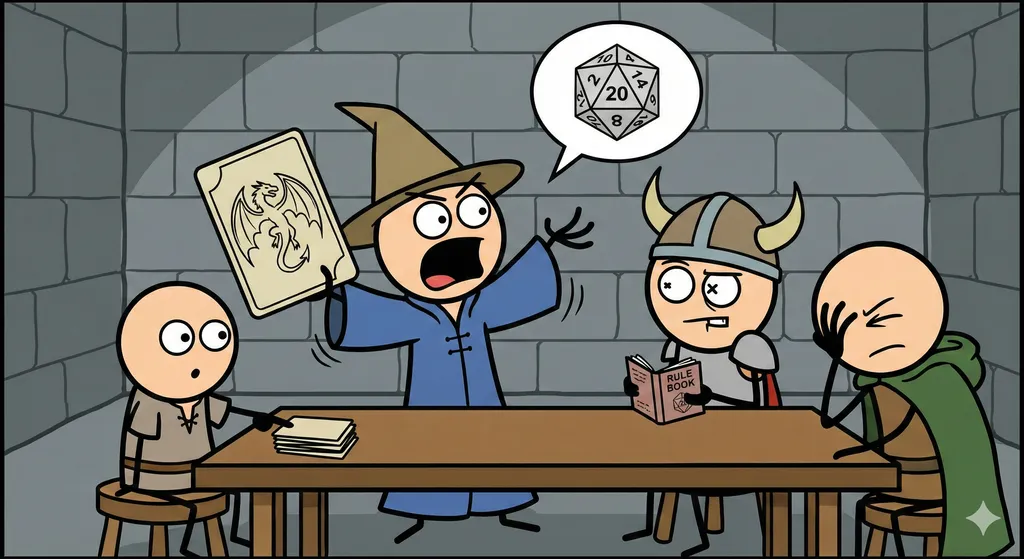
Campaign Mastery’s groundbreaking design methodology, 'The Making Of Complex Newness,' isn't just another article; it's a manifesto for the discerning Game Master. It posits a systematic approach to constructing the truly intricate — from the arcane power of a bespoke spell to the sprawling grandeur of a newly discovered space station — by leveraging the very bedrock of what every TTRPG already possesses.
At its core, the 'Complex Newness' methodology is a masterclass in analytical deconstruction and synthetic reconstruction. The 'crunch' of it demands GMs stop seeing new creations as monolithic blocks of unique stats and instead view them as intricate mosaics built from existing, familiar components. Imagine designing a sentient, eldritch artifact. Instead of simply assigning it a random power level, this process encourages breaking it down: What are its base materials (existing rules for metals, gems, or otherworldly substances)? What 'spells' or 'abilities' (drawn from established spell lists or monster powers) are imbued within it, perhaps with modified ranges or costs? Does it have 'resistances' or 'vulnerabilities' mirroring those of existing creatures or environmental effects? A new castle isn’t just an AC and HP; it’s a collection of rooms, each with its own terrain features, potential traps (derived from existing trap mechanics), and inhabitant stat blocks. This isn't about re-skinning; it’s about modular design, ensuring that every 'new' element is inherently balanced and understandable because its constituent parts are already accounted for within the game's established ruleset. It’s a paradigm shift from ad-hoc creation to structured, logical engineering, giving GMs the tools to create truly unique encounters without breaking the game's internal consistency or forcing endless rules adjudication.
From a 'fluff' perspective, this methodology is nothing short of world-building gold. By constructing complex elements from the fundamental narrative and mechanical atoms of your setting, you inherently weave them into the existing lore. A newly designed political faction isn't just a generic antagonist; its power structures can be explicitly tied to existing noble houses, guild charters, or even forgotten prophecies. Its resources might be drawn from specific regions, its influence exerted through documented trade routes or magical ley lines. This grounding in established lore creates an unparalleled sense of verisimilitude. Players don't just encounter a new threat; they recognize the threads that bind it to the world they already know, deepening their immersion and investment. Think of a newly discovered disease: rather than an arbitrary effect, its symptoms and progression could be linked to existing alchemical principles, environmental hazards, or even the magical emanations of a specific deity. This level of detail transforms a simple encounter into a rich narrative opportunity, where every component resonates with the established history and future of the campaign.
The verdict at the table is overwhelmingly positive. For the Game Master, 'Complex Newness' dramatically reduces the cognitive load of preparing truly original content. Instead of inventing from whole cloth, you're assembling with a robust toolkit, ensuring balance and internal logic from the outset. This frees up precious prep time for narrative refinement and character development. For players, the experience is one of profound immersion. When a GM introduces a novel challenge – a unique monster, a custom magic item, or a never-before-seen faction – and it feels organically part of the world, consistent with its rules and lore, the sense of discovery and agency skyrockets. The game world feels more alive, more reactive, and more genuinely complex, rather than a series of disconnected set pieces. It’s a method that elevates game design from improvisation to craft, benefiting everyone at the table. The Monster Manual
Top Pick: The Dungeon Master's Guide
For its invaluable insights into worldbuilding and item creation frameworks.
Check Price on Amazon →Related Stories
Chronos Weavers: Time's Edge on Your Tabletop
Aetherforge Games' Chronos Weavers introduces a TTRPG where players manipulate time, risking paradoxes via a "Causality Track." This deep dive explores its inno
Through the Hedgerow: A Deep Dive into Rustic Fantasy Legacies
Hedge-Lore Publishing's Through the Hedgerow RPG offers a unique journey through history, focusing on a singular location shaped by magic and time. We analyze i
GAMA Expo 2026: Industry Shifts and Tabletop's Future
The Tabletop Bellhop's GAMA Expo 2026 recap reveals crucial industry shifts impacting game design and player experience. We dissect the evolving mechanics and l