
D&D Megopalooza: Unpacking the New Dynamic Encounter Flow
The recent D&D Megopalooza livestream from EN World unveiled a significant shift in encounter design for Dungeons & Dragons. We dissect the proposed 'Narrative Momentum System' and its implications for both players and Game Masters at the table.
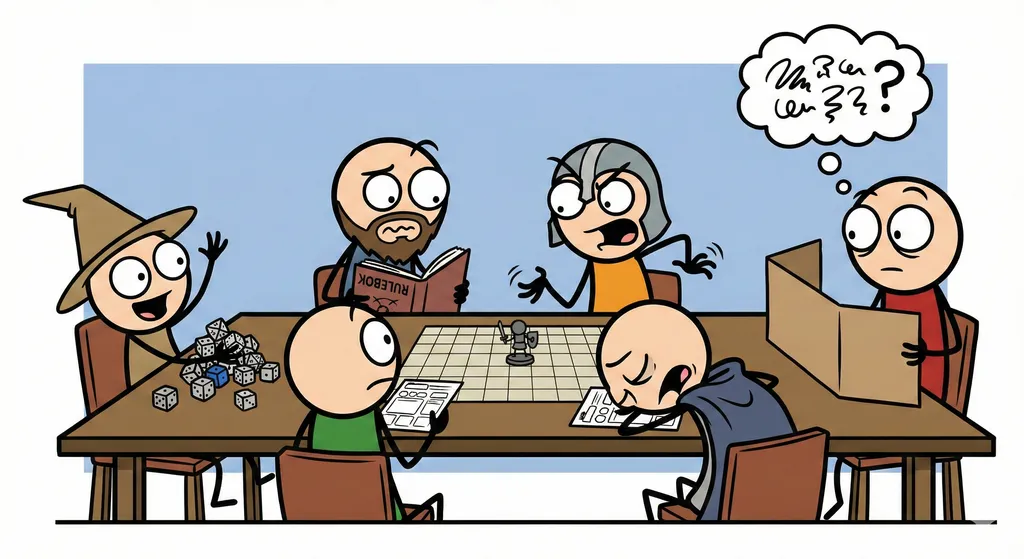
The air at The Crit Sheet offices crackled last week, not with static from a dice tower, but with the buzzing anticipation following EN World's 'D&D Megopalooza!' livestream. Wizards of the Coast, through their various channels, has once again set the TTRPG community abuzz, hinting at a foundational shift in how Dungeons & Dragons encounters will unfold. This isn't just another splatbook or adventure module; what was discussed points to a substantial evolution in the core interaction loop of 5th Edition play, particularly concerning the flow and narrative weight of combat and skill challenges. We're talking about a potential overhaul that promises to inject more dynamism and player agency into every dice roll, moving beyond the predictable turn-based grind many veteran GMs have come to anticipate.
At the heart of this 'Megopalooza' discussion was what we're tentatively calling the 'Narrative Momentum System.' Forget rigid initiative counts and static action economies for a moment. This proposed framework introduces a communal 'Momentum Pool' that both players and the Game Master contribute to and draw from. Certain actions – a critical hit, a particularly clever roleplaying gambit, successfully exploiting an environmental hazard, or even failing spectacularly in an interesting way – generate Momentum. This pool can then be spent to activate special abilities, grant bonus actions, influence dice rolls (think a more structured inspiration system), or even trigger environmental shifts. For instance, a player spending 3 Momentum could activate a 'Heroic Surge' for an extra attack or movement, while a GM might spend 5 Momentum to summon reinforcements or cause a cave-in. The key is its fluidity; Momentum isn't tied to a specific character but rather the collective narrative energy of the encounter. It's a resource that encourages proactive, dramatic play rather than just optimal stat-checking. It also allows for more nuanced pacing, letting GMs throttle the intensity by controlling Momentum generation and expenditure, rather than simply adding more monsters.
From a lore perspective, the Narrative Momentum System isn't just a meta-game mechanic; it's being framed as an intrinsic manifestation of the world's inherent magic and the ley lines of fate. Imagine the very fabric of reality bending to the will of heroic deeds and dramatic turns. This isn't just about 'luck' but about the weave itself responding to audacious actions. The collective will of adventurers, their conviction, and even their despair, literally reshape the immediate battlefield. A cleric invoking their deity with fervent prayer doesn't just cast a spell; their faith generates a tangible ripple in the world, bolstering allies through Momentum. A rogue's perfectly executed maneuver isn't merely skill; it's a brief, potent disruption of the mundane order, creating an opening for the entire party. This system posits that the world of Dungeons & Dragons is alive, responsive, and deeply intertwined with the actions and will of its protagonists, making every encounter feel less like a discrete event and more like a living, breathing narrative unfolding.
So, what does this mean for the table? The potential is immense. For Game Masters, it offers a dynamic toolkit to sculpt encounters in real-time. No longer are you beholden to pre-scripted events; the Momentum Pool becomes a shared dial for tension and opportunity. It rewards creative problem-solving and roleplaying, pushing players beyond simply rolling dice for damage. Players, in turn, gain a more tangible sense of agency, directly influencing the ebb and flow of combat and challenges through their actions, not just their character sheet. The downside? There's an undeniable learning curve. Introducing a new resource management layer to the already robust 5th Edition ruleset could initially slow down play as groups internalize the new mechanics. GMs will need to be adept at both generating and spending Momentum fairly and dramatically, avoiding situations where it feels arbitrary or exploitable. However, if implemented with clarity and supported by strong examples, this system could be a revelation, transforming rote encounters into cinematic sagas. It fundamentally shifts the game from a series of discrete turns to a more fluid, reactive narrative. For GMs looking to inject more spontaneity and consequence into their games, this is precisely the kind of innovation that keeps the game fresh and engaging. The Monster Manual
This 'Narrative Momentum System,' if it sees full release, represents a bold step for Dungeons & Dragons. It's an acknowledgement that the spirit of adventure thrives not just in the numbers, but in the unfolding story at the table. It promises to elevate the player experience, empowering them to truly feel like heroes influencing the very fabric of their world, and gives GMs powerful new tools to weave truly unforgettable sagas.
Top Pick: Xanathar's Guide to Everything
Offers excellent tools for GMs to build encounters and understand player options, which will be vital for integrating a dynamic system like Narrative Momentum.
Check Price on Amazon →Related Stories
Ravenloft: The Horrors Within – A Deep Dive into Dread's Future
The announcement of Ravenloft: The Horrors Within for June 2026 promises a significant expansion to 5th Edition's gothic horror. We analyze what this means for
ShortQuests: D&D's Answer to the Tyranny of the Epic Arc
The emergence of 'ShortQuests' for Dungeons & Dragons 5th Edition signals a crucial shift towards more manageable, impactful play sessions. This digest-sized ad
D&D 2024 Officially 5.5e: The Edition That Wasn't (Quite)
Wizards of the Coast has finally clarified the nature of the D&D 2024 update, confirming it as '5.5e'. This official designation signals a significant revision