
D&D's Dark Turn: Villain Subclasses for the Ambitious Player
The latest Dungeons & Dragons Unearthed Arcana introduces a suite of villainous subclasses, allowing players to embrace darker archetypes. This deep dive examines their mechanical implications and the narrative opportunities they unlock for tables ready for a morally complex campaign.
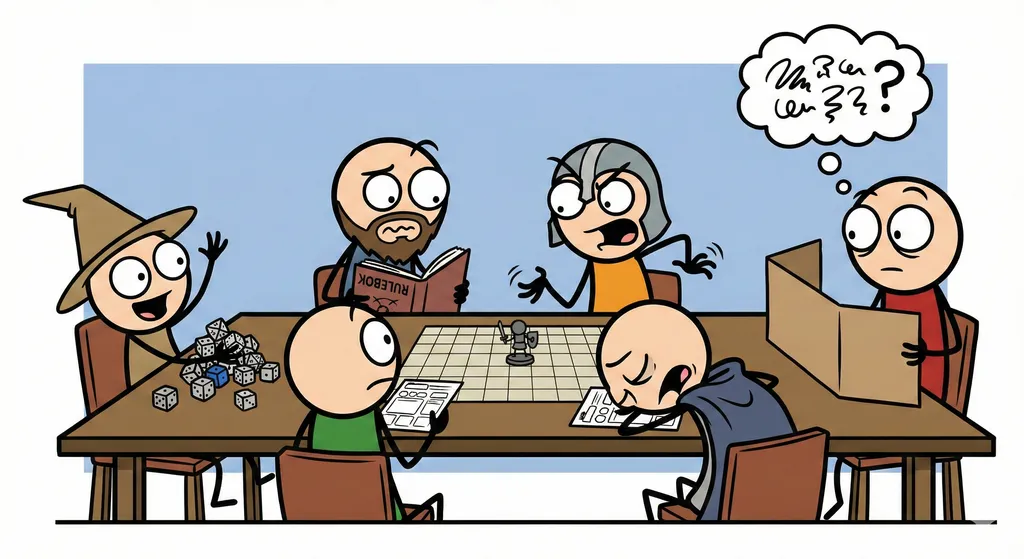
The latest Unearthed Arcana for Dungeons & Dragons 5th Edition, courtesy of Wizards of the Coast, has dropped a bombshell squarely on the good-aligned adventurers of the multiverse: a suite of villainous subclasses. From the plague-ridden priest to the demon-blooded spellcaster, these options aren't just cosmetic; they represent a significant mechanical and narrative shift, challenging the very notion of what a player character can be in a traditional D&D campaign.
Let’s cut straight to the crunch. While specifics are always subject to change in Unearthed Arcana, the archetypes presented are clear. The Cleric subclass, likely a "Plague Domain" or "Pestilence Domain," appears to pivot the class's healing and protective capabilities into avenues of decay and debuff. Imagine a Channel Divinity that spreads a debilitating sickness rather than restoring hit points, or domain spells that focus on necrotic damage, exhaustion, and hindering enemy actions. This isn't just a reskin of the Death Domain; it feels more active, more insidious, perhaps even drawing power from the suffering it inflicts. Such a Cleric might gain abilities to make diseases harder to cure, or to gain temporary hit points from the demise of infected foes. It's a fundamental inversion, turning the divine conduit into a vector of destruction.
Similarly, the Sorcerer subclass, hinted at as "Demonic" or "Abyssal," likely delves into the raw, chaotic power of the lower planes. Unlike the structured pacts of a Warlock, this Sorcerer's power would be inherent, perhaps a tainted bloodline or a demonic infusion. Mechanically, this could manifest as wild magic surges with a fiendish bent, the ability to manifest minor demonic features (claws, horns, shadow-stuff) for combat advantages, or even temporary summoning of lesser demons as a powerful, but risky, ability. The spell list would undoubtedly lean into fire, fear, and psychic damage, with metamagic options that might corrupt spells, making them more potent but with a chance of collateral damage, or even a cost to the caster's own well-being. These aren't just edgy; they're designed to feel dangerous, both to enemies and potentially to the party.
Now, for the fluff. These subclasses aren't just for players looking to be "evil for evil's sake." They offer rich narrative veins. A Plague Cleric could be a desperate individual attempting to weaponize a cure, only to fall to the disease's influence, or a zealot believing pestilence is divine judgment. A Demonic Sorcerer might be a tragic figure battling an inherited curse, or a power-hungry individual who has fully embraced their infernal lineage. These aren't just stat blocks; they are story hooks. They challenge the traditional D&D cosmology, forcing players and GMs to consider the nuances of morality, redemption, and the slippery slope of power. Imagine the roleplaying opportunities within a party: how does a Paladin of Devotion reconcile with a Cleric whose god demands sacrifice, or a Sorcerer whose power whispers from the Abyss? This is where the real magic happens, pushing beyond simple alignment charts into complex character dynamics.
So, is this good for the game? Absolutely. For GMs, these subclasses are a goldmine. They provide ready-made concepts for compelling antagonists, nuanced cult leaders, or even rival adventuring parties. Imagine a campaign where the primary villain isn't a shadowy overlord but a charismatic Plague Cleric promising an end to suffering through a final, cleansing blight. For players, it's an invitation to explore character archetypes beyond the heroic mold, to delve into anti-heroes, or even to run a truly villainous campaign. It demands more from the table – more mature conversations, more creative problem-solving for party cohesion, and a deeper engagement with the consequences of one's actions. This isn't for every table, but for those ready to explore the darker corners of the multiverse, it offers unparalleled depth.
These options also serve as fantastic inspiration for homebrew content, demonstrating how far established class identities can be stretched without breaking the core D&D 5th Edition rules. If you're looking to integrate these deeper, more morally grey elements into your campaign, consider leveraging the robust advice found in Xanathar's Guide to Everything for crafting unique character backstories and motivations.
Top Pick: Dungeon Master's Guide
For crafting compelling antagonists and challenging player ethics
Check Price on Amazon →Related Stories
D&D Random Tables: Essential Tools for Every Veteran DM
A massive bundle of Dungeons & Dragons random tables promises to streamline DM prep and spark on-the-fly creativity. We deep-dive into how these resources eleva
D&D 5e's K-Pop Idol Sourcebook: A Crit Sheet Deep Dive
Starlight Tome Studios introduces 'Harmonic Crescendo,' a D&D 5e sourcebook turning adventurers into K-Pop idols. We break down the mechanics, lore, and table p
Echoes of the Void: Aetherforge Unleashes Cosmic Risk & Reward
Aetherforge Games' 'Echoes of the Void' brings a thrilling psionic class and risky Resonance mechanics to 5th Edition. This deep dive explores how cosmic power