
D&D's Villainous Options Playtest: Elevating Antagonists
Wizards of the Coast's latest D&D playtest offers DMs robust tools for crafting truly memorable antagonists. We dissect how these Villainous Options enhance narrative and challenge at the table.
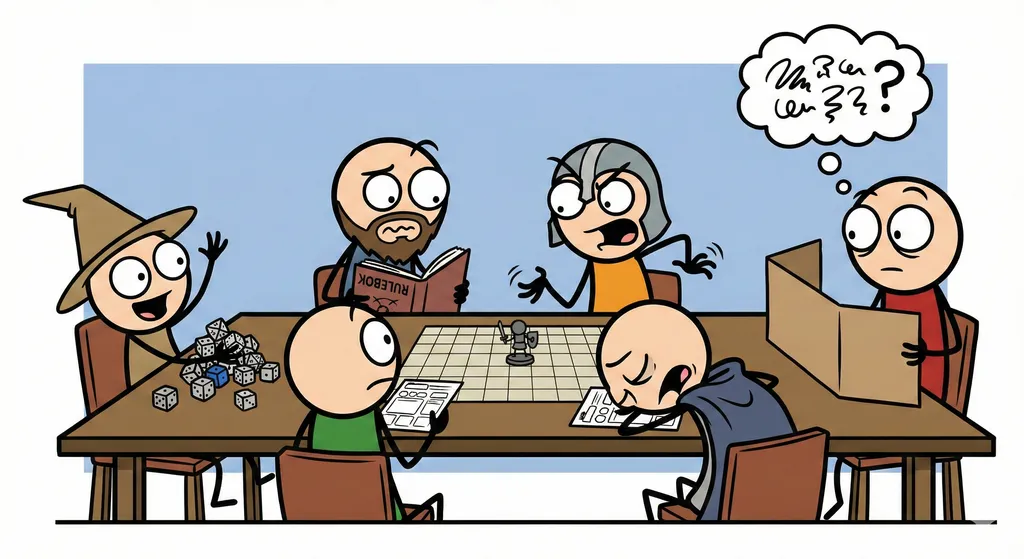
Wizards of the Coast has just dropped a tantalizing new playtest document for Dungeons & Dragons, titled 'Villainous Options', and it's precisely the kind of systemic expansion that DMs have been clamoring for to elevate their antagonists beyond mere stat blocks. As veteran Dungeon Masters, we understand that a truly compelling villain is the bedrock of a memorable campaign, and this document appears to provide the granular tools to build them.
At its core, 'Villainous Options' seems designed to address the perennial challenge of making high-level antagonists feel distinct and mechanically engaging. The crunch here is less about raw numbers and more about modularity and narrative triggers. Imagine a system that allows a DM to select from a menu of 'Villainous Traits' or 'Legendary Reactions' that aren't tied to a specific creature type, but rather to an archetype of villainy. Perhaps a 'Master Manipulator' gains abilities to turn player characters against one another through charm or illusion, while a 'Relentless Pursuer' might possess a suite of movement and tracking abilities that make escape a desperate gamble.
Critically, the playtest introduces concepts that appear to deepen the combat encounter without simply adding hit points or increasing damage. We're looking at potential mechanics like 'Escalation Phases' – where a villain gains new abilities or changes tactics as they take damage or achieve specific narrative goals. This moves beyond the standard Legendary Actions and Resistances of 5th Edition, allowing for multi-stage boss fights that feel dynamic and narratively driven, rather than a slugfest against a bag of hit points. Consider a necromancer who, at 50% health, unleashes a wave of corrupting energy, altering the battlefield itself, or a tyrannical warlord who, upon losing their elite guard, gains a desperate, berserker-like rage. This kind of nuanced mechanical design offers DMs an unprecedented level of control over the ebb and flow of a climactic battle, providing a framework that complements the guidance found in the Dungeon Master's Guide for custom monster creation.
From a lore perspective, these 'Villainous Options' are a godsend. By providing a framework for unique abilities, DMs can more easily imbue their antagonists with a distinct personality and a tangible connection to the world. A villain’s unique 'Corrupting Aura' isn't just a debuff; it’s a manifestation of their dark influence on the surrounding land, a story element made mechanical. A 'Prophetic Vision' trait for a cult leader isn't just flavor text; it could grant them precognitive reactions or allow them to foresee player actions, making them feel genuinely otherworldly and powerful. This level of mechanical-narrative synergy allows the Dungeon Master to craft villains whose abilities are intrinsically linked to their motivations, their history, and their place within the campaign's overarching narrative. It’s about making the antagonist feel like a living, breathing entity with agency, rather than a collection of statistics waiting to be defeated.
So, is this good for the game? Unequivocally, yes. This playtest, if implemented thoughtfully, promises to be a significant upgrade for 5th Edition D&D. It empowers Dungeon Masters to create antagonists that are not only challenging but also deeply memorable, fostering more dynamic and engaging campaigns. It shifts the focus from purely numerical challenges to strategic and narrative ones, forcing players to think beyond simple damage output. For DMs, it offers a modular toolkit that should reduce prep time for creating unique boss encounters while simultaneously raising the bar for antagonist design. The 'Villainous Options' have the potential to make every major antagonist feel like a bespoke threat, elevating the entire D&D experience. This isn't just more content; it's a philosophical refinement of how D&D approaches its central conflicts.
Top Pick: Monster Manual
For expanding your base villain roster and integrating these new options.
Check Price on Amazon →Related Stories
Ravenloft's Shadow Deepens, Paizo Unleashes New Terrors
The latest EN World podcast reveals significant updates to D&D 5th Edition's Ravenloft, alongside Paizo's venture into a dedicated horror RPG. We dissect what t
Ravenloft's Grimoire of Dread: Unpacking The Horrors Within
Wizards of the Coast's latest Ravenloft entry promises deeper dread. We dissect its new mechanics and lore, evaluating its impact on your 5th Edition horror cam
UA Villainy Unleashed: Dark Paths for D&D's Anti-Heroes
Wizards of the Coast has dropped another Unearthed Arcana, 'Villainous Options 2,' expanding morally complex player choices for Dungeons & Dragons 5th Edition.