
Defining the Wargame: Clarity or Conflation at the Table?
A recent discussion at The Players' Aid ignited a vital conversation about the true definition of a 'wargame.' We dissect what this means for game design, player expectations, and the evolving landscape of our hobby.
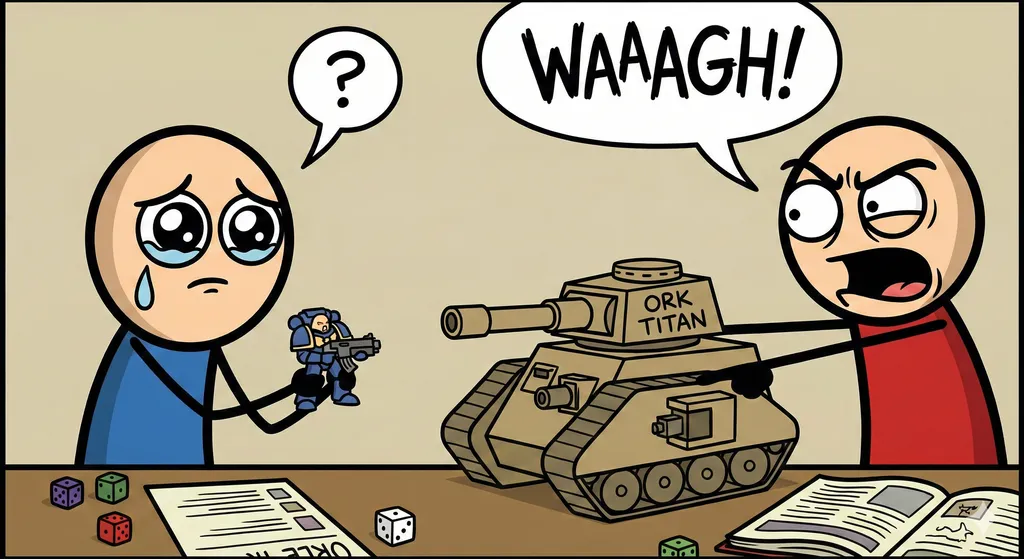
The digital halls of 'The Players' Aid' recently buzzed with a profound discussion, aptly titled 'The All Too Common Misunderstanding or Misinterpretation of the Word Wargame.' This isn't just semantic navel-gazing; it's a critical discourse that cuts to the core of how we categorize, design, and ultimately enjoy the vast spectrum of tabletop experiences. As veteran GMs and players, we understand that labels, while imperfect, shape expectations. When a term like 'wargame' becomes elastic to the point of breaking, it warrants a deep dive.
At its heart, the 'mechanics' of defining a wargame, as illuminated by this discussion, often revolve around three pillars: simulation, conflict resolution, and scale. Is it a wargame if it doesn't simulate historical or plausible military conflict? Many traditionalists would argue for hex-and-counter systems, detailed orders of battle, and logistics as non-negotiable. Here, 'crunch' isn't just dice rolls; it's the meticulous detail in unit stats, terrain effects, and command structures that aim for a degree of verisimilitude. Compare the granular detail of a historical operational wargame, where every supply line and morale check has a tangible impact on strategic outcomes, to a more abstract skirmish game. Both involve conflict, but the *mechanisms* of engagement and the *intent* behind their design diverge significantly. The conversation at The Players' Aid highlighted that some players perceive a 'wargame' as inherently complex, demanding deep strategic thought and often a significant time investment, while others extend the definition to include any game featuring opposing forces clashing, regardless of historical accuracy or simulation depth. This distinction profoundly impacts designer choices, from rulebook length to component design, and crucially, how a game is marketed and received. A game like Bolt Action clearly falls into the wargame category for most, but where does that line blur for others?
The 'lore' of the wargame term is as rich and contested as any fantasy setting. Tracing its lineage from Prussian Kriegspiel to the Avalon Hill classics, through the advent of miniature wargaming with H.G. Wells, and into the modern era of `Warhammer 40K` and `Kill Team 2024`, the term has evolved. For some, 'wargame' evokes images of painstaking historical accuracy, meticulously researched scenarios, and the intellectual rigor of recreating pivotal battles. For others, it's the thrill of commanding fantastical armies, the narrative emergent from dice rolls, and the social aspect of pitting painted forces against a friend. The 'lore' here isn't just about the stories within the games, but the cultural narratives *around* them. The unspoken traditions, the expectations passed down through generations of players, and the very identity of what it means to be a 'wargamer' are all part of this rich tapestry. The discussion revealed a generational and sub-genre divide, where a `Star Wars Minis` player might consider their game a wargame, while a `BattleTech` veteran might draw a much harder line.
So, what's the 'verdict' for the table? This discussion, while seemingly academic, is profoundly important for the health of our hobby. When terms are ill-defined, it leads to mismatched expectations, frustrating purchases, and unnecessary gatekeeping. A player picking up a game expecting a narrative skirmish might be disappointed by a dry, historical simulation, and vice-versa. For designers and publishers, clarity in terminology allows for better communication of a product's intent and target audience. It helps foster inclusivity by breaking down perceived barriers, allowing newcomers to find their niche without feeling intimidated by ill-defined labels. Ultimately, the conversation at The Players' Aid is a call for greater precision, not to constrict creativity, but to enhance understanding. It encourages us to appreciate the vast diversity within the 'wargame' umbrella, rather than seeking to exclude. By understanding what different players *mean* when they say 'wargame,' we can build stronger communities and better games.
Top Pick: On Wargaming: The Art of Command and Control
For a foundational understanding of wargame design philosophy and history.
Check Price on Amazon →Related Stories
GMT's Iron Triangle: A Lane Battler Revolution for Vietnam
GMT Games introduces Iron Triangle: Search and Destroy Operations in the Vietnam War, a fresh take on historical wargaming. Its innovative 'lane battler' mechan
Musket & Mortar: Saratoga's Tactical Depth Revealed
Ironclad Miniatures unveils 'Musket & Mortar: The Saratoga Campaign', promising a fresh take on historical skirmish. We dissect its new Flexible Formations and
Camden 250: Beyond the Board, A Revolution in Wargaming
The Camden 250 event masterfully blends battlefield tours with tactical wargaming, offering unparalleled immersion into the American Revolution. This deep-dive