
Dimir's Quiet Fury: Unpacking the Sneakiest Mill Engine Yet
A new Dimir strategy has emerged, leveraging subtle card advantage and hidden synergies to mill opponents out of the game. This deck redefines 'sneaky,' making every draw and spell a step closer to oblivion.
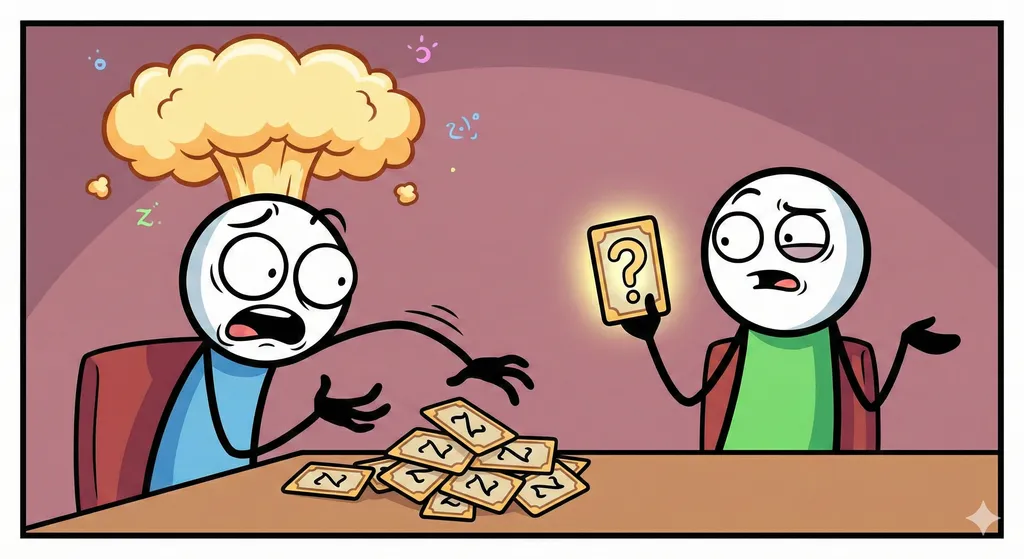
The hallowed halls of Magic: The Gathering, under the watchful eye of Wizards of the Coast, have once again produced a strategic marvel, as reports surface of "The Sneakiest Mill Deck Ever." This isn't your grandpappy's Archive Trap; this is a finely tuned instrument of mental erosion, a strategy that deftly sidesteps overt aggression in favor of a quiet, relentless assault on the opponent's library. For those of us who appreciate the subtle dance of mechanics, this development is a masterclass in obfuscation and inevitable victory.
At its core, this "sneaky" mill deck thrives on misdirection. It presents itself as a resilient Dimir (Blue/Black) control or tempo shell, meticulously managing the board with efficient interaction like Fatal Push, Counterspell, and Thoughtseize. The early game is dedicated to establishing a stable mana base and drawing into key pieces, often leveraging cantrips like Opt or Consider that seem innocuous. The true brilliance, however, lies in its understated win condition: a synergistic pairing of Persistent Petitioners and Bruvac the Grandiloquent.
While Petitioners are a well-known archetype, their deployment here is less about a rapid, all-in swarm and more about a calculated accumulation. The deck seeks to quietly assemble a critical mass of these unassuming Hominids, often using incidental card draw and protection spells to keep them alive. The real pivot occurs with the arrival of Bruvac. This legendary Human Advisor, with his ability to double all mill effects, transforms a slow, grinding attrition into a sudden, overwhelming torrent. The "sneaky" element is twofold: first, the deck doesn't immediately telegraph its mill intent, making opponents prioritize other threats; second, Bruvac often lands at a point where the opponent has already committed their resources, leaving them with few answers to the now-accelerated mill clock. Imagine an opponent meticulously setting up their board, only for a Turn 4 or 5 Bruvac to turn their remaining ~40 cards into a 20-card library, with a handful of Petitioners ready to finish the job. For further insurance, the deck might include surgical removal spells like Unmoored Ego or Necromentia to preemptively strip away crucial answers to Bruvac or the Petitioners, ensuring the mill plan proceeds unimpeded. This isn't about brute force; it's about precision.
The flavor of this deck perfectly encapsulates the insidious nature of the Dimir guild, the shadowy manipulators of Ravnica. The Persistent Petitioners, tireless scribes and archivists, represent the slow, inexorable accumulation of knowledge – or, in this case, the erasure of it. They are the unseen hands sifting through forgotten texts, quietly dismantling mental defenses. Bruvac the Grandiloquent, a master orator, embodies the power of overwhelming rhetoric. His words don't just persuade; they consume, flooding the mind with so much information that the very capacity for thought is eroded. This isn't a direct assault on the body, but a war waged on the mind, on memory, and on the very fabric of one's identity as a Planeswalker. The Dimir don't just defeat you; they make you forget you ever existed. The subtle control elements and the eventual, unavoidable mill reflect their mastery of subterfuge and psychological warfare.
From the perspective of the table, this deck is a fascinating, if sometimes frustrating, experience. For the pilot, it offers a deeply satisfying strategic puzzle. Navigating the early game, protecting your pieces, and timing the Bruvac drop requires a keen understanding of the meta and excellent threat assessment. It feels rewarding to execute such a nuanced game plan, turning seemingly innocuous cards into a lethal engine.
Playing against it, however, is a different beast. Initially, it feels like a standard control matchup, prompting players to deploy their threats and answers as usual. The "sneaky" reveal of the mill engine can be a jarring experience, shifting the entire dynamic of the game in an instant. This can lead to feelings of helplessness, especially if the opponent hasn't diversified their win conditions or held back specific interaction for the mill pieces. It's not a "fun" deck to play against in the traditional sense, as it bypasses the combat step and often wins with an inevitability that can feel oppressive. However, it absolutely forces players to adapt their sideboarding and threat assessment, pushing the meta toward more resilient strategies or proactive disruption. It elevates the strategic depth of the game by demanding foresight and adaptability, a quality that any veteran of the table, from THAC0 to Advantage, can appreciate. It’s a testament to community creativity that such a nuanced strategy can emerge from existing card pools, challenging established norms and forcing new lines of play. Magic: The Gathering Commander Decks
Top Pick: Commander Legends: Battle for Baldur's Gate
Excellent source of synergistic legendaries and powerful spells for unique Commander builds.
Check Price on Amazon →Related Stories
Kitsune's Technique: Mill Recursion Reaches Critical Mass
The latest Universes Beyond Secret Lair introduces Kitsune's Technique, a powerful blue sorcery that scales its mill effect with the graveyard's size. This new
Pauper's New Spark: Unearthing the Moxite Ore Enigma
The Pauper format is abuzz with the potential arrival of a new artifact, Moxite Ore. This deep dive explores how this seemingly innocuous common could fundament
Jenova's Calamitous Draw: Unpacking the New UB Engine
The upcoming Universes Beyond: Final Fantasy set introduces Jenova, Ancient Calamity, an insidious engine for drawing your entire deck. Paired with cheap Mutant