
Discipline at the Table: #RPGaDAY2026's Character Crucible
The annual #RPGaDAY event kicks off its 13th year, challenging players and GMs to explore 'Discipline' in character creation. This deep dive examines how focused choices build more compelling, resonant heroes for any campaign.
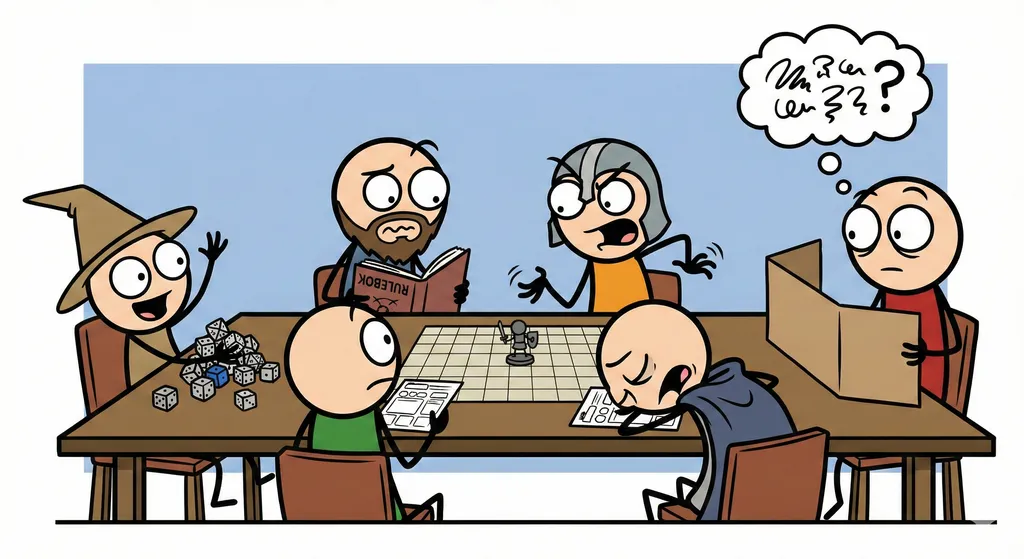
As August dawns once more, the venerable institution of #RPGaDAY, hosted by AUTOCRATIK and Casting Shadows, rolls out its thirteenth annual iteration. For many of us, including The Kind GM who marks their ninth participation, this community-driven event has become a cherished tradition, a yearly prompt-driven introspection into the very fabric of our hobby. This year, the inaugural prompt, "Discipline," is a masterstroke—a deceptively simple directive that cuts to the core of compelling character design.
"Discipline" is not merely about restraint; it is about focus, training, and the deliberate shaping of an identity. In the crucible of character creation, this prompt challenges us to move beyond the superficial optimization of numbers and into the deeper waters of mechanical and thematic integration. Consider a player building a character for a 5th Edition D&D campaign. Instead of simply multiclassing for maximum damage output, a disciplined approach might mean sticking to a single class, meticulously choosing feats and abilities that reinforce a specific martial art, a school of magic, or a philosophical tradition. Mechanically, this could manifest as a Monk who foregoes a dip into Fighter for Action Surge, instead doubling down on their Ki abilities and monastic traditions, picking up feats like Mobile or Sentinel to enhance their battlefield control through disciplined movement and defense. Their stat array might reflect years of focused training, perhaps a higher Wisdom and Dexterity at the expense of Charisma or Intelligence, showcasing a life dedicated to physical and spiritual rigor over academic pursuits or social graces.
This isn't just about making a character "weaker" by not min-maxing; it's about crafting a hero whose abilities are narratively earned and mechanically consistent with their background. A disciplined character might have skill proficiencies that reflect intense, specialized training—perhaps an artificer with an unparalleled proficiency in smith's tools but a glaring weakness in social interaction, or a ranger whose survival skills are honed to a razor's edge from decades in the wilds, leaving them less adept in urban environments. This deliberate allocation of strength and weakness, born from a disciplined focus, creates rich hooks for both the player and the Game Master. It provides a blueprint for character growth, not just in terms of leveling up, but in overcoming inherent limitations or expanding their skillset beyond their initial, disciplined purview.
Looking back at the "lore" of #RPGaDAY itself, the prompts have evolved from straightforward questions to more abstract concepts, encouraging deeper engagement. This shift reflects a maturing community eager to explore the nuances of TTRPGs beyond the surface. "Discipline" is a perfect example of this. It's not asking for a specific stat or a particular background; it's asking for a *mindset* in creation. It’s an invitation to imbue our characters with a tangible history of effort and sacrifice, making their eventual triumphs—or failures—all the more impactful. This kind of prompt fosters a meta-narrative around character development even before the first dice roll, enriching the player's connection to their avatar.
From the Crit Sheet's perspective, this prompt is an unqualified boon for the table. It pushes players to think critically about *why* their character possesses certain abilities and *how* those abilities came to be. For the GM, a character forged through the lens of discipline offers immediate narrative leverage. Their focused skills provide clear strengths for challenging encounters, while their disciplined weaknesses present opportunities for personal quests and growth arcs. It encourages players to lean into their character's established identity rather than chasing optimal power, fostering more cohesive and believable party dynamics. Such characters resonate more deeply, feeling less like assemblages of numbers and more like living, breathing individuals with a history of dedication. It’s a prompt that will lead to more memorable heroes and, consequently, more memorable campaigns.
Top Pick: Player's Handbook (D&D 5th Edition)
Excellent foundational text for understanding mechanical choices for disciplined character builds.
Check Price on Amazon →Related Stories
The One Ring's New Edition & Bestiary: Deeper Shadows for Middle-earth
Free League's acclaimed The One Ring RPG is receiving an updated core experience and a much-anticipated hardcover bestiary. This deep dive explores how these ad
Shifting Scales: Chronicle of Aeons Redefines Faction Play
Arcane Drift Studios' Chronicle of Aeons: Shifting Scales introduces a groundbreaking Political Momentum system, empowering players to directly influence the wo
Aethelgard's Simulacra: The Evolution of TTRPG Companions
Mythic Forge Games introduces a groundbreaking companion system in Chronicles of Aethelgard. This deep dive explores how the Simulacra Companion System redefine