
Elective Action Order: A Nimble Initiative For Your D&D Table
Sly Flourish's Elective Action Order offers a refreshing D&D 5th Edition initiative variant, prioritizing player agency and dynamic combat flow. This deep dive explores its mechanics and how it elevates the tabletop experience.
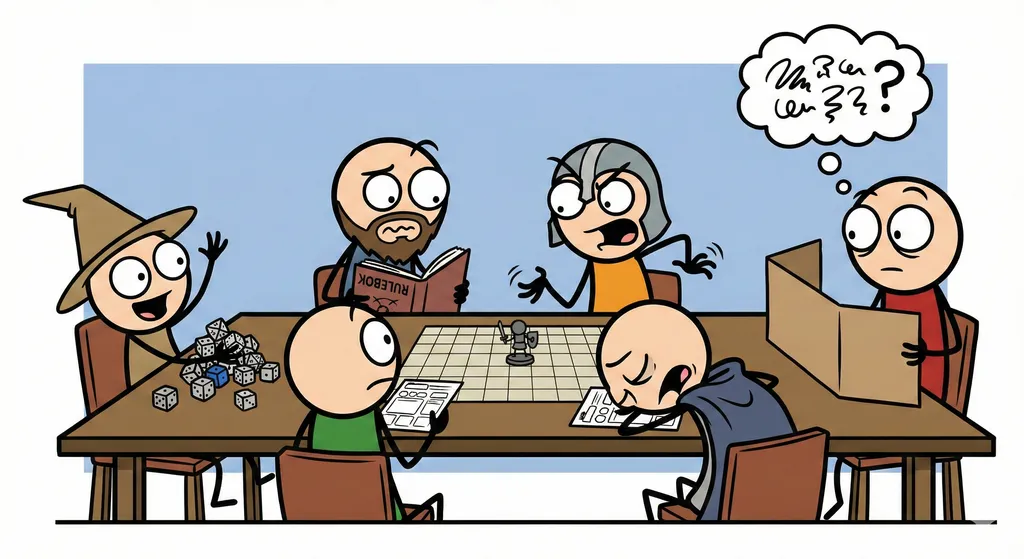
Initiative in Dungeons & Dragons 5th Edition, while functional, often feels like a necessary pause rather than an engaging part of the combat. We roll a d20, add our Dexterity modifier, and then follow a strict highest-to-lowest procession. It works, certainly, but sometimes it can feel like watching a spreadsheet rather than participating in a desperate struggle. That’s where innovations like Sly Flourish’s Elective Action Order come into play, offering a nuanced approach that injects player agency and tactical fluidity into every round.
At its core, Elective Action Order acknowledges that combat isn't a perfectly synchronized parade; it's a dynamic, chaotic dance of action and reaction. Here’s how this variant, as we've explored and refined it, typically functions at the table, blending structure with player choice:
1. **Roll and Establish:** Every combatant—player character (PC) and monster alike—rolls a d20 and adds their Dexterity modifier, just as in standard 5th Edition. The Dungeon Master records all results. 2. **Initiative Bands:** Instead of a single, strict list, the DM then broadly categorizes these scores into 3-4 ‘bands’ or tiers. For example: High (20+), Mid-High (15-19), Mid-Low (10-14), and Low (0-9). These bands are flexible and can be adjusted based on the spread of rolls. 3. **Elective Action:** Starting with the highest band, all combatants within that tier prepare to act. Within each band, Player Characters can *elect* to go in any order they choose amongst themselves. This is where the ‘elective’ truly shines. Players can quickly confer, setting up combos or reacting to immediate threats. Monsters within that same band typically act in their rolled initiative order (highest to lowest), or the DM can choose an order that best suits their tactical goals, interleaving them with PC turns as appropriate. 4. **Flow Down:** Once all combatants in a band have completed their turns, the DM moves to the next highest band, repeating the elective process until all creatures have acted. This continues until the end of the round, then a new round begins, following the same established bands.
Narratively, this variant transforms combat from a rigid sequence into a more cinematic and collaborative experience. Imagine the tension as the heroes, caught in the ‘High’ initiative band, quickly decide who will stun the charging Ogre while another prepares a potent spell, knowing the monster's turn is looming right there in their band. It embodies the chaos and quick-thinking inherent in battle, where moments of opportunity arise and are seized by coordinated action. The ebb and flow feels more organic, less like individual duels and more like a cohesive struggle against shared threats. It creates a palpable sense of a party truly fighting as one, responding to immediate dangers with unified intent.
From the perspective of the table, Elective Action Order is, in my assessment, a significant upgrade for many groups. The primary benefit is the dramatic increase in player agency. Players are no longer passively waiting for their number to come up; they are actively engaged in strategic decisions even before their turn begins. This not only makes combat feel more dynamic but also significantly reduces the downtime for players with lower initiative scores, as their turn within a band can come up sooner, or they can influence the turns of others. Tactical depth is enhanced, as players can set up devastating spell combinations or targeted attacks with precision, rather than hoping the strict turn order aligns. While it requires a slightly more active hand from the Dungeon Master in managing the bands and guiding player choices, the payoff in player engagement and combat fluidity is well worth the effort. It’s a small mechanical shift that yields a massive improvement in the ‘feel’ of the game, making every combat encounter more memorable and impactful. For DMs looking to revitalize their combat encounters, this variant is a potent tool.
Top Pick: The Lazy Dungeon Master's Workbook
For streamlined combat and encounter prep
Check Price on Amazon →I’ve found that incorporating variants like this, along with other tools from Sly Flourish's work, elevates the entire D&D experience, proving that even small mechanical tweaks can have profound effects on the narrative and player enjoyment.
Related Stories
Journeys & Trials: D&D 5e's Bold New Wilderness
Wizards of the Coast's 'Journeys & Trials' handbook promises to redefine exploration in D&D 5th Edition, transforming travel from a mere transition to a core pi
Underdark Options 2: D&D's Deep Dive into Subterranean Power
Wizards of the Coast returns to the Underdark with a new Dungeons & Dragons playtest, offering fresh character options. This Unearthed Arcana explores the uniqu
The Old World Meets 5E: A Fan-Made WFRP Conversion Analysis
The community-driven Warhammer Fantasy Roleplay 5th Edition PDF is now circulating, bringing the grim Old World to D&D's popular ruleset. We dissect its mechani