
Engineering Narrative: What Storytelling Board Games Offer TTRPGs
The rise of dedicated storytelling board games challenges traditional TTRPG design. We dissect how these titles craft compelling narratives and what they teach Game Masters about emergent play.
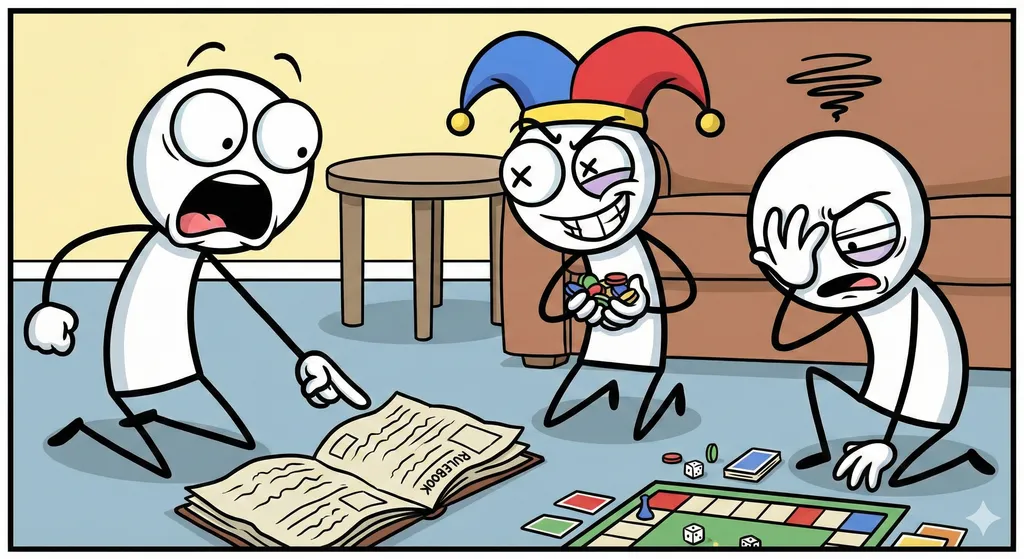
The recent proliferation of dedicated Storytelling Board Games, championed by innovative designers across the broader tabletop industry, presents a fascinating opportunity for introspection within the TTRPG space. Board Game Quest's recent 'Top 10 Storytelling Board Games' article isn't just a list; it's a mirror reflecting how narrative, the very bedrock of our hobby, is being engineered and experienced in novel ways beyond the traditional GM-player dynamic.
At the Crit Sheet, we're keenly interested in the 'how' – the crunch that underpins the fluff. So, how do these board games, often without a designated Game Master, manage to weave compelling tales? Many of these titles employ sophisticated card-driven systems, where prompts and consequences are drawn from a meticulously curated deck, simulating the GM's improvisational responses with uncanny precision. Others leverage branching narrative books, not unlike an old-school solo adventure, where player decisions directly dictate the next textual passage and subsequent game state. The elegance lies in their capacity to create meaningful choices and consequences without a human arbiter. Legacy mechanics, in particular, manifest persistent world changes, permanently altering components and rulesets based on player actions. This isn't just flavor; it's a mechanical representation of narrative progression, a physical manifestation of evolving lore that even the most seasoned GM can struggle to achieve with pure improvisation. The best of these systems offer genuine player agency, where the narrative isn't a fixed track but a landscape shaped by collective decisions and the probabilistic outcomes of dice and cards. It's a masterclass in designing for emergent storytelling, where the sum of simple interactions creates a complex, memorable saga.
The 'fluff' in these games isn't relegated to an appendix; it's woven into the very fabric of play. Every card, every scenario entry, every unique character ability often carries a snippet of evocative text or a stunning piece of art designed to immerse players. Unlike TTRPGs where the GM is the primary lore delivery system, storytelling board games must distill their setting into concise, impactful bursts. This forces a narrative efficiency that can be incredibly instructive. The lore isn't passively received; it's actively constructed by the players through their choices, creating a shared history that feels earned. Think of the way a *Pandemic Legacy* campaign builds its own unique world history through successive outbreaks and player responses – the story *becomes* the lore. The thematic consistency, maintained through consistent terminology, iconography, and art direction, ensures that even without a GM's descriptive prose, players remain grounded in the world's reality. This creates a powerful sense of place and purpose, often making the players feel like genuine contributors to the world’s ongoing saga.
So, what does this mean for our TTRPG tables? A great deal, actually. For Game Masters, these board games are masterclasses in narrative design. They illustrate how to craft compelling hooks, how to present meaningful dilemmas, and how to ensure player choices have tangible, lasting repercussions without resorting to railroading. The way they parcel out information and build tension through escalating stakes offers a blueprint for structuring encounter chains and even entire Adventure Paths. It encourages GMs to think about how mechanics can *physically* represent story progression, moving beyond mere descriptive text to actual alterations in the game state. For players, these experiences demonstrate the power of collective storytelling, where the group actively shapes the unfolding drama. They teach us that narrative isn't just something delivered by the GM, but something born from the interaction of rules, choices, and collective imagination. It’s about leveraging the mechanics to *serve* the story, rather than the story merely existing alongside the mechanics, fostering a deeper engagement with the world and its inhabitants. The best of these titles prove that even without a human narrator, a rich, evolving world can emerge directly from the rules.
Top Pick: Gloomhaven: Jaws of the Lion
Excellent entry point into legacy storytelling board games
Check Price on Amazon →Related Stories
Chthonic Echoes: A New Depth for OSR Dungeon Crawls
Iron Crown Studios' Chthonic Echoes promises a return to high-stakes adventuring with its innovative 'Echo Die' mechanic. This deep dive explores how this OSR-i
Aethelgard: Echoes Delivers Grim Consequences to the Table
Mythforged Games' 'Aethelgard: Echoes of the Sundered Realm' promises a dark fantasy TTRPG where every choice echoes through the world. Its innovative mechanics
Weaving Time at the Table: Chronos Weavers Reimagines Narrative Play
AetherForge Games' Chronos Weavers: Echoes of the Sundered Age offers a fresh take on TTRPGs, letting players manipulate timelines. Explore its innovative mecha