
Family Feuds & Fractured Planes: MTG's New Political Arena
Wizards of the Coast unveils "Magic: The Gathering Family Feud," a new product line focusing on intense inter-factional conflict. Players must navigate treacherous alliances and betrayals, bringing a fresh political dimension to multiplayer games.
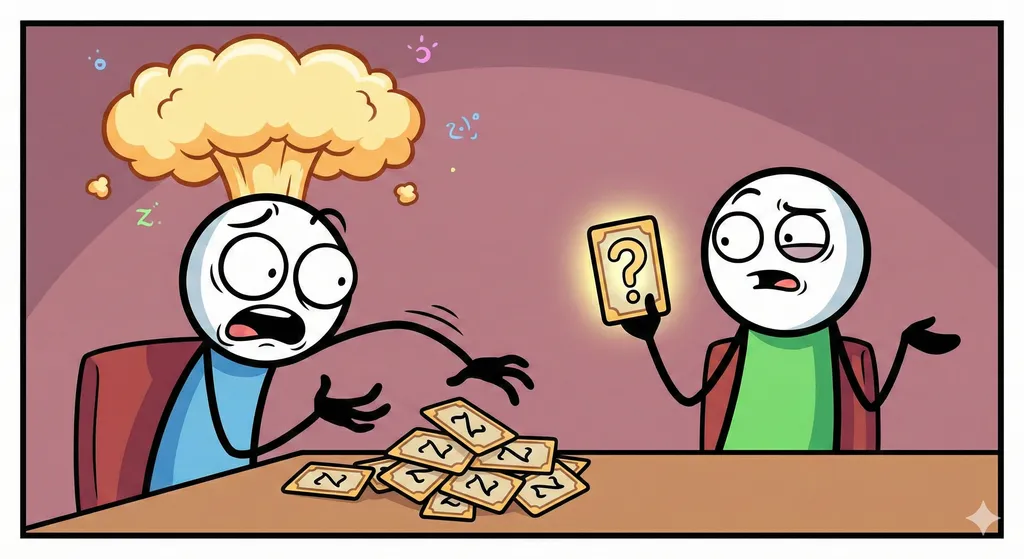
The rumor mills have been churning with unusual fervor, and now the official confirmation from Wizards of the Coast brings a fascinating, if somewhat enigmatic, new direction for Magic: The Gathering: the aptly titled "Magic: The Gathering Family Feud" product line. Far from a simple crossover with a classic game show, this initiative appears to be a deliberate and intricate foray into the deeper, more political currents that flow beneath the surface of multiplayer Magic, promising to inject a fresh layer of social strategy into our Commander pods and kitchen table brawls.
At its core, "Magic: The Gathering Family Feud" introduces the "Feud & Alliance" mechanic, a system designed to formalize the unspoken treaties and betrayals that define many multiplayer games. Each player begins the game with a unique "House Sigil" emblem, representing their chosen faction on the new plane of Veridia. These emblems aren't just cosmetic; they come with two active abilities: 'Declare Feud' and 'Forge Alliance.' Once per turn, a player may activate one of these abilities, targeting another player. Declaring a Feud marks an opponent as your sworn enemy, while Forging an Alliance publicly designates them as a temporary ally. These declarations persist until you choose to change them or until the target player is eliminated.
Now, where the crunch truly comes in are the numerous cards designed to interact with these states. We're seeing new enchantments, creatures, and instants with abilities like 'Whenever you deal non-combat damage to a player you are Feuding with, draw a card' or 'If you control a creature of power 4 or greater and are Allied with target player, prevent all damage that would be dealt to them this turn.' Some cards even feature symmetrical effects, like a powerful artifact that reads: 'At the beginning of your upkeep, each player you are Feuding with sacrifices a nonland permanent. Each player you are Allied with draws a card.' This isn't just about targeting; it’s about incentivizing specific political postures. It introduces a dynamic layer of player interaction that goes beyond simple threats, demanding negotiation, bluffing, and carefully timed shifts in loyalty. This isn't just about who has the biggest board; it's about who has the most reliable friends, or the most opportune enemies.
The narrative backdrop for "Magic: The Gathering Family Feud" transports us to Veridia, a plane steeped in ancient magical traditions and governed by an intricate web of noble houses. Each house, from the mercantile Trelani to the martial Vaskor, possesses unique magical affinities and long-standing grudges. The storyline explores a period of unprecedented internal strife, where the fragile peace between these powerful families has shattered, plunging the plane into a cold war of political machinations and open skirmishes. Players are cast as emerging leaders within these houses, tasked with navigating treacherous alliances and decisive betrayals to secure their lineage's dominance. The lore doesn't just provide flavor; it's intricately woven into the mechanics. The specific creature types, color identities, and even card art will subtly hint at the allegiances and rivalries of Veridia's Houses, allowing players to truly embody their chosen faction. This deep dive into a new plane's internal politics feels fresh, moving beyond the usual planar threats to focus on the more human (or humanoid) drama of power and legacy.
So, what does this mean for the kitchen table? "Magic: The Gathering Family Feud" is poised to fundamentally alter the social contract of multiplayer Magic. For seasoned Commander players weary of 'solitaire Magic' where everyone builds their own engine until one combo wins, this is a breath of fresh air. The 'Feud & Alliance' mechanic forces interaction, negotiation, and strategic targeting. It creates a dynamic where kingmaking becomes a legitimate, albeit risky, tactical choice, and where shifting allegiances can turn the tide of a game in an instant. This could lead to genuinely memorable game states, rife with dramatic reveals and unexpected power shifts.
However, it’s not without its potential pitfalls. The added layer of social complexity might not appeal to every player, particularly those who prefer a more straightforward, less politically charged experience. There's also the risk of 'ganging up' if a player is declared a Feud by multiple opponents, potentially leading to quick eliminations and less satisfying game experiences for the targeted player. Balancing these social dynamics will be key, both in individual game groups and in the overall design of future cards. Yet, for groups seeking to deepen the role-playing and strategic intrigue of their multiplayer games, this product line offers an exciting new dimension. It encourages players to think beyond their own board state and consider the motivations and relationships of every other player at the table, transforming a game of cards into a nuanced negotiation for power. It’s a bold move, and one that reflects a growing understanding from Wizards that the social element of our games is just as crucial as the raw mechanics. For those who appreciate deep political interplay, I highly recommend the multiplayer dynamics found in Conspiracy: Take the Crown. It's a masterclass in how to make every decision resonate beyond your board.
Top Pick: Commander Legends: Battle for Baldur's Gate
Excellent for political multiplayer groups
Check Price on Amazon →Related Stories
TMNT Crash the MTG Meta: Pizza Power or Corporate Play?
Wizards of the Coast's latest Universes Beyond drop features the Teenage Mutant Ninja Turtles, igniting 'decklist drama' and debate. We dissect the mechanics an
Beyond the Box: Optimizing Lorwyn Eclipsed Commander Precons
Lorwyn Eclipsed's Commander preconstructed decks offer a solid foundation, but unlocking their true potential requires strategic upgrades. This deep-dive explor
Hasbro's MTG Lawsuit Dismissal: A Pyrrhic Victory for the Table?
Shareholders have dropped their lawsuit against Hasbro over alleged Magic: The Gathering overprinting. While it removes immediate legal uncertainty, the underly