
Izzet Lessons: Milwaukee's Meta Shift and the Art of Adaptation
Krueger's Izzet Lessons victory at the Milwaukee RC proves strategic depth triumphs. We dissect the deck's mechanics and Izzet lore, revealing a flexible meta-game masterclass.
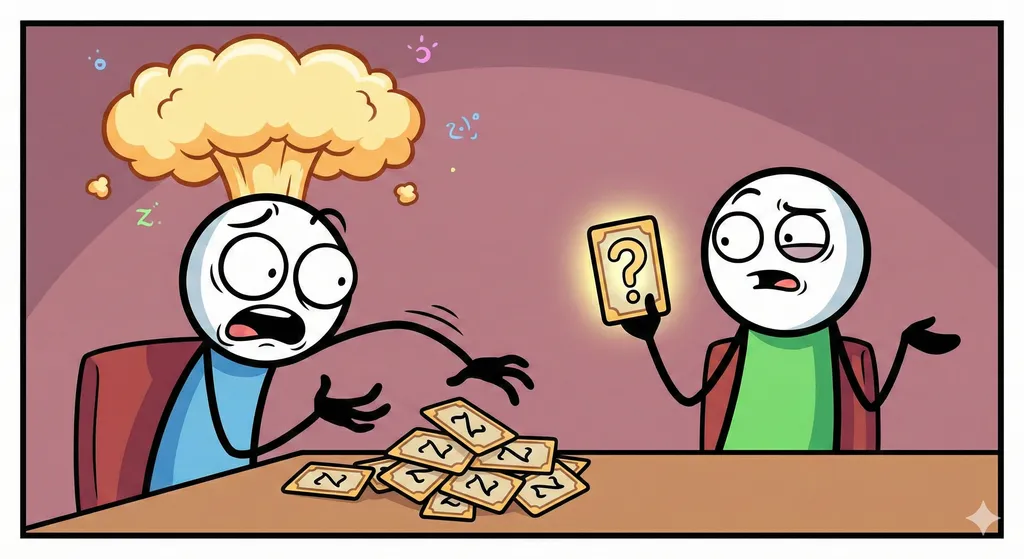
The recent triumph of Krueger piloting 'Izzet Lessons' at the Milwaukee Regional Championship, a premier Magic: The Gathering event sanctioned by Wizards of the Coast, offers more than just another tournament report; it’s a masterclass in adapting to a shifting meta. This isn't merely about raw power or a broken combo; it's a testament to surgical precision, deep format understanding, and leveraging a diverse toolkit to dismantle the competition.
At its core, 'Izzet Lessons' is a Blue/Red spell-based strategy that masterfully leverages the 'Learn' mechanic introduced in Strixhaven: School of Mages. For those unfamiliar, a card with 'Learn' allows its controller to either draw or discard a card, or, crucially, to put a 'Lesson' card they own from outside the game into their hand. In competitive Magic: The Gathering, 'outside the game' almost exclusively refers to the sideboard. This transforms the traditional sideboard from a reactive collection of cards swapped between games into a dynamic, in-game toolbox. Need targeted removal for a creature? Grab a specific damage Lesson. Facing a control deck? Fetch a card advantage Lesson. The beauty of Izzet Lessons lies in this unparalleled flexibility, allowing the pilot to fetch the precise answer for a given board state or opponent's strategy *during* a game, rather than simply hoping their main deck has the right interaction. The deck combines Blue's potent counter-magic and card velocity with Red's efficient removal and direct damage, creating a reactive yet proactive shell that can pivot roles with astonishing fluidity. It’s a testament to efficient resource management, turning a diverse set of options into a cohesive, game-winning strategy against any foe.
From a lore perspective, the Izzet Guild of Ravnica has always been synonymous with chaotic brilliance and relentless experimentation. They are the mad scientists, the inventors, the engineers of the improbable. This 'Izzet Lessons' deck perfectly embodies that ethos. It isn't about brute force, but about finding the *right* solution through a process of trial-and-error, or rather, through 'learning'. The 'Lessons' mechanic, originating from the magical university setting of Strixhaven, ties directly into the Izzet's intellectual curiosity and their pursuit of knowledge, even if that knowledge often manifests in volatile, unpredictable ways. The deck's capacity for on-the-fly adaptation reflects the Izzet's willingness to pivot, to innovate when faced with unexpected challenges, and to unleash unpredictable, yet devastatingly effective, solutions. Piloting this deck isn't just playing cards; it's conducting an elaborate experiment, constantly calibrating and recalibrating to achieve the desired, explosive result. For those looking to dive deeper into the guild's history and flavor, consider exploring the Izzet Guild Kit for a comprehensive dive into their unique identity.
Krueger's victory with Izzet Lessons sends a clear signal throughout the competitive Magic: The Gathering landscape. It’s a resounding validation that player skill, deep format knowledge, and strategic adaptability are paramount, even in a meta often dominated by powerful, linear archetypes. This win demonstrates that a well-constructed, flexible strategy, expertly piloted, can consistently overcome more ostensibly powerful or straightforward decks. For the broader meta, it means players must now prepare for these dynamic toolbox strategies. Blindly running a 'best deck' without understanding its vulnerabilities to an opponent capable of pulling specific answers from their sideboard is a recipe for disaster. This isn't just a win for Krueger; it's a win for thoughtful deck construction, for rewarding players who truly understand the nuances of their chosen format, and for a competitive scene that values innovation. It pushes players to think beyond the main 60 cards, integrating the sideboard into a dynamic, fluid game plan. This kind of organic evolution is precisely what keeps competitive Magic vibrant, engaging, and prevents the stagnation that can plague a 'solved' meta.
Top Pick: Strixhaven: School of Mages Set Boosters
To experience the innovative 'Learn' mechanic and Izzet's chaotic brilliance first-hand.
Check Price on Amazon →Related Stories
SCG CON Milwaukee: The Meta's Message for Magic's Future
SCG CON Milwaukee's top decks revealed more than just winners; they offered a potent snapshot of Magic: The Gathering's evolving competitive landscape. We delve
TMNT x MTG: Pizza, Power, & Player Engagement
The latest Universes Beyond crossover, Magic: The Gathering | Teenage Mutant Ninja Turtles, is hitting the tables, igniting new brewing discussions among Comman
TMNT Crash the MTG Meta: Pizza Power or Corporate Play?
Wizards of the Coast's latest Universes Beyond drop features the Teenage Mutant Ninja Turtles, igniting 'decklist drama' and debate. We dissect the mechanics an