
Jibber Jabble & Allplay: The Microgame Phenomenon
Allplay's annual Gen Con microgame releases, like Jibber Jabble, continue to spark conversation despite their tiny boxes and $9 price tag. We scrutinize the design philosophy behind these compact hits and their impact on the tabletop landscape.
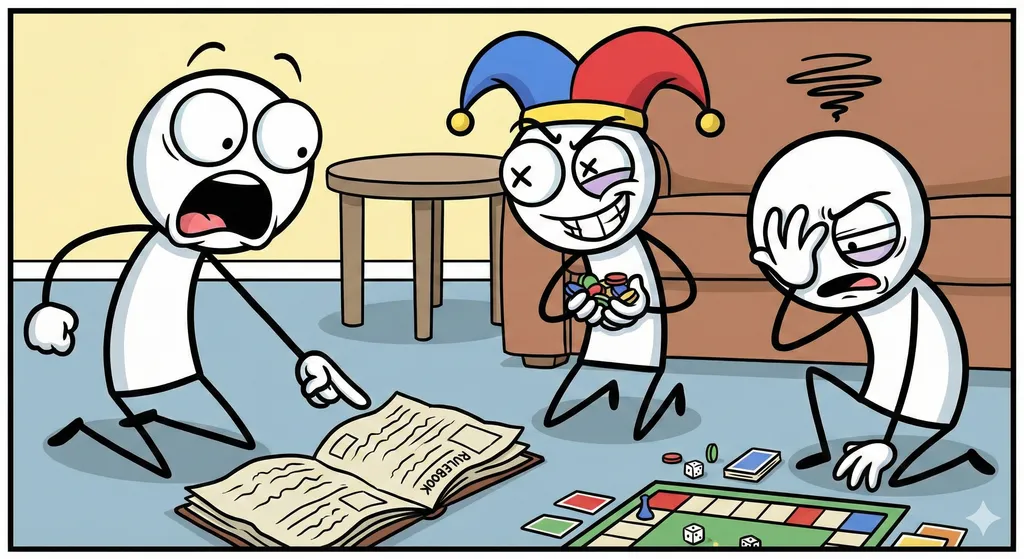
Every year, as the Gen Con behemoth rolls around, the industry fixates on the sprawling, the epic, the meticulously crafted campaigns and towering miniatures. Yet, Allplay, with almost mischievous regularity, sidesteps this grandeur, opting instead for a different kind of splash: the $9 microgame. This year, alongside the buzz surrounding their financial romp Stonk Market, we’re seeing whispers of another compact contender, Jibber Jabble. These aren't just cheap novelties; they represent a deliberate, potent strategy, and it’s one that warrants a closer look than their diminutive footprint might suggest.
At the Crit Sheet, we love a robust ruleset, but we also recognize clever design when we see it. The core appeal of games like Jibber Jabble and Stonk Market lies in their elegant constraint. For a game priced at nine dollars, the mechanics must be streamlined to an almost brutal degree. Take a hypothetical Jibber Jabble: one might imagine a deck of cards, each bearing a single, often absurd, word or phrase. Players could be challenged to quickly form coherent (or hilariously incoherent) sentences, categorize words under pressure, or even engage in a rapid-fire social deduction, trying to guess which player submitted the most outlandish response to a prompt. The 'crunch' here isn't in complex action economies or sprawling tech trees; it's in the immediate, intuitive understanding of a few simple rules that lead to emergent, often chaotic, player interaction. Stonk Market, by contrast, likely distills the high-stakes world of finance into a few key decisions, perhaps involving speculative card plays, minimal resource management, and a dash of bluffing. The component count is minimal – a deck of cards, maybe a handful of tokens – but the design leverages player psychology and social dynamics over physical heft. This is game design as a surgical strike: precise, economical, and aiming for maximum impact with minimum fuss.
Lore in a $9 microgame is rarely about a sprawling narrative or a deep, established universe. Instead, it's about thematic resonance that immediately informs the player experience. For Jibber Jabble, the 'fluff' isn't a backstory of ancient babblers; it's the joy of linguistic absurdity, the shared laughter over a nonsensical phrase, or the challenge of verbal dexterity. The theme itself is the setting. Similarly, Stonk Market doesn’t need a detailed corporate espionage plot; its lore is the collective human experience of greed, risk, and the exhilarating chaos of a volatile market. These themes are universal, instantly graspable, and serve as a quick on-ramp to the game’s core loop. The context isn't printed on a page; it's evoked by the game's title and its immediate, intuitive play. It’s a testament to design that a simple concept can create such vivid thematic immersion, even without an accompanying tome of lore.
So, is this good for the table? Absolutely. Allplay's microgame strategy is a boon for the hobby. These games are perfect 'pallet cleansers' between heavier sessions, excellent for introducing new players to the hobby without overwhelming them, and incredibly accessible due to their price point. They cultivate a sense of community creativity, often leading to house rules or variations precisely because their simple nature encourages experimentation. They prove that innovation isn't exclusive to the big boxes; some of the most memorable moments at the table come from these unassuming packages. The buzz they generate at Gen Con isn't just about the novelty; it's about the genuine fun and surprising depth found within. They challenge the notion that more components or complex rules inherently equate to a better experience, reminding us that clever design and engaging player interaction are the true hallmarks of a great game. For those looking to expand their collection without breaking the bank, or simply for a quick, engaging diversion, these small wonders are a compelling proposition. Consider adding a copy of Jibber Jabble to your collection – it might just surprise you.
Top Pick: The Mind
It’s a cooperative card game that strips away communication, forcing players to rely on pure intuition, embodying the elegant simplicity and social dynamics found in the best microgames.
Check Price on Amazon →Related Stories
Arnak's 'Surprise Shipment': Unpacking the Expedition's New Tools
The highly anticipated 'Surprise Shipment' expansion for Lost Ruins of Arnak from Czech Games Edition promises to shake up established strategies. We delve into
Drillers: CGE's Subterranean Deckbuilder Digs Deep for Fun
Czech Games Edition's Gen Con release, Drillers, is a tight deckbuilding experience. While not as sprawling as their other 2026 behemoth, it offers solid mechan
Falling Towers, Rising Fortunes: Capstone's New Engine Builder
Capstone Games introduces Falling, a unique engine-building Eurogame where players navigate a mysteriously crumbling tower. Designer Kentaro Yazawa challenges e