
Kickstarter's Mature Content Mess: A Patch, Not a Fix
Kickstarter has walked back its controversial mature content policy, but underlying issues with payment processors like Stripe mean adult-themed projects still navigate treacherous waters. This 'imperfect temporary solution' leaves creators in a precarious position, highlighting a systemic problem for the TTRPG and board game industries.
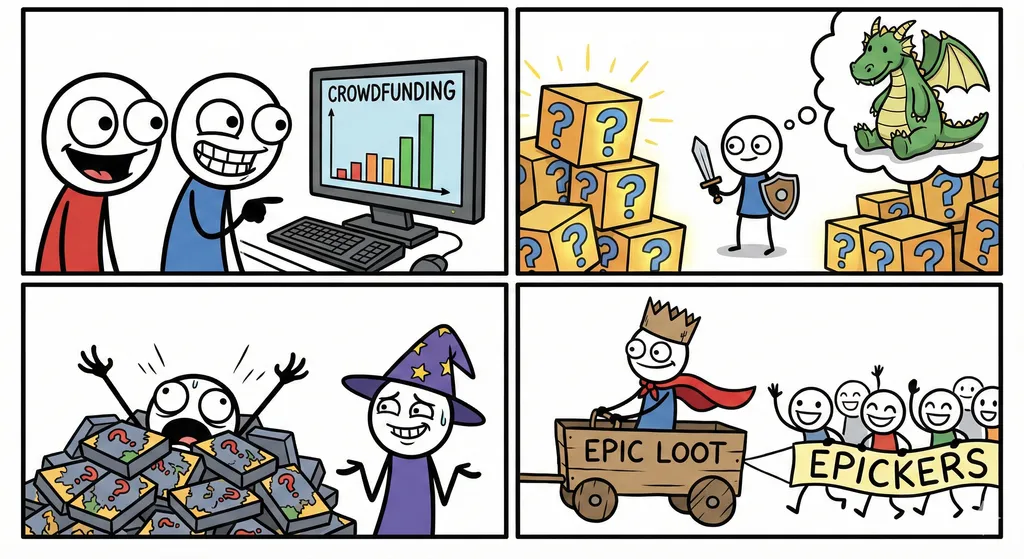
Kickstarter, the crowdfunding behemoth responsible for launching countless TTRPGs and board games, has once again thrown its community into a maelstrom of uncertainty with the abandonment of its recently “botched” mature content policy. This isn't just about a platform reversing course; it’s a stark reminder of the fragile ecosystem creators inhabit when relying on third-party infrastructure.
Let’s dissect the mechanics of this reversal, or rather, the lack thereof. The previous iteration of Kickstarter’s mature content policy was a nebulous, poorly defined set of guidelines that led to arbitrary project removals, bans, and a chilling effect across the independent TTRPG and board game landscape. Creators found themselves caught in a Kafkaesque nightmare, their projects flagged for everything from artistic nudity to frank discussions of adult themes common in horror or historical settings. The platform’s initial response was to double down, citing a need to comply with payment processor requirements.
The “abandonment” of this policy, as Kickstarter terms it, is not a return to true freedom of expression, but rather an admission of defeat. The platform now describes its stance as an “imperfect temporary solution,” effectively punting the ball back to the very entity that caused much of the initial turmoil: its payment processor, Stripe. This means that while Kickstarter itself might be less likely to flag a project, the ultimate authority still rests with Stripe’s often opaque and notoriously conservative interpretation of what constitutes “adult content.”
For creators, particularly those crafting independent TTRPGs and niche board games, this is a distinction without a meaningful difference. The Sword & Sorcery module exploring the moral ambiguities of a dark fantasy realm, the indie RPG delving into queer narratives, or the horror game pushing boundaries with psychological dread – these projects remain in a precarious limbo. The actual “crunch” here is that creators are still subject to the whims of algorithms and individual reviewers at a payment processing company, whose primary concern is not artistic merit or community standards, but rather minimizing financial risk and perceived legal exposure. It’s a mechanism designed for broad strokes, not the nuanced brushwork of creative expression.
The lore of tabletop gaming has always been one of boundless imagination. From the early days of Dungeons & Dragons pushing societal norms to modern solo RPGs exploring deeply personal themes, our hobby thrives on the freedom to tell any story. This includes mature, challenging, and sometimes uncomfortable narratives. Kickstarter’s original policy, and the lingering threat of Stripe’s censorship, fundamentally undermines this spirit. It forces creators to self-censor, to dilute their vision, or to risk losing funding and access to a vital crowdfunding platform. The community's shared lore suffers when stories are untold or sanitized under corporate pressure. The rich tapestry of our hobby is frayed when a payment processor dictates what art is permissible.
So, what’s the verdict for the table? Is this a good development? In short, no. It’s a tactical retreat, not a strategic victory. While the immediate pressure from Kickstarter’s internal moderation might lessen, the sword of Damocles still hangs, wielded by Stripe. This breeds continued distrust in Kickstarter as a reliable partner for independent creators, especially those daring to explore themes beyond the most anodyne. It will undoubtedly continue to push creators towards alternative platforms like BackerKit or Gamefound, further fragmenting the crowdfunding landscape. For players, this means a slower discovery of truly innovative, boundary-pushing TTRPGs and board games, as creators become more risk-averse or simply vanish from the mainstream platforms.
Ultimately, this is a symptom of a larger problem: the reliance of creative industries on monolithic, risk-averse financial gatekeepers. Until a truly creator-first payment infrastructure emerges, or platforms like Kickstarter develop their own robust, transparent, and artist-friendly payment solutions, the independent tabletop scene will continue to navigate these treacherous waters, its most daring voices perpetually at risk of being silenced.
Top Pick: Gamefound
For creators seeking a more TTRPG-friendly crowdfunding alternative with robust fulfillment tools.
Check Price on Amazon →Related Stories
Warhammer 40k: Standalone Rulebook is a Win for the Table
Warhammer Community confirmed a standalone rulebook for the new 40k edition. This move is welcomed by players eager to get the core rules without buying a big b
Onyx Path's Scion 3rd Ed: Charting a New Mythic Path
Onyx Path has announced Scion 3rd Edition, promising a fresh take on its beloved game of modern mythology. This new iteration aims to refine mechanics and expan
Paizo's Layoffs: A Chilling Warning for Tabletop Distribution
Paizo's recent layoffs, directly linked to Diamond Comic Distributors' bankruptcy, highlight a precarious distribution landscape. This development isn't just ab