
Kill Team's February Meta: The Relentless March of the Swarm
February 2026 tournament data for Kill Team reveals a significant meta shift. We dissect the mechanical implications and lore context of this evolving skirmish landscape.
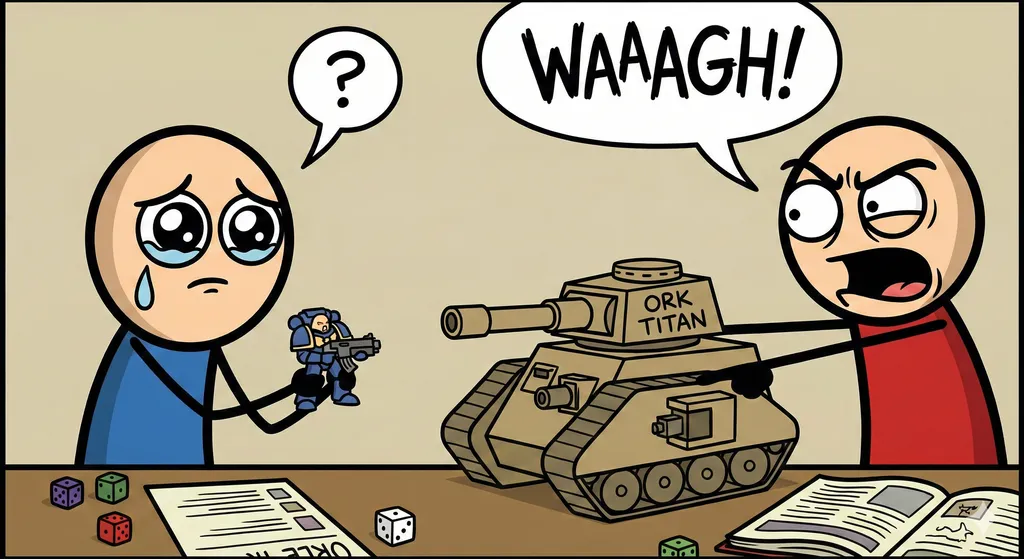
The latest statistical deep-dive from John at Can You Roll a Crit?, meticulously aggregated by Goonhammer, has dropped, and the numbers for Kill Team's February 2026 global tournament circuit paint a fascinating, if somewhat concerning, picture for Games Workshop's premier skirmish game. What we're seeing isn't just a minor fluctuation; it's a clear, decisive pivot in competitive play that demands a closer look at the very foundations of operative design and mission structure.
At the heart of this meta-shift is the undeniable dominance of teams boasting higher operative counts. While elite, six-operative teams like the Custodian Guard or even the nimble Striking Scorpions still find niche success in the hands of truly exceptional players, the raw action economy and board presence of factions deploying 10+ models are simply overwhelming the field. The data shows a consistent win rate increase for teams that can reliably flood objectives, control lanes, and absorb hits through sheer numerical superiority. We're talking about the likes of the Blooded, the Veteran Guardsmen, and surprisingly, a resurgence of the Kommandos, leveraging their Sneaky Git ploy to maximum effect. It's less about individual operative potency and more about the aggregate output of a resilient, multi-pronged assault. Critical hits, once a terrifying equalizer, are less impactful when a team can simply shrug off the loss of a single grunt and continue the advance. This trend suggests that current mission designs, particularly those emphasizing objective control and persistent board pressure, are heavily favoring the 'swarm' archetype, making it exceedingly difficult for lower model count teams to maintain parity without near-perfect tactical execution and fortunate dice.
From a lore perspective, this meta development is a grim reflection of the Warhammer 40,000 universe itself. The Imperium's struggle against overwhelming numbers—whether it be xenos hordes, insidious cults, or the relentless tide of Chaos—is a foundational pillar of the setting. The highly specialized, often individualistic prowess of an Astartes Kill Team, or the golden might of a Custodian, is narratively potent but mechanically vulnerable in a game that rewards distributed threats. It speaks to the brutal, attritional nature of the 41st millennium, where even the most elite warriors can be drowned in a sea of lesser foes. The tactical flexibility and sheer resilience of a well-drilled line infantry squad, or the unpredictable savagery of an Ork mob, now feels more aligned with the brutal reality of galactic conflict than the surgical precision of an elite strike force. The narrative of the setting is one of constant, grinding warfare, and the current meta, for better or worse, echoes that sentiment on the tabletop. The desperate gambits and heroic stands of smaller teams, while cinematic, are proving to be less effective than the grinding, relentless advance of the larger forces.
So, what does this mean for the table feel of Kill Team? While it's exhilarating to see new strategies emerge and established teams find new ways to dominate, a meta that heavily favors one archetype can lead to stagnation. For the hyper-competitive player, it's an exciting puzzle to solve, demanding mastery of a specific playstyle. However, for the casual player or someone looking to explore the vast array of factions, it can feel exclusionary. Building a thematic, elite team, only to find it consistently out-activated and out-maneuvered, can be disheartening. Games Workshop has done an admirable job with the evolving ruleset, particularly with the nuanced interactions introduced in expansions like `Kill Team: Into the Dark`, but the core design of certain mission parameters and Tac Ops might need recalibration to ensure a healthier balance across all team sizes. The ideal Kill Team meta should encourage diverse tactical approaches, where both the surgical strike and the overwhelming assault have viable paths to victory. February's numbers suggest we're leaning heavily towards the latter, and while narratively resonant, it risks narrowing the competitive landscape too much.
Top Pick: Kill Team Annual 2023
Essential for updated rules, missions, and team options that might shift this meta.
Check Price on Amazon →Related Stories
The Imperium's Edge: Dissecting 10th Edition's Shifting 40K Meta
Goonhammer's 'Competitive Innovations' series offers a vital look into Warhammer 40,000's 10th Edition tournament landscape. We analyze how current meta trends
The Next Kill Team: Reforging the Skirmish Blade
The whispers of a new Kill Team edition from Games Workshop ignite a crucial discussion on mechanical evolution. This article delves into potential refinements,
Twin Lance Knights: A New Era for Imperial Might?
Goonhammer's review of the new Twin Lance Knight models has ignited discussion. We break down the mechanical implications and lore behind this formidable new ad