
Nostalgia: The Double-Edged Die of Tabletop's Future
The Players' Aid recent debrief on nostalgia sparked vital discussion. We dissect how reverence for the past both enriches and constrains the evolving wargaming and TTRPG landscape.
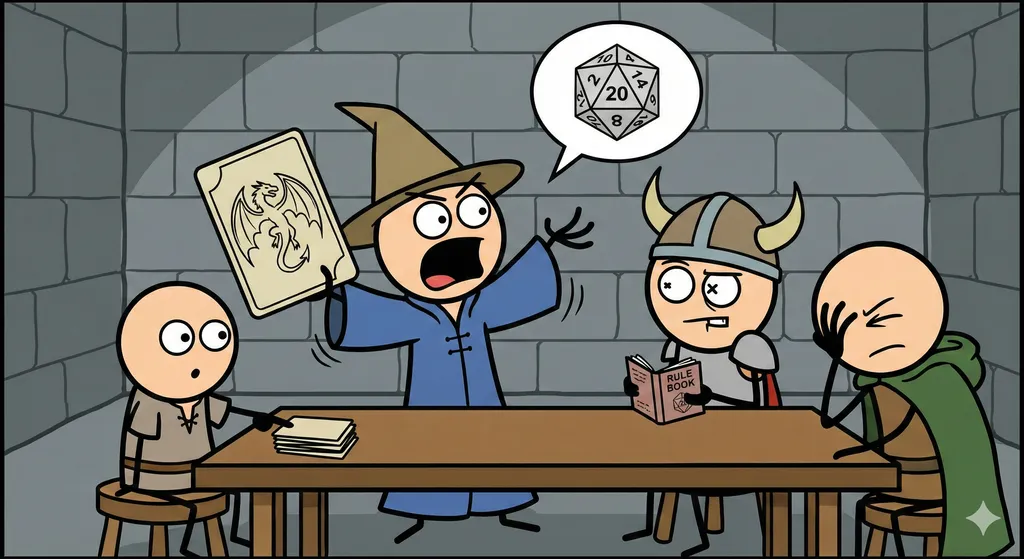
The Players' Aid’s June 2026 Monthly Debrief Video, a deep dive into the pervasive influence of nostalgia on the wargaming and tabletop role-playing game hobby, hit a nerve with many of us at The Crit Sheet. As veteran GMs and designers, we’ve witnessed firsthand how a reverence for the past can be both a comforting embrace and a creative shackle. The question isn't whether nostalgia exists, but how we, as a community and as creators, choose to wield it.
From a purely mechanical standpoint, nostalgia's impact is a fascinating study in design evolution—or sometimes, stagnation. On one hand, it fuels entire sub-genres like the Old School Revival (OSR) movement, where systems like Shadowdark RPG masterfully distill the essence of early D&D editions, stripping away bloat while retaining that visceral, dangerous table feel. Publishers respond to this demand, as seen with the triumphant return of Warhammer: The Old World, bringing back square bases and a more grounded, tactical crunch that many veteran Warhammer Fantasy Battle players yearned for. These are instances where nostalgia provides a valuable blueprint, allowing designers to refine and streamline beloved mechanics, making them accessible to a new generation without sacrificing their soul. It’s about understanding *why* certain mechanics resonated and then polishing them for contemporary play, not just slavishly copying them. This thoughtful approach can breathe new life into classic systems, offering a familiar yet fresh experience that respects its lineage, much like Old School Essentials revitalized B/X D&D.
Conversely, nostalgia can become a lead weight on innovation. It manifests as a resistance to change, a fervent defense of perceived flaws, or a fear of breaking “sacred cows” in a ruleset. How many times have we heard the refrain, “That’s how we always did it,” even when a mechanic is clunky, unbalanced, or outright detrimental to modern play? This can stifle necessary errata, prevent crucial balance passes in competitive wargames, or deter publishers from experimenting with genuinely new core systems. The constant pressure to appease long-time players, who often represent the loudest voices, can lead to design paralysis, forcing designers to make incremental, safe changes rather than bold leaps. It’s a delicate tightrope walk between honoring tradition and pushing the boundaries of what tabletop games can be.
The same duality applies to lore and setting. Nostalgia provides a rich, established tapestry for storytelling. The deep, intricate sagas of the Forgotten Realms, the grim darkness of Warhammer 40,000, or the vastness of the Star Wars universe offer instant buy-in, shared cultural touchstones, and a comforting familiarity that draws players in. These settings are imbued with decades of player experiences, fan theories, and epic campaigns, creating a collective memory that enhances immersion. The “lore” isn't just what’s written in the books; it’s the stories we tell about our own tables, the legendary critical failures and heroic successes that become part of the shared narrative of the hobby.
Yet, this deep lore can also become a cage. The weight of established canon, the fear of “retcons,” and the resistance to advancing timelines or introducing truly disruptive elements can lead to stagnant settings. Publishers become wary of alienating long-time fans with bold narrative shifts, resulting in settings that endlessly recycle familiar conflicts rather than exploring new frontiers. Game Masters, too, can feel pressured to adhere strictly to published lore, even when it might limit their own creative impulses or the organic development of their player characters’ stories. The line between a rich history and an impenetrable wall of continuity is fine indeed.
So, is nostalgia good for the game table? The verdict from The Crit Sheet is a resounding, “It depends entirely on how you approach it.” When curated with intention, nostalgia fosters community, provides a comforting entry point for new players, and serves as a wellspring of inspiration for designers. It’s good for the game when it reminds us of the joy we found, prompting us to seek it anew or improve upon it. However, when allowed to fester unchecked, it can breed insularity, resist progress, and ultimately stifle the very creativity that makes this hobby so vibrant. For GMs, the challenge is to weave familiar threads with fresh narratives, offering players the comfort of the known while daring them to explore the unknown. For publishers, it’s about understanding the heart of what players love, and then having the courage to evolve it.
Top Pick: Shadowdark RPG
Masterful blend of old-school feel with modern accessibility
Check Price on Amazon →Related Stories
Paizo's Catalog Expands to DTRPG: What It Means for Your Table
Paizo's complete Pathfinder and Starfinder PDF catalogs are now available on DriveThruRPG, greatly enhancing accessibility for GMs and players. This move promis
The Crit Sheet: Renegade's DCC RPG Crawls to the Tabletop
Gen Con 2026 was abuzz with the Dungeon Crawler Carl RPG from Renegade Games. We break down how this LitRPG phenomenon translates to the tabletop, from its uniq
Shadowdark's New Relics: Power Comes at a Price
Arcane Library's latest Shadowdark RPG supplement introduces potent artifacts with a unique Attunement Burden mechanic. This deep dive explores how these items