
Plotting Perspectives: The GM's Art of Nuanced Narrative
Campaign Mastery's 'Perspectives Of Plot' offers a robust framework for GMs to enrich their TTRPG narratives. This deep dive explores how leveraging individual character viewpoints can transform gameplay.
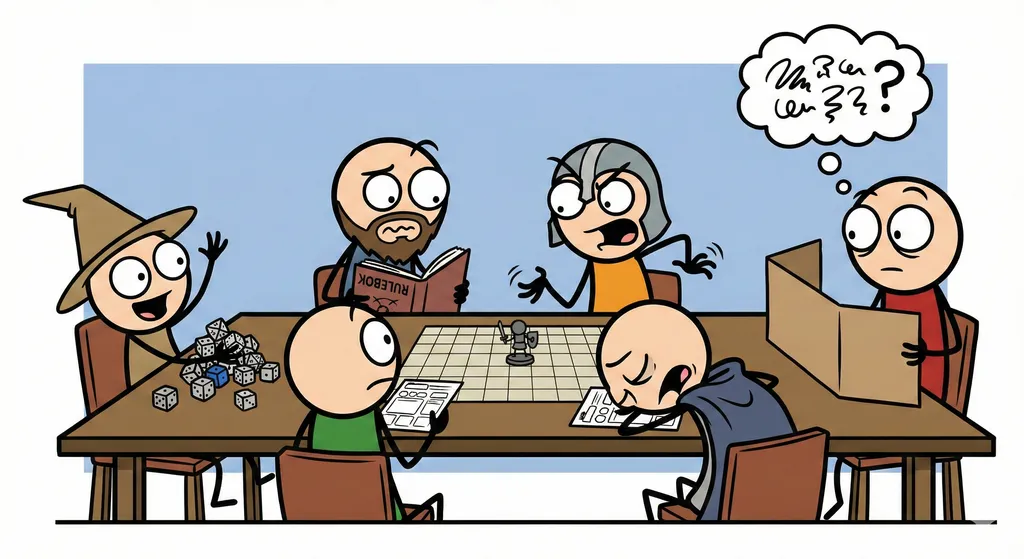
The latest conceptual deep-dive from Campaign Mastery, titled 'Perspectives Of Plot', isn't just theory; it's a blueprint for enriching the very fabric of our TTRPGs. It challenges Game Masters to move beyond a singular, omniscient narrative, instead embracing the nuanced lens through which each player character views the unfolding world. For GMs who’ve cut their teeth on everything from the intricacies of 5th Edition D&D spellcasting to the tactical crunch of Kill Team 2024, this framework isn't about *what* happens, but *how* it's perceived, and the profound impact that has on the table.
At its core, 'Perspectives Of Plot' is a mechanical call to arms for more dynamic GMing. How does this actually work at the table? It begins with information control, not as a means to obscure, but to tailor. Consider the classic perception check. Instead of the GM stating, 'You see a tripwire three feet ahead,' an approach rooted in plot perspective might ask, 'Given your background as a former thief, what specific hidden dangers are you looking for in this abandoned crypt?' The answer then informs the description: the rogue might notice the subtle discolouration of the flagstones indicating a pressure plate, while the paladin's divine senses might pick up on the faint, lingering desecration around a false idol. Each PC receives information filtered through their skills, background, and current emotional state, making the world react specifically to *them*.
This isn't just about sensory input; it’s about framing. A cryptic prophecy might be delivered differently depending on whether the recipient is a devout cleric or a cynical warlock. The mechanics here involve the GM actively asking players to articulate their character’s immediate interpretation – 'What does this mean to *you*, given your experiences?' – thereby shifting a portion of the narrative burden, and creative ownership, to the players. It’s a powerful tool for refining your GM toolkit, forcing players to engage with plot on a personal, rather than purely analytical, level.
From a lore perspective, this approach injects unparalleled depth into the setting. A character’s personal quest for vengeance against the Iron Syndicate will naturally filter every encounter with their agents through a different emotional and moral lens than a character simply hired to retrieve a MacGuffin from them. The tyrannical baron, a clear antagonist to the oppressed commoner PC, might be viewed as a necessary evil protecting the realm from outside threats by the noble knight PC, or even a rightful ruler by another with differing political leanings. This divergence isn't a flaw; it's the very texture of a living, breathing world. It allows for antagonists and factions to possess motivations beyond simple evil, forcing players to grapple with moral ambiguities that feel genuinely earned because they stem from their character's unique place within the lore.
The verdict for the table feel is overwhelmingly positive, though not without its demands. For players, the immersion deepens significantly. Their characters become more than just stat blocks; they are active interpreters and shapers of the narrative, their choices imbued with greater weight because their understanding of events is uniquely theirs. This inherently encourages stronger role-playing and reduces meta-gaming, as 'player knowledge' is consistently challenged by 'character perspective.' For GMs, however, it requires a more dynamic approach to preparation and improvisation. You're not just outlining a plot; you're anticipating how different archetypes, backgrounds, and allegiances will perceive and react to that plot. While this can increase the cognitive load during session prep, the payoff is immense: a world that feels genuinely alive and responsive to the individual stories playing out within it, fostering a shared narrative that is both complex and deeply personal.
Top Pick: The Alexandrian Remix
For GMs seeking to master non-linear narrative and weave complex plots from multiple angles, this resource is invaluable.
Check Price on Amazon →Related Stories
Elric's Rebirth: Two New RPGs Challenge the Throne
The Young Kingdoms beckon anew as Free League's Dragonbane and Goodman Games' Dungeon Crawl Classics both announce adaptations of Michael Moorcock's iconic anti
Dragon Reflections Unleashes Potent Draconic Resonance
EN World's Dragon Reflections #104 introduces a compelling new system, 'The Draconic Resonance Protocol.' It weaves ancient draconic power directly into campaig
Citadel of the Sun Kings: A Radiant New Horizon for TTRPGs?
Astral Forge Games' Citadel of the Sun Kings promises a unique blend of high-fantasy and ancient sci-fi through its innovative Solar Resonance mechanic. This de