
Reawakening the Mind: Recalibrating Your Gaming Engine
After a long hiatus, many gamers find their strategic acumen dulled. We dissect Meeple Mountain's advice on rebuilding your gaming muscles, offering a veteran's perspective on sharpening your tabletop wits and re-engaging with the hobby's cognitive demands. It's not just about rules; it's about the mental agility that makes every session shine.
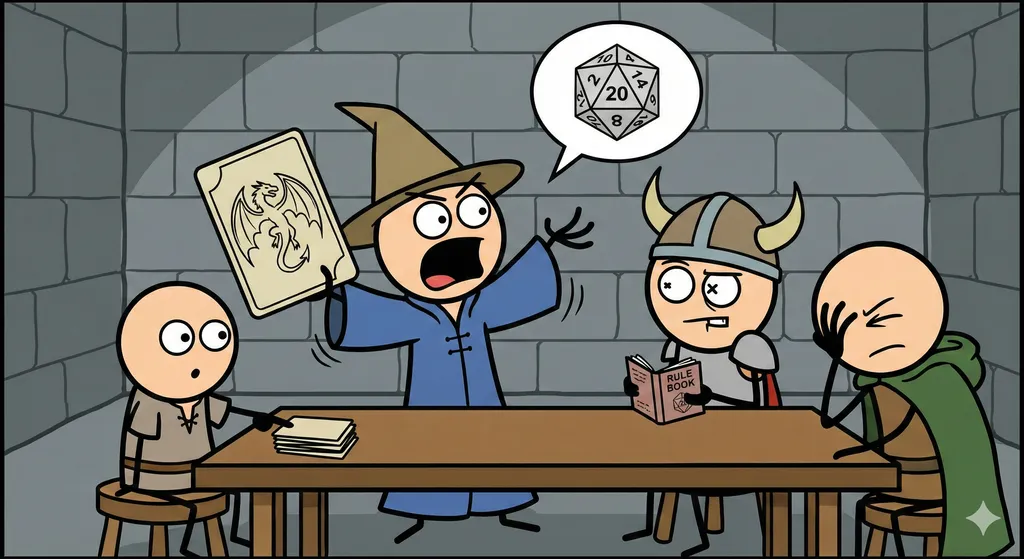
The recent series from *Meeple Mountain*, beginning with "Top Six Ways to Rebuild Your Gaming Muscles," tackles a topic that resonates deeply with any veteran player who's ever stepped away from the table: the quiet, insidious atrophy of gaming skill. This isn't about forgetting a rulebook; it's about the erosion of the very cognitive architecture that underpins our hobby, a personal game of re-engagement where the player is both the protagonist and the architect of their own comeback.
From our vantage point at The Crit Sheet, we see this not as a personal failing, but as a universal challenge, a natural consequence of life's demands. The author's candid admission of feeling "stupid and slow" after years of caregiving and a global pandemic isn't just relatable fluff; it's a stark illustration of the *mechanics* of cognitive decline in a gaming context. Our "gaming muscles" aren't biceps; they're the neural pathways dedicated to strategic foresight, logical deduction, pattern recognition, and the rapid parsing of complex rulesets. They are the engine that drives every tactical decision in a skirmish game, every resource allocation in a Euro, and every narrative pivot in an RPG. When these muscles atrophy, the very act of engaging with a system, even a beloved one like *Trollhalla*, becomes a struggle against one's own processing power.
So, how do we rebuild this crucial crunch? While *Meeple Mountain* promises further installments, the implication in Part One is clear: it demands deliberate, incremental effort. For us, this translates directly to the tabletop. Start with systems that offer immediate, low-stakes feedback. Revisit games with clear victory conditions and limited decision trees. For TTRPG players, this might mean a one-shot adventure with a pre-generated character, focusing solely on tactical combat or a straightforward social encounter, rather than a sprawling sandbox campaign. It means actively engaging with the rules again, perhaps even reading a rulebook aloud, or explaining a mechanic to an imagined novice. Consider playing a solo game variant, or even a digital adaptation, to practice the core loops without social pressure. The critical path here is deliberate practice, focusing on one "muscle group" at a time: maybe a week dedicated to understanding action economy, followed by a week on spatial reasoning, then on optimizing resource management. Systems like the Shadowdark RPG offer a streamlined, intuitive experience perfect for recalibrating those core TTRPG instincts without overwhelming the player with complex subsystems.
This isn't just about personal improvement; it's about the *lore* of the gaming table itself. Every GM knows the difference a sharp, engaged player makes to the narrative flow and challenge of a session. When players are operating at their peak, the story becomes more dynamic, the stakes feel higher, and the collaborative storytelling flourishes. The shared experience of overcoming a cognitive hurdle, of witnessing a returning player reclaim their strategic acuity, strengthens the bonds of the gaming group. It's a reminder that our hobby is a skill-based pursuit, one that rewards dedication and mental agility, but also one that embraces the journey of regaining lost prowess. The "lore" of the hiatus – the real-world demands, the personal struggles – adds a layer of depth to every triumphant return to form.
The verdict from The Crit Sheet is unequivocal: this conversation is vital. The advice, even in its foundational stages, is sound. Rebuilding gaming muscles isn't just "good for the game"; it's essential for the longevity and health of the player and, by extension, the entire hobby. A player who feels capable and engaged is a player who stays at the table, contributing to the vibrant ecosystem of strategy, storytelling, and camaraderie. It’s a call to arms for anyone who’s felt their mental gears grind, a sophisticated nod to the fact that our brains, like our dice, sometimes need a good warm-up before the critical roll.
Top Pick: Gloomhaven: Jaws of the Lion
Excellent tutorial and streamlined experience for tactical thinking
Check Price on Amazon →Related Stories
Epic Brick Adventures: The Foundation of Imagination
Epic Brick Adventures merges plastic bricks with TTRPGs, letting players use existing collections to craft stories. We dissect its framework for MiniHeroes and
Mothership's Print Run: Blue-Collar Terror, Tangible Dread
The physical release of Mothership RPG from Tuesday Knight Games signifies a triumph for indie design. We deep-dive into its mechanics and lore, dissecting how
Beyond Tropes: Aetherial Bonds Brings Omegaverse to D&D 5e
Mythos Forge Publishing's 'Aetherial Bonds' introduces Omegaverse mechanics to D&D 5th Edition. We examine how pheromones, pair bonding, and secondary genders c