
Revenant: A Deep Dive into Ambitious Design and Overwhelming Complexity
Thomas Wells's Revenant promised a Battlestar Galactica-esque eurogame with unique investment mechanics and a dynamic board. While its core systems are robust, the sheer volume of intricate rules and iconography creates a daunting barrier to entry.
The tabletop world is no stranger to ambitious designs, and when a game like Revenant, by designer Thomas Wells, emerges with the promise of a Battlestar Galactica-esque narrative woven into a sophisticated eurogame, our collective ears perk up. The initial pitch is compelling: a flotilla of ships navigating the perils of space, all while players contend with ideological conflict and a shared board space that shifts and evolves with every decision. It's the kind of high-concept blend that immediately suggests a rich, rewarding experience for veteran players.
Mechanically, Revenant sets out to achieve a great deal. It incorporates elements of investment and stock games, where player actions subtly influence the value and trajectory of various factions or resources within the struggling fleet. The idea of a shared, dynamic board, expanding and contracting as the game progresses, is a brilliant concept, promising emergent tactical depth. Furthermore, the game boasts a plethora of 'oblique powers' – cards and abilities that don't always offer straightforward advantages but instead open up nuanced strategic pathways, encouraging creative engine building and long-term planning. The core systems, on paper, are undeniably well-designed, offering a robust framework for strategic play.
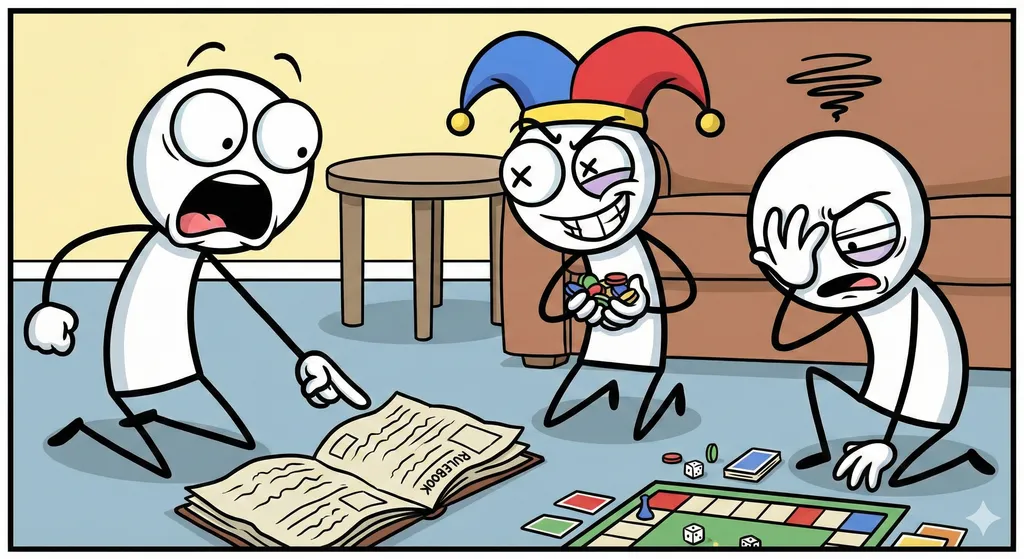
However, this mechanical ambition, while laudable, often trips over its own feet in execution. The experience of playing Revenant, particularly when teaching it, reveals a significant friction point. The game suffers from a near-impenetrable miasma of choices, primarily due to an overwhelming volume of iconography and rules grit that is granularly layered over each system. Simply during setup, players are tasked with parsing icons on eight different cards, each with unique interactions that must be understood before the first turn even begins. This isn't just a learning curve; it's a cognitive Everest. As the game develops, player engines become increasingly elaborate, transforming what should be a satisfying synergy into a labyrinth of conditional effects and triggers. Even with just three players, turns can extend significantly, turning strategic deliberation into a drawn-out exercise in rules cross-referencing.
The thematic promise of Revenant, that Battlestar Galactica-esque struggle for survival amidst ideological strife, is potent. One can easily envision the drama unfolding as players manage their resources, influence the fleet's direction, and contend with the moral ambiguities of leadership in a dying civilization. The changing board state could represent the fleet's dwindling resources or desperate maneuvers. The 'oblique powers' could manifest as desperate gambits or hard-won technological breakthroughs. This rich narrative potential is what draws many of us to the table. Yet, the overwhelming mechanical overhead often overshadows this thematic brilliance. Instead of feeling like a desperate struggle for survival, the game can often feel like a struggle against its own rulebook.
At the table, the 'feel' of Revenant is a mixed bag. For the dedicated few who manage to internalize its intricate lexicon, there's a deep, rewarding strategy to be found. But for most, the initial excitement quickly wanes as the sheer mental load becomes apparent. It's a game that demands repeated plays and a significant investment of time to truly 'click,' which is a tough sell when the very act of teaching it becomes a chore. While the core systems are indeed solid, their presentation creates a formidable barrier to entry, hindering the organic flow of play and dampening the emergent narrative. It’s a classic case of brilliant ideas being hampered by an overzealous application of complexity. When the learning experience overshadows the playing experience, even the most veteran GM might find themselves hesitant to pull it off the shelf. For those seeking a compelling euro with clearer iconography and a smoother ramp-up, consider exploring another compelling euro for its elegant action selection and resource management.
Top Pick: Twilight Imperium: Fourth Edition
For those who love grand-scale sci-fi epics and don't mind a long playtime, but with a much clearer ruleset and iconic components.
Check Price on Amazon →Related Stories
Jisogi: Anime Studio - The Crunch of Creativity, the Thrill of the Pitch
Jisogi: Anime Studio isn't just a game; it's an economic engine that captures the high-stakes world of anime production. This title breaks the mold, proving tha
Surplus of Sloths: Decoding the Shrug of Simplicity
Weird Giraffe Games' upcoming Surplus of Sloths (2026) offers a card drafting experience centered on ascending runs and a unique 'surplus net' mechanic. This ed
Effervescent: Weird Giraffe's Next Abstract Dive Challenges the Grid
Carla Kopp's Effervescent from Weird Giraffe Games introduces a peculiar tail-to-head tile placement mechanic, promising a unique spatial puzzle. This abstract