
RPGBOT's Spirit Binder: A New 5.5 Paradigm for D&D's Ethereal
RPGBOT dives into homebrew with the Spirit Binder, a D&D 5.5 class offering unique mechanics for interacting with the spirit world. This deep dive examines its potential to enrich player options and challenge GMs at the table.
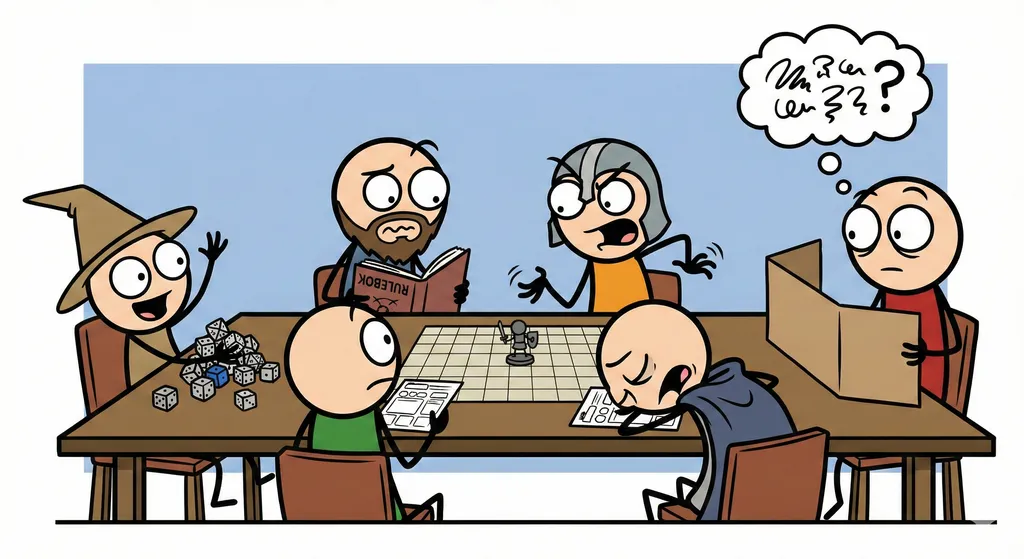
RPGBOT, a long-standing oracle of D&D optimization, has announced a bold pivot: a dedicated foray into homebrew content, kicking off with the Spirit Binder class for D&D 5.5. This isn't just another fan creation; it's a statement, and one that demands a veteran's eye to dissect its potential impact on our tables.
The Spirit Binder, as presented, immediately establishes a unique resource economy. Unlike traditional spell slots or daily abilities, the core seems to revolve around the active management and "binding" of ethereal entities. While specific subclass features are noted as still in development—a commendable transparency, frankly—the foundational concept appears to be a hybrid of a summoner and a controller, capable of manifesting spiritual energy or compelling minor entities to their will.
We're looking at a class that likely offers a persistent spiritual companion, evolving with the Binder, alongside the ability to temporarily call forth other spirits for specific tasks or combat roles. This suggests a more dynamic summoning paradigm than, say, a Wizard's *Conjure Animals*, potentially allowing for greater player agency in tailoring their spiritual retinue. The design notes hint at a focus on utility and battlefield control, possibly through debuffs, spiritual barriers, or even channeling spirits to empower allies. The efficacy of such a system hinges entirely on the clarity of its rules for spirit interaction and whether it introduces too much bookkeeping for the average player or GM. The critical question for 5th Edition remains: how does this interact with the action economy without becoming overly dominant or underpowered? Does it introduce a new type of "minionmancy" that avoids the pitfall of slowing down combat to a crawl?
Contextually, the Spirit Binder opens up fascinating narrative avenues. These aren't your typical necromancers, raising mindless thralls. Instead, we envision individuals who bridge the veil between the material and spiritual planes, perhaps acting as guardians against spectral incursions, mediums for the departed, or even seekers of forgotten knowledge whispered by ancient echoes. A Spirit Binder might be a shaman from a remote tribe, revered for their communion with ancestral spirits, or a reclusive scholar who delves into forbidden rites to understand the cosmic dance of life and death.
Their motivations could range from benevolent protection of the living from malevolent phantoms to a desperate quest for vengeance, binding the spirits of the wronged to enact justice. Imagine a character whose spiritual companion is the lingering echo of a lost loved one, or a primal nature spirit bound to protect the wilds. This rich thematic potential is a goldmine for Dungeon Masters looking to weave intricate personal quests into their campaigns, offering a protagonist who directly interacts with the unseen forces of the world. The class intrinsically encourages worldbuilding, pushing GMs to define the nature of spirits in their setting—are they sentient? Are they echoes? What are their limitations?
The Spirit Binder, even in its nascent form, promises a fresh, engaging playstyle for D&D 5.5. For players, it offers a distinct identity, moving beyond the familiar archetypes to explore a niche often relegated to specific spells or subclass features. The tactical depth of managing a spiritual retinue, adapting to different encounters by binding appropriate entities, could be incredibly rewarding. It demands strategic thinking beyond simply casting the highest-level spell.
For Dungeon Masters, this class presents both opportunities and challenges. On the one hand, it’s a wellspring of plot hooks and character interactions, injecting a vibrant element of the ethereal into the campaign. On the other, GMs will need to be prepared to adjudicate the nuances of spirit abilities and interactions, especially with the "gaps in subclass features" still awaiting completion. The class design notes, which RPGBOT thoughtfully included, are a welcome sign of self-awareness and iterative development, crucial for any robust homebrew. It suggests a designer actively thinking about balance and potential exploits, which is exactly what we need for a complex class like this. I'd particularly recommend GMs looking for inspiration to explore Tasha's Cauldron of Everything for its diverse range of subclasses, which often push the boundaries of 5th Edition design in similar creative ways. If the final iteration can maintain its distinct identity without becoming overly complex or bogging down the game, the Spirit Binder could carve out a vital and much-loved role at the table. This is the kind of community-driven design that keeps TTRPGs vibrant and evolving.
Top Pick: Van Richten's Guide to Ravenloft
For its deep exploration of spirits, curses, and the ethereal, providing excellent thematic inspiration for Spirit Binder campaigns.
Check Price on Amazon →Related Stories
Avantris' Primeval Cryptist: A D&D 5e Deep Dive
Avantris introduces the Primeval Cryptist, a new D&D subclass blending elemental might with martial prowess in their Legends of Avantris space opera setting. We
UA Villainy Unleashed: Dark Paths for D&D's Anti-Heroes
Wizards of the Coast has dropped another Unearthed Arcana, 'Villainous Options 2,' expanding morally complex player choices for Dungeons & Dragons 5th Edition.
Battlezoo's Ultimate Bundle: Breathing Depth into D&D 5E Encounters
The Battlezoo Ultimate Monster and Adventure Bundle for D&D 5E and 5.5E offers GMs a trove of innovative tools. This collection transcends simple stat blocks, p