
SFG's Kickstarter Conundrum: Backer Trust on the Line
Steamforged Games faces backlash over delayed board game Kickstarters while Warmachine thrives. We dissect how publisher priorities impact player trust and the tabletop economy.
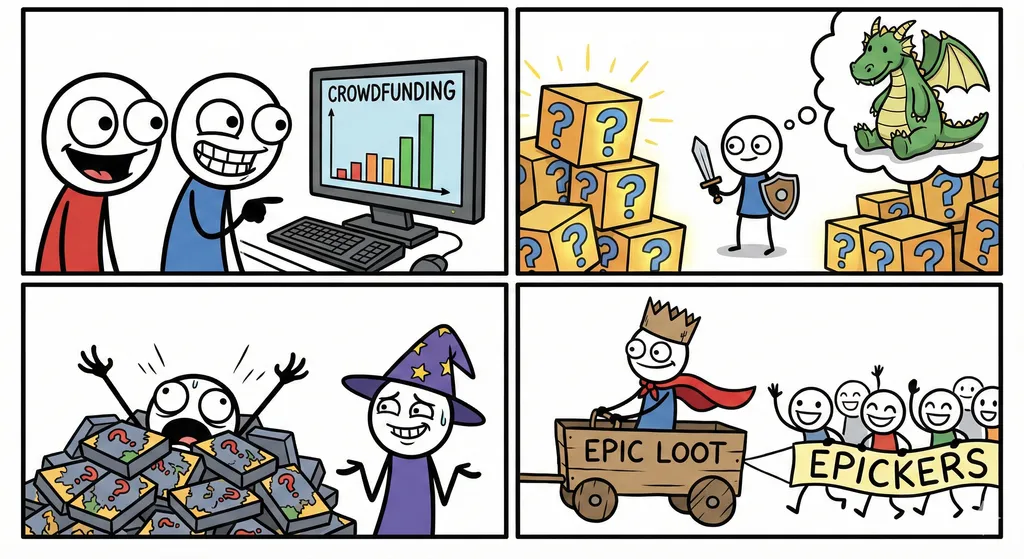
The Crit Sheet has been tracking the shifting tides of the tabletop industry for decades, and few phenomena have been as transformative—or as fraught—as crowdfunding. This week, the spotlight falls on Steamforged Games, a publisher now facing a storm of accusations from its board game Kickstarter backers. While their sales of Warmachine appear to go from strength to strength, a growing chorus of customers who funded earlier board game projects fret they've been left in the lurch, raising critical questions about publisher priorities and the integrity of the crowdfunding model itself. This isn't just about delayed miniatures; it's about the very social contract between creators and their community.
At its core, this situation illuminates a fundamental tension in game publishing: resource allocation. Kickstarter, for all its promise of direct creator-to-backer engagement, is not a philanthropic endeavor; it’s a pre-order system with inherent risks for both parties. For the publisher, managing multiple projects concurrently, especially when some are mature, ongoing product lines (like Warmachine, now under Steamforged's purview) and others are one-off, complex board game productions, demands rigorous logistical mechanics. How does a company mechanically prioritize manufacturing slots, shipping lanes, and customer service bandwidth?
When a publisher like SFG sees a surge in success for a newly acquired or prioritized IP, the temptation to divert resources – be it personnel, marketing budget, or even manufacturing capacity – from older, unfulfilled Kickstarter obligations can be immense. This isn't necessarily malicious; it's often a calculated business decision. However, for the backer, the mechanics of their investment are simple: money in, game out. When that equation breaks down, and communication becomes sparse, the trust mechanism that underpins the entire crowdfunding model begins to erode. We're not talking about a simple dice roll here; we're talking about the complex, interconnected systems of supply chain management, financial accountability, and transparent community engagement that dictate whether a project lives or dies, and whether a publisher retains its credibility.
The 'lore' of Kickstarter is rich with both heroic tales of indie darlings finding their audience and cautionary sagas of over-promised, under-delivered projects. The platform was initially conceived as a means for creators to bypass traditional gatekeepers and directly fund their visions, fostering a unique symbiotic relationship with their earliest, most enthusiastic supporters. Backers weren't just customers; they were evangelists, patrons, and often, unpaid beta testers. This created a powerful narrative: you're part of something special, helping to bring a dream to life.
However, as the platform matured, and larger, more established publishers like Steamforged Games increasingly utilized it, the 'lore' began to shift. The promise of direct engagement often gave way to the realities of corporate structure and market demands. The unique 'backer experience' became standardized, sometimes feeling less like a partnership and more like a pre-order with extra steps and significant delays. The community, once a fount of positive energy, can quickly become a crucible of frustration when expectations are not met. The historical precedent is clear: publishers who fail to adequately manage this narrative, who prioritize new ventures over existing commitments, risk not just individual project failures but a broader erosion of goodwill that can haunt them for years. The unwritten contract, the 'lore' of the backer, is that you are valued for your early support, not just as another customer in the sales pipeline.
So, what does this mean for the table? The immediate "table feel" for those unfulfilled backers is one of frustration and disappointment. It's the sour taste left when you've invested not just money, but anticipation, into a project that seems to be languishing while the publisher trumpets new successes. This isn't just a financial hit; it's an emotional one. For the broader hobby, these incidents contribute to a growing skepticism surrounding Kickstarter, making even the most compelling new projects harder to fund. Players become more cautious, perhaps opting to wait for retail releases or, worse, turning away from the platform entirely.
A publisher's reputation is its most valuable asset, built brick by brick through consistent communication, transparent operations, and, crucially, timely fulfillment. When that reputation is tarnished, it doesn't just affect future Kickstarter campaigns; it impacts every product they release. Why invest in a new Steamforged Games title if their track record for supporting their initial backers is perceived as shaky? The meta-game of publisher trust is paramount. For the health of the hobby, for the continued innovation that crowdfunding enables, publishers must remember that their backers are not just wallets, but the passionate heart of their community. Prioritizing new market opportunities over existing commitments is a dangerous game, one that can lead to a hollow victory if the very foundation of player trust crumples. Gamefound
Top Pick: Gloomhaven: Frosthaven
For a masterclass in transparent, consistent Kickstarter communication and fulfillment, even for massive projects, look no further.
Check Price on Amazon →Related Stories
Steam & Cheese: A Deep Dive into Rodent Industrial Domination
The upcoming Steam and Cheese board game promises a unique blend of charming aesthetics and cutthroat industrial strategy. We break down its innovative mechanic
Jurassic Crisis: Prehistoric Survival Meets Arcane Dread
Apex Games' Jurassic Crisis has stormed crowdfunding, promising a unique blend of PvE and PvP survival against ancient beasts and eldritch forces. We deep-dive
Aberration's Grim Expansion: A Deep Dive into Gothic Survival
The gothic survival board game, Aberration, is poised for a significant rerelease and expansion via crowdfunding. We dissect how its dark fantasy tower defense