
Shared Sovereignty: Commander's Ultimate Identity Crisis
This variant flips Commander on its head: players cast opponents' commanders, not their own. It redefines deckbuilding and interaction, forcing a radical shift in strategy.
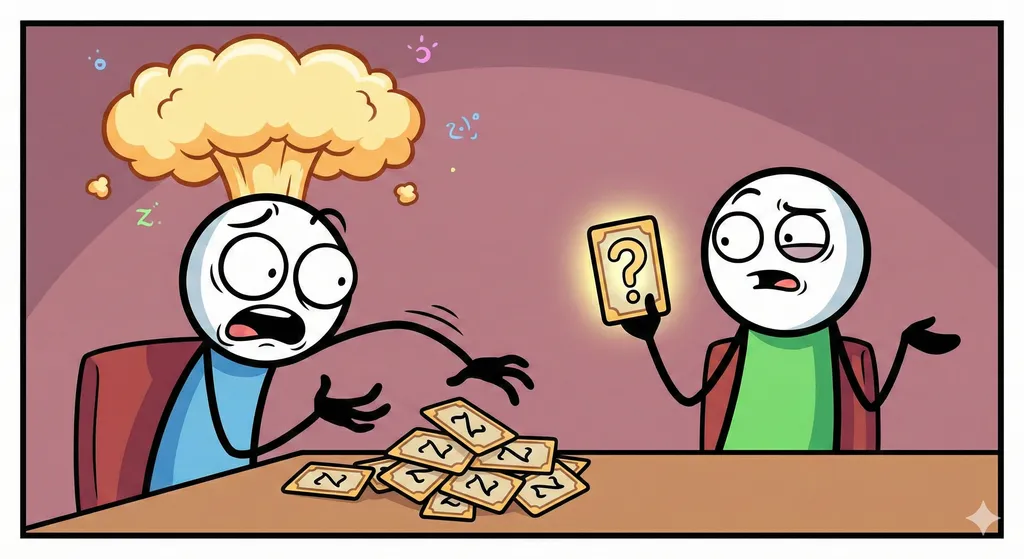
The venerable Magic: The Gathering Commander format, published by Wizards of the Coast under the Hasbro umbrella, has always been defined by the singular entity at the heart of your 99-card deck. Your commander is your general, your identity, your guiding star. But what happens when that star is unreachable, and you're forced to navigate by another's light? The recent MTGGoldfish Commander Clash S20 E9 introduced a truly provocative variant: "We Can ONLY Play Each Other's Commanders," where players are explicitly forbidden from casting their own commander, yet empowered to cast any opponent's. This isn't just a house rule; it's a fundamental re-imagining of the format's core premise, demanding a rigorous analysis of its mechanical implications and potential for table-shaking fun.
Let's get down to the brass tacks of this radical departure. The rule is deceptively simple: your commander remains in your command zone, inaccessible to you. However, *any* opponent's commander becomes fair game. When you cast an opponent's commander, it follows all standard casting rules: it costs its mana value, plus any accrued commander tax (which, crucially, applies *to you* for subsequent castings of *that specific commander*). The card itself is still owned by its original player, meaning if it's exiled or returned to the command zone, it goes back to *their* command zone. This creates a fascinating dynamic where you might pay increasing amounts of mana to keep an opponent's powerful legendary creature on the board, only for them to reclaim it via a bounce spell or their commander's inevitable demise.
The primary mechanical ripple effect is in deck construction. Your 99 cards can no longer rely on a singular synergy with your chosen commander. Instead, you must build a robust, self-sufficient engine capable of leveraging *any* commander that might become available. This often pushes players towards "good stuff" piles, strong value engines, or highly interactive strategies that don't need a specific legend to go off. Furthermore, the color identity rules remain tied to *your* deck. While you can cast an opponent's commander outside your colors, you still cannot include cards in your 99 that violate your own commander's color identity. This means a mono-red deck could cast a Simic commander, but couldn't include green or blue spells in its main deck. The political layer is also intensified: do you cast the opponent's combo piece, knowing it might benefit them later, or use their powerful removal commander against another threat? Resource management becomes paramount, as you're constantly evaluating whether to invest mana into your own spells or an opponent's borrowed general.
From a narrative perspective, this variant feels less like planeswalkers commanding their champions and more like a chaotic, multi-planar free-for-all where powerful beings are constantly being yanked across realities, pressed into service by whichever planeswalker can exert enough influence (mana) to temporarily control them. Imagine a grand, cosmic chess match where the pieces on the board are not loyal soldiers, but independent agents capable of being swayed by any competing will. Perhaps the "true" commanders in this scenario are the planeswalkers themselves, their identities so potent they prevent their own champions from being fully controlled, yet allow them to seize control of others. It evokes a sense of desperate improvisation, a "the enemy of my enemy is my temporary ally" ethos, where alliances are forged and broken not by words, but by mana spent. The legendary creatures become less personal avatars and more powerful, neutral artifacts to be wielded.
Is this good for the game? Absolutely, for the right table. This variant is a breath of fresh air for veteran Commander groups suffering from meta stagnation or players who always default to the same powerful commander-centric strategies. It forces genuine creativity in deckbuilding and demands dynamic, on-the-fly decision-making. The game becomes less about executing *your* game plan and more about adapting to the ever-shifting board state and the commanders available for hire. This variant significantly reduces the prevalence of "tutor for my commander, execute combo" lines, pushing interaction and board presence to the forefront. It's a fantastic way to revitalize old decks or challenge assumptions about what makes a "good" Commander deck.
However, it's not without its drawbacks. Newer players might find the complexity overwhelming, as the core identity of their deck is fundamentally undermined. Some commanders, particularly those with very specific build-around requirements (e.g., Muldrotha, the Gravetide), become significantly less appealing or even useless if no one wants to cast them. Games can potentially slow down as players deliberate over which opponent's commander best suits their current needs. But for experienced players hungry for a novel challenge, a way to truly break free from established norms, this variant is a goldmine. It encourages social interaction, political maneuvering, and a deep understanding of not just your deck, but everyone else's.
Top Pick: Commander Masters
Excellent reprint value for Commander staples and a fantastic way to boost the power level of existing decks.
Check Price on Amazon →Related Stories
Kaelen, The Unyielding Charge: Aggression Redefined in Commander
The reveal of Kaelen, The Unyielding Charge, a new Gruul legend, promises to reshape aggressive casual Commander play. This card's unique combat damage triggers
Commander's Land Destruction: Salt, Strategy, or Sabotage?
This week, we're dissecting the contentious strategy of Mass Land Destruction in Magic: The Gathering's Commander format. Is it a legitimate tactical choice or
The Hobbit Spoilers: Universal Typal Tools Shake Up Commander
New Magic: The Gathering – The Hobbit spoilers reveal powerful typal support, including a versatile equipment piece. This release is poised to invigorate variou