
Sly Flourish's Eight Steps: A GM Prep Masterclass
Sly Flourish's "Return of the Lazy Dungeon Master" offers a concise eight-step preparation method, initially tailored for D&D 5th Edition. This article explores its surprising versatility across a myriad of TTRPG systems, examining its core principles and impact on diverse tables.
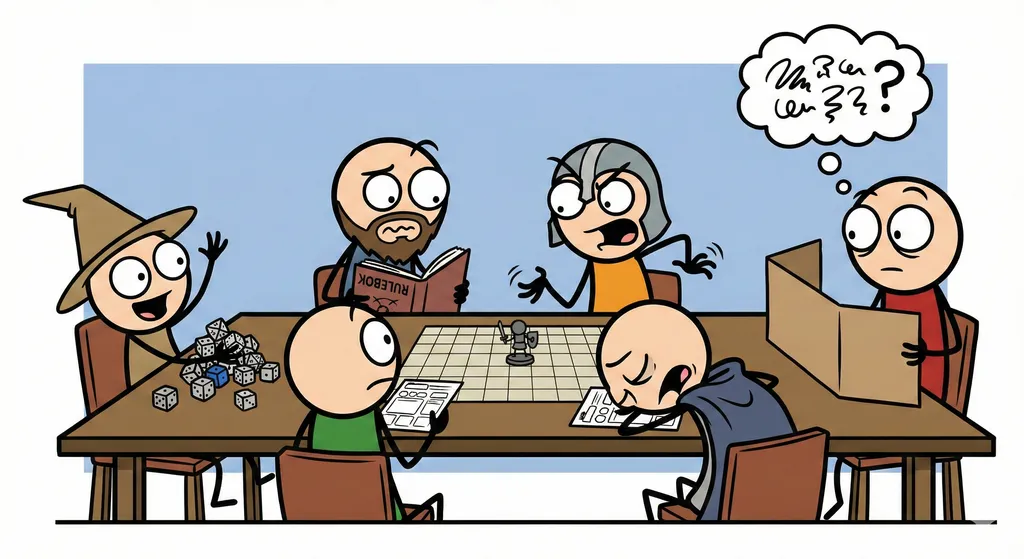
Return of the Lazy Dungeon Master by Michael E. Shea (Sly Flourish) emerged during D&D 5th Edition's infancy, quickly becoming a touchstone for GMs seeking efficient preparation. But as the TTRPG landscape diversified, a crucial question arose: does this streamlined methodology extend its utility beyond the Forgotten Realms and into the myriad worlds of other systems? The answer, as Shea himself has confirmed, is a resounding yes, and understanding why offers profound insights into effective game mastering.
The core of Shea's approach lies in its eight deceptively simple steps, designed to minimize wasted prep time while maximizing table impact. These aren't prescriptive plot points, but rather flexible prompts: 1. Review the characters. 2. Create a strong start. 3. Outline potential scenes. 4. Define secrets and clues. 5. Detail fantastic locations. 6. Outline important NPCs. 7. Choose relevant monsters/threats. 8. Select magic items/rewards.
At first glance, this list might seem inextricably linked to D&D's combat-heavy, treasure-laden structure. Yet, the genius is in the abstraction. 'Monsters/threats' becomes 'antagonistic forces' in a Cyberpunk RED campaign, 'social challenges' in a Powered by the Apocalypse game, or 'environmental hazards' in a Shadowdark dungeon crawl. 'Magic items/rewards' translates to 'critical intel' in a spy thriller, 'unique technological upgrades' in a sci-fi setting, or 'hard-won reputation' in an OSR sandbox. The steps guide a GM to consider *what* is important for the session, not *how* that importance must manifest in a specific ruleset. It's about identifying crucial vectors of player engagement and interaction, regardless of the dice system or character sheet.
The philosophy underpinning the Lazy DM method is one of emergent gameplay and player agency. Shea advocates for preparing situations, not plots. This isn't about abandoning worldbuilding; it's about focusing that effort on elements directly relevant to the upcoming session. Instead of writing a novel, you're sketching a compelling scene and populating it with evocative details and dynamic threats. This approach respects the narrative contributions of the players, acknowledging that the story truly unfolds at the table, not solely in the GM's notes. It's a reaction against the exhaustive, often paralyzing prep-styles prevalent in early D&D editions and some more simulationist games, offering a pragmatic alternative that prioritizes play over exhaustive pre-scripting. For those seeking even more minimalist approaches, exploring Solo RPGs can illuminate further avenues of efficient storytelling. It champions the idea that a GM's energy is better spent reacting to and building upon player choices than rigidly adhering to a pre-defined script. This shift in mindset, from storyteller to facilitator of shared storytelling, is where the method truly shines.
So, how does this translate to the table across diverse systems? For narrative-focused games like Fiasco or even some Indie TTRPGs, the 'strong start' and 'potential scenes' steps align perfectly with their scene-based structures. For crunchier systems like Pathfinder 2e or BattleTech, the 'monsters/threats' and 'rewards' steps ensure mechanical challenge and system mastery are still addressed, albeit with a focus on immediate session impact rather than long-term campaign arcs. Even in games with intricate lore, such as Warhammer 40,000 RPGs, the 'fantastic locations' and 'important NPCs' steps provide excellent anchors for injecting setting-specific flavor without drowning in minutiae.
The true strength of the Eight Steps is its adaptability. It's a meta-framework for game preparation, a set of heuristics that helps GMs identify and prioritize the elements that will make a session engaging. It encourages improvisation, not as a last resort, but as an integral part of the GM's toolkit. By focusing on *what* the players might encounter and *why* it matters to them, rather than rigid plot progression, the Lazy DM method cultivates a dynamic, responsive table experience. It reduces GM burnout by making prep feel less like homework and more like creative brainstorming, freeing up mental bandwidth for in-the-moment decision-making and collaborative storytelling. This isn't just a D&D 5th Edition trick; it's a fundamental principle for any GM who values player engagement and wants to spend more time playing and less time meticulously planning every conceivable outcome.
Top Pick: Return of the Lazy Dungeon Master
Essential reading for any GM looking to streamline prep and elevate their game, regardless of system.
Check Price on Amazon →Related Stories
Sly Flourish's Core Drives: Fueling TTRPG Quests
Sly Flourish's 'Greed, Heroism, Wonder' framework offers Game Masters a robust toolkit for crafting compelling character motivations. Discover how these core dr
D&D 2024 Officially 5.5e: The Edition That Wasn't (Quite)
Wizards of the Coast has finally clarified the nature of the D&D 2024 update, confirming it as '5.5e'. This official designation signals a significant revision
Renegade's Exodus RPG: Will This Sci-Fi Journey Reshape Your Table?
Renegade Game Studios is set to publish the Exodus Roleplaying Game in 2026, promising a new sci-fi TTRPG experience. This article explores its potential mechan