
Standard Stays Fast: WotC's Latest B&R List Raises Eyebrows
Wizards of the Coast released its latest Banned and Restricted list, notably leaving Standard untouched despite previous concerns. While Pauper and Legacy saw targeted bans, the decision to let Magic's premier format continue its rapid pace sparks debate among players and designers.
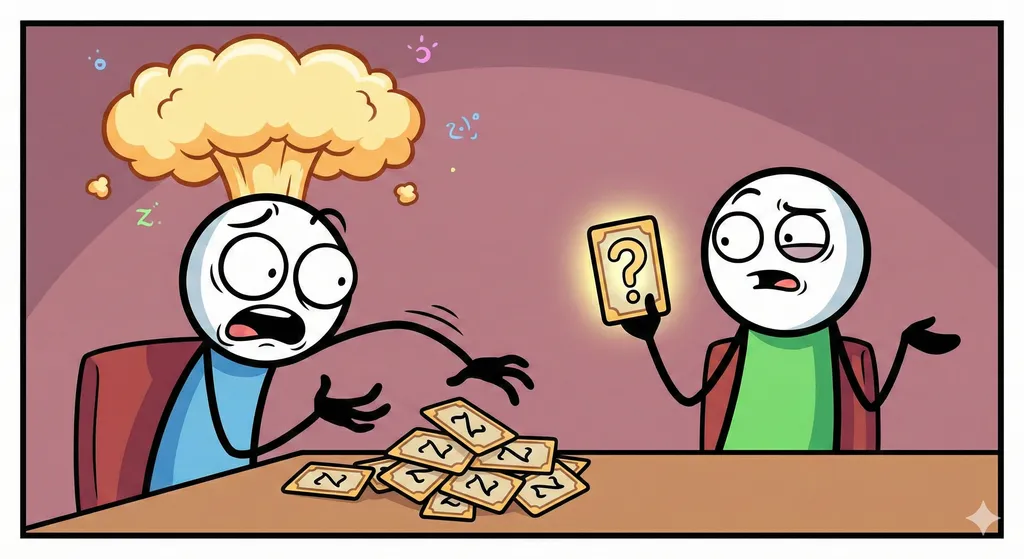
The Multiverse of Magic: The Gathering reverberated with a familiar tremor on June 30th as Wizards of the Coast unveiled its latest Banned and Restricted list. This time, however, the tremors were notably localized, leaving the premier formats of Standard, Pioneer, and Modern surprisingly unshaken. Instead, the focus landed squarely on targeted interventions within Pauper and Legacy, leaving many at the table wondering about the philosophy guiding these crucial decisions.
Let’s get to the crunch. The B&R announcement saw no fundamental shifts in the competitive landscape of Standard, Pioneer, or Modern. This stands in stark contrast to the preceding cycle, where we witnessed significant re-evaluations across multiple formats. The rationale, as often articulated by Play Designer Jadine Klomparens, has been a desire for metagames to organically evolve. Yet, Klomparens herself conceded last month that “the speed of Standard right now is faster than we would like,” earmarking this very June announcement as the potential crucible for change. The absence of such intervention now suggests either a surprising confidence in the format’s self-correction, or perhaps a more conservative approach than anticipated.
In Pauper, the format defined by its common-only card pool, and Legacy, the eternal format boasting access to nearly every card printed, the story was different. While specific card names weren't highlighted in the initial bulletin, the implication is clear: specific, problematic interactions or overwhelmingly dominant strategies were identified and excised. Typically, Pauper bans target commons that warp the format around singular, often recursive, engines or provide too much efficiency for too little cost, stifling diversity. Legacy bans, on the other hand, frequently address cards that enable hyper-efficient combo kills or generate insurmountable resource advantages too early in the game, circumventing the format’s already high power level. These are surgical strikes, designed to prune rather than fell, aiming to restore balance to specific, often highly degenerate, corners of the metagame.
From a lore perspective, one might view each Magic format as a distinct plane within the Multiverse, each with its own unique ecology of spells and strategies. Standard is the vibrant, ever-shifting core, a plane under constant flux as new sets introduce fresh mana and new threats. Pioneer and Modern are more stable, ancient planes with established ecosystems. Legacy and Pauper are the wild frontiers, where the rules bend and break in fascinating, sometimes terrifying, ways. The B&R list, then, is the hand of the Planeswalkers' Council – Wizards of the Coast – intervening when a plane's ecology becomes too unbalanced, when a single species (a dominant deck archetype) threatens to consume all others. The current decision regarding Standard feels like the Council observing a rapidly accelerating planar anomaly, acknowledging its speed, but choosing to believe the plane itself possesses the resilience to adapt without direct intervention. It’s a bold, almost hands-off approach to a perceived crisis.
So, what’s the verdict for us at the table? The lack of Standard changes is a double-edged sword. On one hand, players who have invested time and money into current top-tier Standard decks will appreciate the stability. There's no sudden invalidation of their competitive choices. On the other, those yearning for a slower, more interactive Standard experience, as openly acknowledged by the design team, might feel a pang of disappointment. The metagame will continue to evolve, of course, as new sets are released. But the question remains: will it evolve away from the current high-speed, often non-interactive paradigm on its own, or will the “speed of Standard” persist until a more drastic measure is unavoidable? The targeted bans in Pauper and Legacy, by contrast, are generally well-received. They demonstrate a continued commitment to maintaining the health and diversity of these beloved, if less frequently updated, formats. It's a testament to the granular attention paid to formats whose communities are often fiercely dedicated. This meticulous attention to detail in the less prominent formats, while leaving the flagship untouched, paints a complex picture of Wizards' current design philosophy. For those looking to dive into the deeper cuts of Magic's history, the Modern Horizons 3 set offers a fantastic entry point into the power and complexity of non-Standard formats. Ultimately, this B&R announcement feels less like a seismic shift and more like a calculated pause, a moment of observation before the next inevitable planar upheaval. The Crit Sheet will be watching closely.
Top Pick: Magic: The Gathering Commander Decks
Excellent way to experience diverse strategies without heavy investment
Check Price on Amazon →Related Stories
Dragon's Desire: The Fixed Dockside Extortionist Commander Needed?
The ban of Dockside Extortionist shook Commander, leaving players yearning for a balanced mana burst. We analyze if Dragon's Desire from The Lord of the Rings:
Middle-earth Logistics: Decoding The Hobbit's Early Ship Strategy
Card Kingdom has unveiled early shipping details for The Hobbit, promising quicker access to new cards for eager collectors and players. Understanding these dea
WotC Unleashes Competitive Brawl: A Sanctioned cEDH Precedent?
Wizards of the Coast has officially debuted "Competitive Brawl" on MTG Arena, marking their first sanctioned competitive format using Commander rules. This move