
Take Time: The Silent Art of Cooperative Card Play
Gamewright's Take Time challenges players to solve card puzzles collaboratively without speaking after seeing their hands. It's a unique test of non-verbal communication and shared strategy.
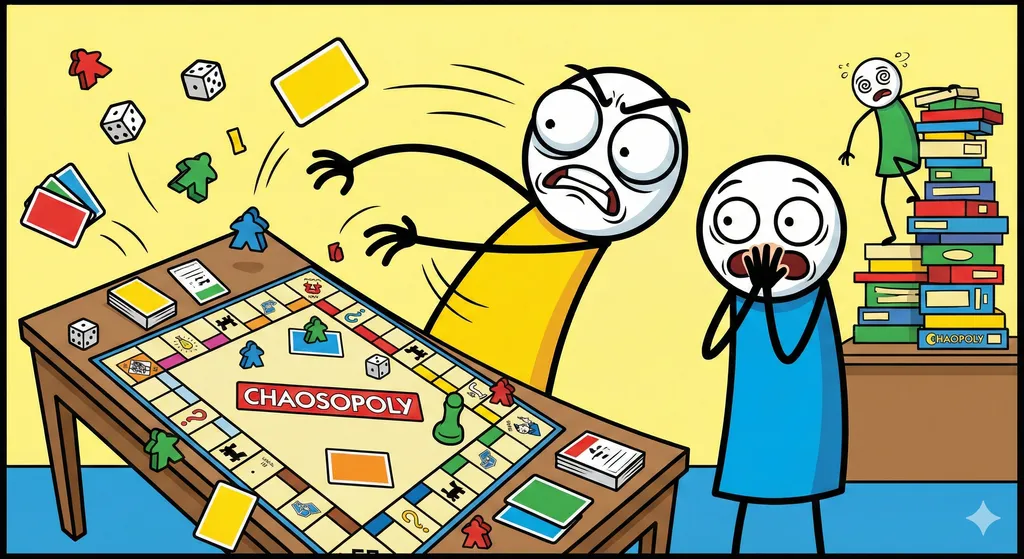
Gamewright's recently announced cooperative card game, Take Time, throws a fascinating wrench into the gears of typical team play, challenging players to solve intricate puzzles not just against the clock, but against the very nature of verbal communication itself. This isn't just another entry in the burgeoning field of cooperative tabletop experiences; it's a deliberate exercise in non-verbal strategy, demanding a shared mental model and intuitive understanding from its participants.
The core conceit of Take Time is deceptively simple: players must collectively place all of their cards according to specific rules for various "tests" or challenges. The profound twist, the true mechanical genius, emerges once players have seen their initial hands – from that moment on, all communication ceases. This isn't merely a thematic flourish; it’s the beating heart of the game’s engine. Each "test" likely presents a unique set of placement criteria, perhaps requiring ascending or descending sequences, matching suits or symbols, or adhering to specific patterns on a central board or tableau. The "play around the clock" description suggests a cyclical progression or a time-tracking mechanism that adds pressure to the silent decision-making. Players are forced to infer intent, anticipate moves, and subtly guide their partners through card placement alone. This creates a fascinating tension, where every card played is a statement, a question, or a desperate plea for understanding. It’s a delicate dance of deduction and trust, where the wrong card can derail an entire collaborative effort. Unlike explicit information exchange, success hinges on building a shared language of play, understanding what a partner *might* have and what they *need* you to do. For veterans of The Mind, this premise will feel familiar, yet the promise of varied "tests" suggests a deeper, more structured puzzle-solving experience beyond pure numerical sequencing.
While the initial details from Casual Game Revolution are light on explicit narrative, the phrase "play around the clock solving challenges" paints a vivid picture. Imagine a clandestine society of temporal architects, tasked with repairing fractured timelines or calibrating cosmic mechanisms before reality unravels. Each "test" isn't just a card puzzle; it's a critical juncture, a temporal anomaly that demands precise, synchronous intervention. Players aren't just placing cards; they are subtly nudging the fabric of time, ensuring causality remains intact. The silence isn't a handicap; it's a necessary discipline, a meditative focus required to perceive the intricate patterns of temporal flow that only a unified, unspoken consciousness can grasp. Perhaps the "clock" isn't just a timer, but a representation of the very timeline players are attempting to mend, with each card representing a crucial event or a necessary correction. This thematic layer, even if lightly applied, elevates the abstract card play into a compelling narrative of high-stakes, silent collaboration, where the fate of time itself hangs on a perfectly placed card.
Take Time promises an intensely engaging, and potentially maddening, experience at the table. For groups who revel in the psychological dance of games like Hanabi or the pure non-verbal synergy of The Mind, this will be an absolute hit. The satisfaction of successfully completing a complex "test" purely through unspoken coordination will be immense, fostering a unique bond and shared sense of accomplishment. Conversely, the inability to communicate directly will undoubtedly lead to moments of profound frustration, as a perfectly clear strategy in one player's mind is completely missed by another. This isn't a game for those who prefer explicit instructions or heavy-handed quarterbacking; it demands patience, empathy, and a willingness to embrace ambiguity. It's a masterclass in emergent strategy, where the "meta" develops organically within each playgroup. The replayability will hinge heavily on the variety and cleverness of the "tests" themselves, ensuring that players don't quickly exhaust the silent puzzles. If Gamewright delivers on a robust suite of challenges, Take Time could easily become a staple for those seeking a deeper, more cerebral cooperative challenge that truly tests the limits of teamwork without a single uttered word. It’s a game that forces you to truly *see* your fellow players, not just hear them.
Top Pick: Take Time
A fresh take on cooperative problem-solving that will test your group's unspoken synergy
Check Price on Amazon →Related Stories
Triangulation: The Subtle Science of Shared Secrets
Triangulation, from Wordplay Studios, challenges players to distill complex ideas into precise, yet elusive, clues. It's a team-based word game where communicat
Springwood Resort: The Ultimate Tabletop Retreat Examined
Tabletop Bellhop’s review of Springwood Resort has sparked a conversation: are dedicated gaming vacations the future? We dissect the mechanics and lore of these
The Mists of Barovia: Horrified's D&D Tabletop Take
Ravensburger's Horrified series ventures into Dungeons & Dragons' iconic Ravenloft, bringing Barovia's horrors to your tabletop. Designed by Peter Lee and Nick