
Team Dynamics Redefined: Tag Team & Rowdy Partners Dissected
Critical Roll Games introduces two new titles, Tag Team and Rowdy Partners, promising fresh takes on team-based play. We dissect the innovative mechanics and emergent lore of these hotly anticipated board games.
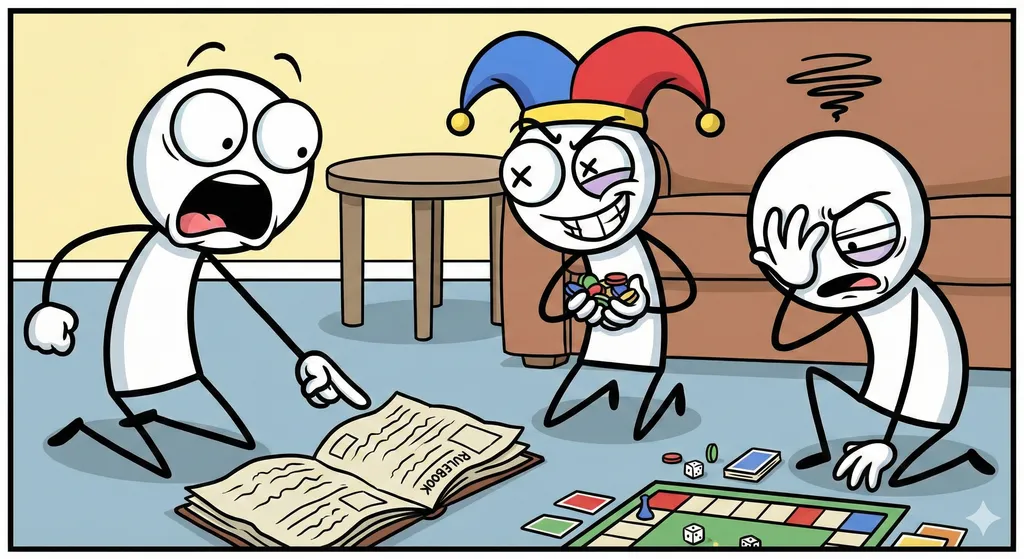
The TTRPG table thrives on cooperation, but board games often struggle to capture truly dynamic team play without falling into alpha-gamer traps or simple parallel solitaire. That’s why the buzz around Critical Roll Games’ recent releases, Tag Team and Rowdy Partners, as highlighted in the latest Tabletop Bellhop Gaming Podcast Episode 302, demands a deep dive. These aren't just new boxes; they are a calculated challenge to the very notion of team-based design.
Let’s crack open the crunch of Tag Team first. At its core, Tag Team is an objective-driven skirmish game for 2-4 players, played in two teams. Each player controls a unique hero, but the crucial innovation lies in the ‘Active Player’ and ‘Tag-Out’ system. Only one hero per team is ‘Active’ at any given time, granting them full access to their unique action suite and a shared pool of team resources. When a player decides to ‘Tag Out,’ their hero moves to a ‘Rest’ zone, refreshing certain abilities or recovering spent resources, and another hero on their team immediately becomes ‘Active.’ This isn't a simple turn order swap; it's a strategic gambit. Tagging out often comes with a minor penalty – perhaps a temporary reduction in movement or a discarded card – but it can also trigger powerful ‘Tag-In’ abilities for the newly activated hero, creating devastating combos. This system forces teams to think several turns ahead, managing their hero's fatigue, optimizing their action economy, and orchestrating powerful two-part plays across different character strengths. It’s less about individual glory and more about the intricate ballet of a well-oiled machine.
Now, for the lore that fuels this tactical dance: Tag Team drops players into the ‘Aetherian Arenas,’ ancient battlegrounds where champions from disparate planes are magically bound into temporary alliances. These Arenas are not just for sport; they are conduits for raw magical energy, and the winning team’s combined essence is said to stabilize a crumbling reality. Each hero represents a distinct archetype – the ‘Crimson Blademaster’ from the Martial Spires, the ‘Whisperwind Weaver’ from the Shifting Mists, or the ‘Ironclad Sentinel’ from the Golem Forges. Their abilities are deeply integrated with their origins, making the narrative justification for their synergistic powers feel natural and compelling. The stakes are cosmic, yet the focus remains squarely on the tactical prowess of the team.
Rowdy Partners, by contrast, is a beast of a different stripe entirely. This 2-on-2 brawl game embraces chaos and the glorious messiness of true partnership. Set in the infamous ‘Scurvy Dog Saloon’ of the pirate city of Port Malice, players control a pair of ne’er-do-wells trying to out-brawl another pair. The core mechanic here is a dice-driven push-your-luck system for initiating brawls, combined with a fascinating ‘Reputation’ track. Each player has their own Reputation, which can increase by landing critical hits or performing particularly audacious stunts (like smashing a chair over an opponent's head). However, the team's overall success depends on a shared objective: clearing the saloon of the other team and establishing dominance over key areas. The twist? Individual Reputation points contribute to a bonus objective for the *player*, not the team. This creates a delightful tension where you want your partner to succeed, but you also want to be the one smashing the most tables. Tag Team Core Set ‘Dirty Tricks’ cards, which can be played to hinder opponents or even subtly inconvenience your partner for a personal gain, amplify this delightful internal conflict. It’s a game where you’re simultaneously cheering for your partner and trying to outshine them.
The Verdict? Both Tag Team and Rowdy Partners succeed brilliantly in their respective design goals, offering distinct, compelling experiences. Tag Team is for the players who relish intricate planning, precise execution, and the satisfaction of pulling off a perfectly synchronized combo. It rewards deep understanding of character synergies and a communicative team. The table feel is one of focused intensity, where every Tag-Out decision feels weighty. Rowdy Partners, on the other hand, is pure, unadulterated fun. It’s for groups who enjoy laughter, emergent narratives, and don't mind a bit of lighthearted backstabbing within their team. The push-your-luck brawling and the Reputation track generate memorable moments of triumph and hilarious failure. Both titles elevate the concept of team-based play beyond simple cooperation, offering fresh challenges and engaging dynamics that will undoubtedly spark lively discussions around your gaming table for years to come.
Top Pick: Rowdy Partners
For its unique blend of cooperative chaos and individual ambition
Check Price on Amazon →Related Stories
City of the Great Machine: Unpacking CrowD's Steampunk Asymmetry
CrowD's 2023 release, City of the Great Machine, delivers a compelling one-versus-many steampunk experience. We break down the intricate mechanics and rich lore
Fruit Island: A Primate Predicament of Profit and Peril
Fruit Island challenges players to brave a jungle full of delicious produce and a thieving gorilla. This press-your-luck game blends shrewd risk assessment with
Arkham Travel Guide: Eldritch Routes & Elevated Rolls
Daniili Zaitsev’s Arkham Travel Guide redefines the roll-and-write genre, offering a highly interactive and strategic experience within a chilling Cthulhu Mytho