
The $400 Gamble: Unearthing Value in a MTG Collection
A recent MTGGoldfish article detailed a collector's incredible find, turning a modest investment into significant profit. This isn't just a tale of luck; it's a deep dive into the evolving mechanics of Magic: The Gathering's secondary market and the enduring thrill of the hunt for hidden gems.
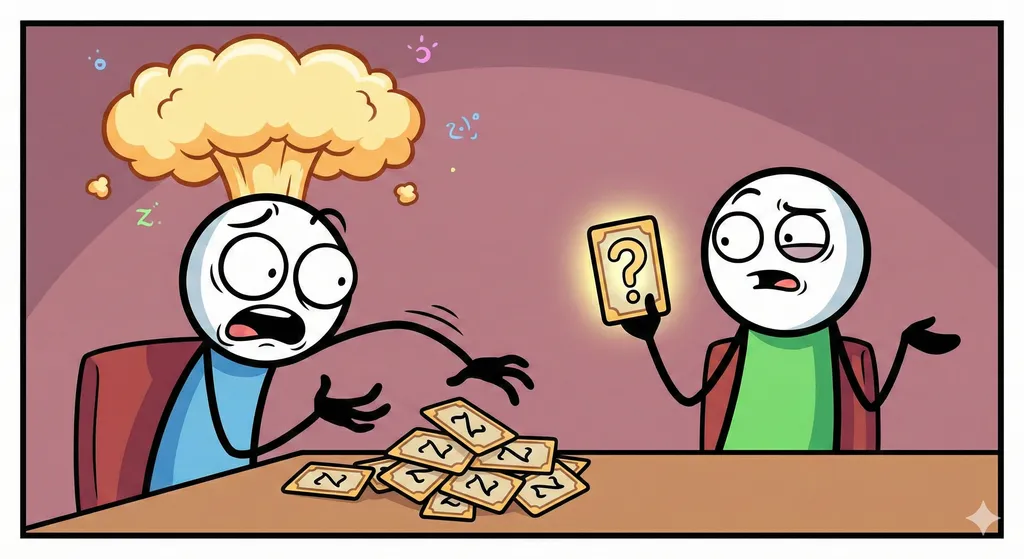
The world of Magic: The Gathering, driven by Wizards of the Coast, recently buzzed with a story of a collector turning a $400 gamble into a significant jackpot. While the headline itself evokes the thrill of discovery, it’s a potent reminder of the intricate systems at play within the game’s ecosystem, far beyond the shuffle and draw. As veterans of the table know, understanding the market is as much a strategic layer as deck construction or combat math.
At its core, hitting a “jackpot” in a Magic collection hinges on a sophisticated understanding of several interconnected mechanics. First, identification: distinguishing a common bulk card from a Reserved List powerhouse. This requires knowledge of set symbols, rarity indicators, and print runs. Early Magic sets, particularly those pre-dating the modern rarity system, often contain cards whose scarcity was not immediately apparent. Take, for instance, a seemingly innocuous common from Alpha that, due to print sheet anomalies or specific playability in formats like Legacy or Commander/EDH, now commands hundreds. Then there's condition: a Near Mint card can be exponentially more valuable than a Heavily Played version of the same card. The discerning eye of a seasoned collector, trained to spot creases, edgewear, and surface abrasions, directly translates into financial gain. Finally, market valuation: tools like TCGplayer Market Price or Card Kingdom's buylist offer real-time data, but the true skill lies in anticipating trends, understanding format shifts, and recognizing arbitrage opportunities between different platforms or local game stores. The mechanics here are not dice rolls or spell resolutions, but rather the meticulous application of knowledge to a fluid, player-driven economy.
Beyond the raw numbers, there’s a rich tapestry of lore woven into the act of collecting itself. Each vintage collection holds a story, a relic from a bygone era of Magic: The Gathering. These aren't just pieces of cardboard; they are artifacts imbued with the history of the game. An original Dual Land from Revised, for example, isn't just a powerful fetch target for Commander; it's a tangible link to a time before modern mana bases, when the game was finding its footing. The hunt for these cards echoes the in-game quests for powerful artifacts or forgotten spells. The excitement of finding a heavily played but still valuable Gaea's Cradle or a foil Sensei's Divining Top isn't purely financial; it's the thrill of unearthing a piece of gaming history, connecting with the legacy of the designers and the millions of players who have shuffled these cards over three decades. It’s a collective narrative, shared across forums and local game store trade binders, of the game's evolution and the community's enduring passion.
So, what does this mean for the table? Stories of colossal finds, while rare, serve a vital function. They act as a powerful, albeit sometimes misleading, advertisement for the game. They remind players that Magic: The Gathering is not just a strategic card game but also a vibrant collectible market. This can draw new players in, tantalized by the prospect of discovering their own hidden treasures. However, it’s a double-edged sword. Such narratives can also fuel speculation, leading to inflated prices for staples in competitive formats and Commander, potentially making the game less accessible for casual or budget-conscious players. It emphasizes the 'collectible' aspect perhaps too strongly for some, overshadowing the pure 'game' experience. Yet, for those who embrace it, the secondary market adds a layer of depth, turning every card acquisition into a potential mini-quest, every trade into a negotiation, and every collection into a personal archive of gaming history. The 'table feel' here isn't about playing the game, but about the meta-game of engaging with its economy and lore, enriching the overall experience for those willing to delve deeper.
Top Pick: Dragon Shield Sleeves
Essential for protecting valuable cards and maintaining their condition
Check Price on Amazon →Related Stories
Secret Lair's Latest: Deadpool, Dandân, & the Meta's Wild Ride
Wizards of the Coast has unveiled bonus cards for upcoming Secret Lair drops, featuring a new Deadpool iteration and a reprint of the enigmatic Dandân. These re
Flash Photography: Unpacking a 500% Price Surge in Final Fantasy MTG
The Magic: The Gathering x Final Fantasy card, Flash Photography, has seen an unprecedented 500% price increase, leaving many players wondering why. This deep d
The Eclectic Hoard: Unpacking a Collector's Time Capsule
A recent discovery of a truly bizarre collection featuring early Magic: The Gathering staples, Pokémon cards, and minor league baseball cards offers a unique lo