The Analog Resonance: Why Tabletop's Soul Resides in Paper
Despite the siren call of digital solutions, the core TTRPG experience thrives on the tangible. We explore why the physical table still holds an irreplaceable magic for Game Masters and players alike.
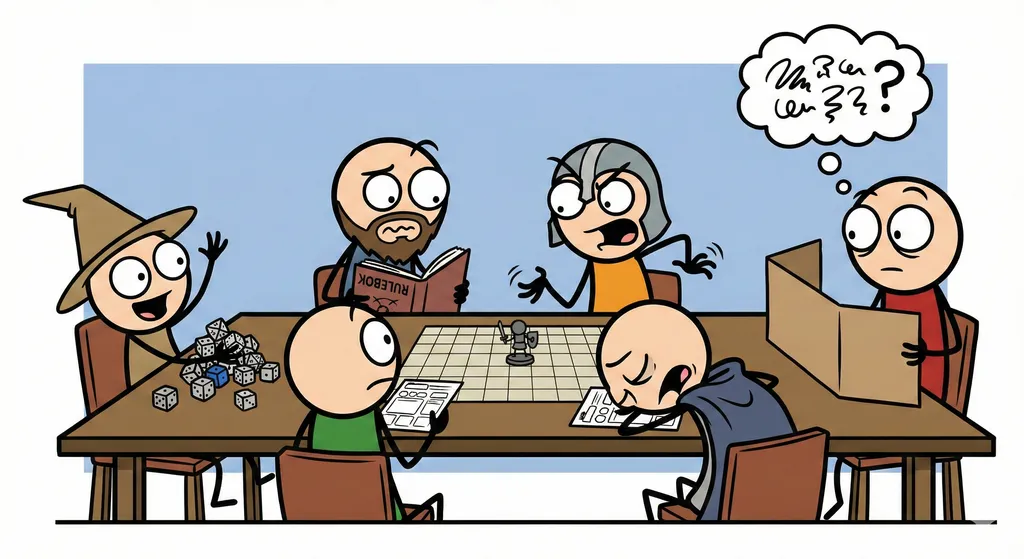
The ongoing discourse, often framed as "RPG Evolution: Why Paper Beats Pixels," isn't just an abstract debate; it’s a critical examination of the very soul of the TTRPG experience. While digital platforms and virtual tabletops (VTTs) continue to advance with impressive features, the enduring appeal of the analog tabletop, that tangible space where imagination meets the physical, remains undeniably potent. For seasoned GMs and new players alike, the "publisher" of our collective stories, the gaming community itself, consistently finds profound value in the tactile.
Let’s cut through the marketing jargon and talk brass tacks: how does 'paper' actually *work* differently from 'pixels'? Consider the simple act of rolling dice. In a VTT, a click generates a result; it's efficient, but it lacks the visceral thrill. The weight of the dice in your hand, the clatter across the table, the collective gasp or cheer as the d20 settles – these are mechanical inputs that transcend mere numbers. They inject randomness with a physical presence, a communal act that grounds the game.
Beyond dice, think about character sheets. A paper sheet, dog-eared and annotated, tells a story beyond its stats. It's a living document, evolving with every session. Marking off hit points with a pencil, crossing out used spell slots, scribbling a new item acquired – these actions are small, physical commitments to the game state. Compare this to automated digital tracking, which, while convenient, can sometimes flatten the player's engagement with their character's progression. The very act of physically interacting with your sheet reinforces your connection to the character's journey.
Maps and miniatures too, are more than mere visual aids. Moving a miniature across a hand-drawn dungeon map, measuring ranges with a physical ruler in a skirmish game like Kill Team, or simply pointing to a feature on a printed battlemat – these are spatial mechanics that engage players in a different way. They demand shared focus, collaborative interpretation of terrain, and a communal understanding of tactical positioning that a perfectly rendered, but often solitary, digital map can sometimes struggle to replicate. The "crunch" of analog play is the friction of the real world meeting the imagined one.
The lore of any great TTRPG isn't just in its rulebooks; it's in the shared experience, the table talk, and the artifacts we create. The tangible elements of tabletop play are integral to building this emergent lore. A custom-painted miniature isn't just a game piece; it's a representation of a character you've invested hours into, a physical avatar for your narrative. A hand-drawn map, even a crude one, carries the GM's personal touch, infusing the world with a unique flavor that pre-rendered digital assets often lack.
The "fluff" of the tabletop is also in the improvisation. When a player asks to examine a specific detail on the battlemat, the GM can point, describe, and even sketch a quick addition on the fly. This fluid, responsive interaction fosters a deeper sense of immersion and agency. It's about building a shared world collaboratively, not just consuming a pre-packaged digital environment. The collective imagination, sparked by a few well-placed props or a vivid description, creates a richer, more personal narrative tapestry than any meticulously programmed VTT can produce on its own. It’s the difference between *experiencing* a story and *co-authoring* it.
So, is "paper beats pixels" a good thing for the game? Absolutely, when understood correctly. This isn't a dismissal of digital tools; VTTs and digital resources have made TTRPGs more accessible, enabling remote play and streamlining certain aspects of Game Mastering. They are invaluable for bridging distances and introducing new players. However, they are supplements, not replacements, for the core analog experience.
The magic of the physical table lies in its inherent limitations and the creativity they inspire. The need to describe, to imagine, to physically manipulate components, fosters a deeper engagement and a more profound sense of shared presence. It’s about the human connection – the laughter, the eye contact, the shared silence of a tense moment. This "table feel" is a holistic sensory experience that digital interfaces, for all their advancements, still struggle to fully replicate. For a Game Master, the ability to read body language, to hand a player a physical prop, or to watch their eyes light up as they roll a critical hit, is irreplaceable. The enduring power of D&D, Pathfinder, and countless indie TTRPGs lies not just in their rules or settings, but in the communal ritual of gathering around a table, dice in hand, and weaving a story together. The analog table remains the crucible where the most potent gaming memories are forged.
Top Pick: The Tome of Adventure Design
Offers invaluable tools and inspiration for GMs building rich, original worlds, perfect for analog play.
Check Price on Amazon →Related Stories
Print's Enduring Reign: Why Physical RPG Books Still Crit
EN World's "RPG Print News" report highlights the robust health of physical D&D, Pathfinder First Edition, and OSR titles. This isn't just nostalgia; it's a tes
D&D 5e's K-Pop Idol Sourcebook: A Crit Sheet Deep Dive
Starlight Tome Studios introduces 'Harmonic Crescendo,' a D&D 5e sourcebook turning adventurers into K-Pop idols. We break down the mechanics, lore, and table p
Echoes of the Past: Influential Years and Our Tabletop Future
The history of board gaming offers profound lessons for TTRPGs and wargames. Understanding pivotal design shifts can elevate our play and creation at the table.