
The Arithmetic of Heroism: Analyzing the D&D Leveling Loop
We examine the mechanical transition from local hero to cosmic force in Dungeons & Dragons 5th Edition, focusing on the 2024 rule revisions and table feel.
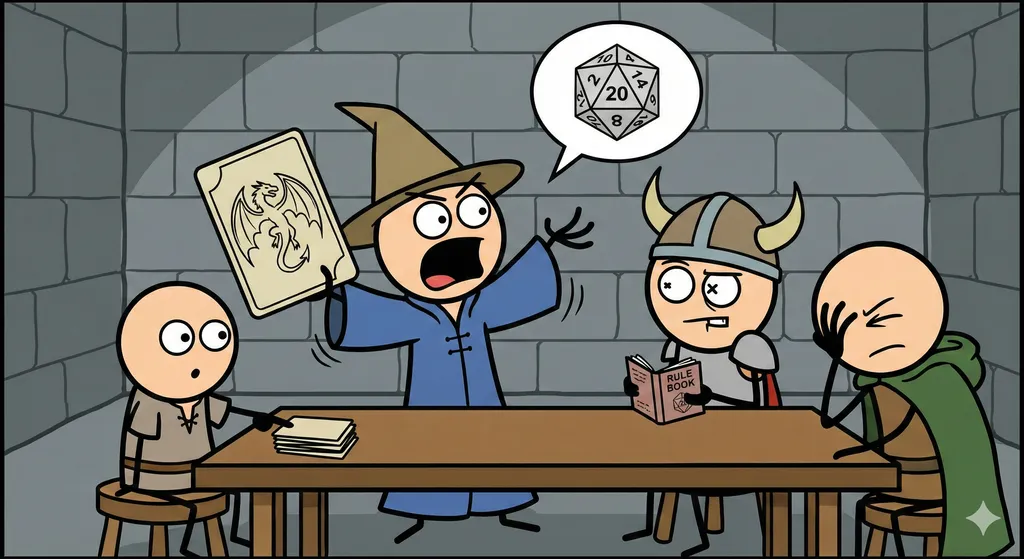
Leveling up in Dungeons & Dragons 5th Edition by Wizards of the Coast is the most significant ritual in the modern hobby, representing the mechanical manifestation of a character’s narrative growth. While the casual observer might see it as a simple increment of numbers, the veteran Game Master understands that each level represents a shift in the campaign’s fundamental physics. Whether you are tracking every copper piece of experience or utilizing the more narrative-focused milestone system, the progression from a fragile novice to a planar power-player is the engine that drives player engagement.
At its core, the mechanics of advancement—the crunch—rely on a predictable but impactful scaling system. The most vital metric is the Proficiency Bonus, a flat numerical addition that scales with total character level rather than class level. This design choice ensures that even multiclassed characters maintain a baseline of competency in their chosen skills and combat maneuvers. However, the true weight of a level-up is found in the Hit Die. Rolling for health is one of the few remaining gambles in 5th Edition that can permanently alter a character’s survivability, though many tables opt for the average result to mitigate the swinginess of a poor d10 roll. The 2024 revisions have further refined this by standardizing when subclasses come online, typically at level 3, which prevents the front-loading of power that often plagued earlier iterations of the system.
Multiclassing adds another layer of complexity, requiring a 13 in specific ability scores to ensure that a character isn't just a collection of disparate features, but a cohesive, if specialized, build. When you consult the Player’s Handbook 2024, you see that the progression is designed to offer a ribbon feature or a major power spike at every interval, ensuring that the dead level of previous editions is largely a relic of the past.
The fluff, or the narrative context of these levels, is categorized into four distinct Tiers of Play. Tier 1 (Levels 1-4) is the realm of local heroes, where a stray goblin arrow remains a lethal threat. Tier 2 (Levels 5-10) is where the game truly opens up, as martial classes gain Extra Attack and spellcasters gain access to 3rd-level spells like Fireball or Revivify. By Tier 3 (Levels 11-16), characters are regional powerhouses, and by Tier 4 (Levels 17-20), they are effectively demigods capable of reshaping reality. This progression mirrors the classical Hero’s Journey, but with the added satisfaction of seeing that growth reflected in a higher Armor Class or an additional d6 of damage.
From a table-feel perspective, the verdict is clear: the 5th Edition leveling loop is exceptionally successful because it provides a tangible sense of momentum. However, it places a heavy burden on the Game Master to adjust the action economy as players gain more options. A level 1 encounter is a math problem; a level 15 encounter is a tactical puzzle involving teleportation, legendary resistances, and environmental hazards. The transition from XP-based leveling to Milestone leveling has been a boon for narrative-heavy games, allowing the DM to reward story beats rather than monster body counts, though purists will always miss the granular satisfaction of seeing that XP bar fill up.
Ultimately, the leveling system is the contract between the player and the ruleset. It promises that if you survive the dungeon, you will emerge stronger, faster, and more capable of facing the darkness. It is the carrot on the stick that has kept players rolling dice for five decades.
Top Pick: Xanathar’s Guide to Everything
For the most robust downtime and tool proficiency rules to flesh out character growth.
Check Price on Amazon →Related Stories
Arkham’s New Engine: Can the Dynamic Pool System Outrun Cthulhu?
Edge Studio brings Arkham Horror to the table with a brand-new mechanical engine. We analyze the Dynamic Pool System and how it compares to the d20 status quo.
Beyond the Weave: The Adventurous Psion Reinvents Mental Combat
The Kind GM's new supplement offers a robust standalone Psion class for 5th Edition. We analyze how its resource management avoids the pitfalls of traditional V
D&D Finally Embraces Its 5.5e Identity, Ending Branding Chaos
Wizards of the Coast's long-awaited D&D iteration finally receives a sensible name: 5.5e. This move promises mechanical refinement and lore continuity, benefiti