
The Ban Hammer’s Toll: Balancing Magic's Multiverse
An analytical look at how Wizards of the Coast utilizes the Banned and Restricted lists to maintain format health. We explore the mechanics of balance and the table feel of a meta.
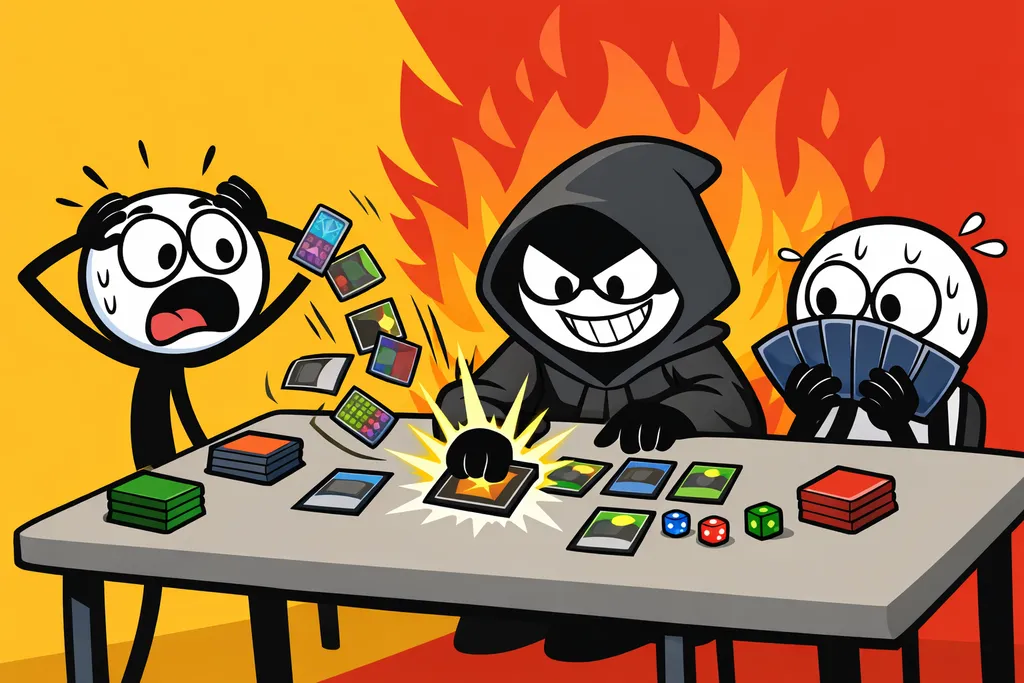
Magic: The Gathering, the flagship titan from Wizards of the Coast, exists in a state of perpetual entropy, held together only by the thin, white lines of the Banned and Restricted list. For the veteran player, a ban announcement is more than a news cycle; it is a seismic shift in the structural integrity of the local meta. When the architects at R&D decide a card is too efficient, too recursive, or simply too miserable to play against, they aren't just deleting a piece of cardboard. They are recalibrating the fundamental physics of the game to ensure that Friday Night Magic doesn't devolve into a repetitive loop of non-deterministic combos.
From a mechanical standpoint, the Banned and Restricted list functions as the ultimate safety valve for various formats. In the Commander Format, the list acts as a social contract codified into law, preventing fast mana artifacts from turning a casual four-hour political drama into a ten-minute blowout. In Modern or Standard, the bans focus on deck diversity. If a single archetype occupies more than thirty percent of the competitive field, the crunch dictates that something must go. We look at the mana curve and the win-rate percentages. When a card like Nadu, Winged Wisdom or the One Ring begins to warp the very concept of resource management, the ban hammer is the only tool left in the kit. It is about preserving the choice—ensuring that your deck-building decisions actually matter rather than being a binary choice between playing the best deck or losing to it.
There is a certain lore to these bans that transcends the printed text. In the early days, cards like the Power Nine were restricted because they represented artifacts of such immense magical potency that having more than one in a deck felt like a flavor fail as much as a mechanical disaster. Today, the lore of the ban list is written in the history of the Pro Tour. We remember the Combo Winter or the Summer of Eldrazi not just as periods of bad balance, but as eras where the internal logic of the Multiverse broke down. When a creature is so powerful it ignores the fundamental rules of the color pie, it creates a narrative dissonance. Why would a Planeswalker use anything else? The Banned list restores the narrative balance, forcing players to return to the diverse spells and creatures that make the lore of Ravnica or Innistrad feel lived-in and varied.
At the table, the feel of a fresh ban list is transformative. There is an initial wave of mourning for the players who spent hundreds of dollars on a playset of now-illegal cards, but this is quickly replaced by a frantic, joyful period of brewing. The table feel becomes one of discovery again. Without the looming shadow of a Tier 0 deck, the mid-tier archetypes—the jank we all secretly love—get a chance to breathe. The social friction at the table decreases because the non-games where one player simply doesn't get to participate are minimized. It forces a return to fundamentals: combat math, threat assessment, and clever sideboarding. It moves the game away from being a solved equation and back into the realm of tactical skill.
Ultimately, the Banned and Restricted list is the most important document Wizards of the Coast publishes. It is the admission that perfection is impossible in a game with over 25,000 unique pieces, but that fairness is a goal worth chasing. It keeps the environment from stagnating into a repetitive series of identical turns. For those of us who have been tapping lands since the nineties, we know the cycle. We adapt, we rebuild, and we find new ways to challenge the system until the next update. This is the heart of the hobby: the constant evolution of the game state through both community ingenuity and necessary corporate intervention.
Top Pick: Dragon Shield Matte Sleeves
Protecting your legal cards from the wear and tear of a shifting meta
Check Price on Amazon →Related Stories
Beyond the Scorecard: The 2026 Magic Companion Overhaul
Wizards of the Coast is rebuilding the Magic: The Gathering Companion app for 2026. We analyze how digital tools are redefining the Friday Night Magic experienc
The Hunter Returns: Analyzing Garruk’s Potential Return to Lorwyn
Key art for MagicCon suggests Garruk Wildspeaker is returning to Magic: The Gathering. We break down the mechanical and lore implications for the veteran player
Hasbro's MTG Lawsuit Dismissal: A Pyrrhic Victory for the Table?
Shareholders have dropped their lawsuit against Hasbro over alleged Magic: The Gathering overprinting. While it removes immediate legal uncertainty, the underly