
The Blueprint of Play: Deconstructing TTRPG Adventure Types
Understanding distinct adventure types is a fundamental skill for any Game Master. We dissect how different structures impact mechanics, lore, and the overall table experience, drawing wisdom from design veterans.
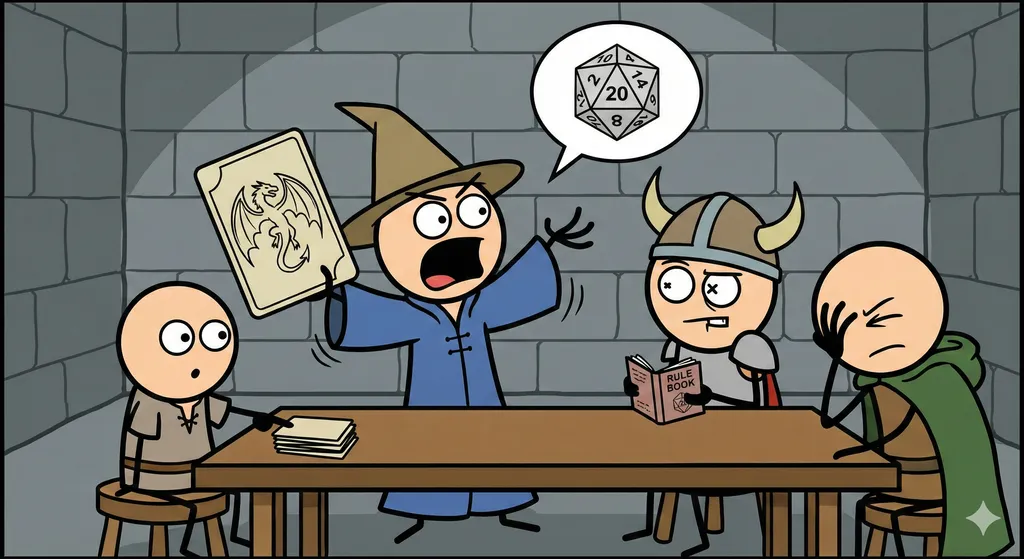
The fundamental architecture of a TTRPG session, the very bones of play that inform every dice roll and narrative beat, often gets overlooked in favor of flashier system discussions. Yet, as luminaries like Sly Flourish and Robin Laws have meticulously articulated, understanding distinct adventure types is perhaps the most potent tool in a Game Master's arsenal across the greater TTRPG landscape. It’s not about rigid categories, but about recognizing the underlying design principles that give each session its unique flavor and challenge.
To truly grasp the impact of adventure types, we must first look at the crunch. A classic dungeon crawl, for instance, demands a specific mechanical toolkit. We’re talking turn-based tactical combat, often on a grid, where resource management—hit points, spell slots, torch light—is paramount. Traps, puzzles, and hidden doors are resolved through specific skill checks (Perception, Investigation, Thieves' Tools) and often require player ingenuity. Contrast this with a social intrigue adventure. Here, the mechanics shift dramatically. Charisma-based skills like Persuasion, Deception, and Intimidation take center stage. Success isn’t always a clear pass/fail; it’s about shifting attitudes, gaining influence, and navigating complex social webs. The 'combat' might be a verbal spar or a reputation-damaging rumor, resolved with contested rolls or faction standing mechanics.
A wilderness exploration, on the other hand, leans heavily into Survival, Athletics, and Navigation checks. Environmental hazards become antagonists, and the core challenge is often resource sustainment and overcoming the elements. A mystery adventure, inspired by the likes of Gumshoe System, prioritizes information gathering. Mechanics here revolve around clue presentation, deduction, and sometimes even 'failure forward' systems where clues are always found, but interpretation is the challenge. Each type organically calls for a different emphasis on the ruleset, demanding GMs master specific sections of the core rulebook and players adapt their character's mechanical strengths.
Beyond the dice, these adventure types inherently sculpt the narrative and world-building. A world where dungeon crawls are common feels ancient, dangerous, and rife with forgotten secrets. Its lore is steeped in lost civilizations, monstrous incursions, and the remnants of cataclysms. The very existence of such dungeons implies a history of powerful entities and cataclysmic events. Conversely, a setting primarily driven by social intrigue screams of intricate political landscapes, powerful factions, and deeply woven personal histories. Its lore is less about ancient evils and more about the delicate balance of power, the weight of reputation, and the machinations of ambitious individuals.
Wilderness exploration narratives thrive in worlds with vast, untamed frontiers, unexplored continents, or post-apocalyptic wastes. The lore here is often about the unknown, the struggle against nature, and the isolated communities clinging to existence. Mysteries, meanwhile, nestle perfectly within settings grappling with hidden truths, corrupt institutions, or the lingering shadows of past misdeeds. The narrative tension isn't just about what will happen, but what did happen, and why. Understanding this intrinsic link between adventure structure and setting ensures your world feels cohesive and your stories resonate with the chosen tone.
So, is this categorization merely an academic exercise? Far from it. For the Game Master, recognizing these distinct adventure types from the outset is a powerful design heuristic. It allows for targeted preparation: knowing you're running a dungeon crawl means focusing on map design, monster stat blocks, and trap placement, rather than agonizing over NPC social networks. For players, it sets clear expectations, allowing them to tailor their character choices and in-game approaches. They know when to ready their sword and when to sharpen their wits.
This approach fosters creativity by providing a framework, not a cage. It encourages GMs to blend and subvert expectations—a social encounter in the heart of a dungeon, or a mystery unfolding during a wilderness trek. It cultivates a richer, more intentional play experience, reducing GM burnout by streamlining preparation and enhancing player engagement through focused challenges. The clarity derived from understanding these fundamental adventure types elevates the entire table, transforming good sessions into truly memorable sagas. It’s a return to first principles, a powerful reminder that sometimes, the most sophisticated design insights come from dissecting the basics.
Top Pick: Robin Laws' Adventure Crucible
Essential reading for GMs seeking to master adventure design across any system.
Check Price on Amazon →Related Stories
Illustrator Avenue: The Art of Impacting Your Tabletop
Justin Bell's 'Illustrator Avenue' series isn't just about pretty pictures; it's a deep dive into how game art fundamentally shapes gameplay and narrative. We e
Aethelgard Ascendant: Beyond Sanity Checks to Soul-Deep Scars
Ironclad Games' Aethelgard Ascendant, recently highlighted in charity bundles, offers a TTRPG experience that redefines heroic struggle. Its 'Vigilance & Burden
Beyond Human: Reshaping Emotion with Chromatic Empathy
Aetherweave Games' 'Chromatic Empathy' concept redefines alien psychology. We delve into how remapping emotions via color creates profound TTRPG experiences.