
The Bracket Dilemma: Old Commanders in a New Power World
Card Kingdom's Commander Brackets Beta aimed to balance play, but two years in, power creep presents a significant challenge. Older, beloved commanders often find themselves outclassed in brackets designed for a rapidly accelerating meta.
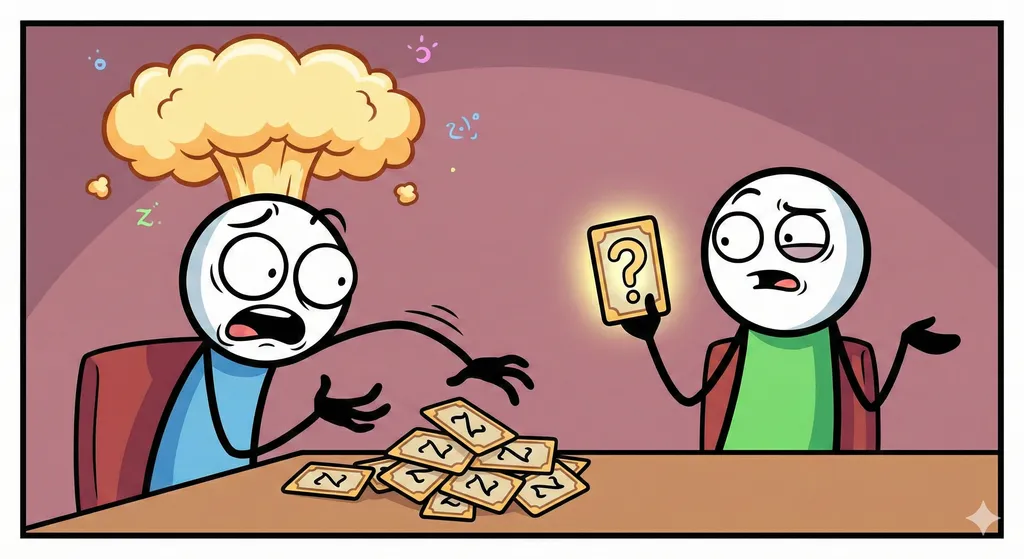
Magic: The Gathering's Commander format, specifically Card Kingdom's Bracket System, has been a valiant attempt to bring some semblance of order to the wild west of power levels. Now two years into its beta, a specific tension has become undeniable: how do the format’s cherished older commanders possibly fit into a system built on the shifting sands of modern design philosophy? This isn't a critique of the Bracket System's intent, but rather an examination of its struggle against the relentless tide of power creep that Wizards of the Coast has ushered into the format.
Let’s crunch the numbers and the mechanics. The Bracket System fundamentally attempts to categorize decks by their competitive ceiling and consistency, offering players a guide to finding appropriately matched games. Its initial iterations suggested Bracket 2 was "roughly equivalent to a modern precon." That language, tellingly, disappeared. Why? Because the baseline for "modern precon" has rocketed skyward. Commander 2016, with its revolutionary Partner mechanic, served as an undeniable inflection point. Suddenly, individual commanders offered unprecedented levels of card advantage, synergy, and raw efficiency, pushing the format’s power ceiling into the stratosphere. Subsequent sets continued this trend, introducing ever more potent mana acceleration, streamlined combo pieces, and commanders that simply *do more* than their predecessors for the same mana cost. This means a commander like, say, Zur the Enchanter, once a terror, now often finds himself in a Bracket alongside commanders with far more robust protection, combo lines, or resilience, making his play pattern feel clunky and underpowered by comparison. The system itself, while logically structured, constantly chases a moving target, struggling to accurately place commanders whose power was defined by a bygone era.
From a lore, or rather, *format identity* perspective, this acceleration has fundamentally altered Commander’s soul. The format, originally known as Elder Dragon Highlander (EDH), cultivated a "battlecruiser" ethos. Games were longer, spells were splashier, and the focus was less on hyper-efficiency and more on epic, board-centric interactions. It was a haven for big creatures, intricate engines, and the kind of plays that made for memorable stories, not turn-four wins. Wizards' increased focus on Commander as a pillar of their product line, while undeniably expanding its reach, inadvertently eroded this identity. The demand for new, exciting commanders with unique mechanics often translates directly into higher power levels to justify their inclusion and drive sales. This isn't just about individual card strength; it's about the *context* in which those cards operate. An older commander, designed for a slower meta, simply lacks the inherent resilience or explosive potential to keep pace with the current speed and threat density without significant, often budget-breaking, support. The Bracket System, in its attempt to categorize, inadvertently highlights this chasm, often pushing beloved commanders into tiers where they are objectively outmatched by the meta's evolution.
So, what’s the verdict for the table? The Bracket System is a well-intentioned tool attempting to solve a genuine problem: the frustration of mismatched power levels. However, its efficacy is severely hampered by the very game it seeks to regulate. The relentless march of power creep means that the system is perpetually playing catch-up. For players who adore their older, perhaps less optimized, commanders, the current state of affairs can be disheartening. They are forced into a difficult choice: abandon their favorite general for a more meta-relevant option, invest heavily to artificially prop up an underpowered commander, or resign themselves to consistently playing at a disadvantage within their assigned bracket. While the system provides a framework, the *feel* at the table is one of perpetual imbalance, especially for those holding onto the spirit of classic EDH. The community's creativity in building around these older legends is commendable, but even the most cunning pilot struggles against raw card efficiency. Perhaps the true solution lies not just in categorization, but in a broader community agreement on what "casual" or "mid-power" truly means in an ever-escalating landscape. For those seeking to navigate these power levels, comprehensive Commander deck building guides can offer valuable insights.
Top Pick: Commander preconstructed decks (latest release)
Great starting points for modern power levels
Check Price on Amazon →Related Stories
Jace's Fragmented Will: Reality Fracture and the Commander Meta
Reality Fracture introduces "Empower Jace," a potent new mechanic for Magic: The Gathering that brings a unique planeswalker token to Commander. This deep dive
Reality Fracture: The Design Philosophy Behind Commander's Next Powerhouses
The upcoming Reality Fracture set promises to introduce a new wave of rare and mythic cards poised to reshape the Magic: The Gathering Commander meta. We delve
Jace's Reality Fracture: The Theorist's Twisted Vision
Magic: The Gathering's latest set, Reality Fracture, plunges the multiverse into chaos as Jace Beleren, now 'The Theorist,' attempts to rewrite history. His 'Ec