
The Cost of a Crown: Cheating's Shadow on Magic: The Gathering
A recent cheating scandal has rocked the competitive Magic: The Gathering scene, challenging the integrity of its highest levels. This incident forces a crucial examination of fair play and its impact on the game's enduring legacy.
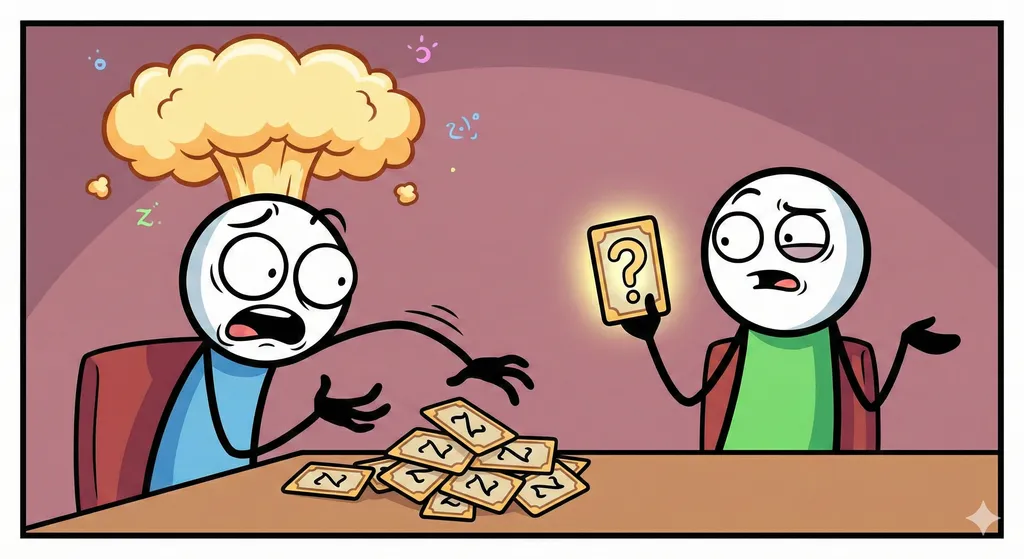
The hallowed halls of competitive Magic: The Gathering, overseen by Wizards of the Coast, have once again been rattled by the specter of a cheating scandal, a stark reminder that even the most revered legends can fall. When a player's legacy, built on years of dedication and perceived skill, is exposed as compromised, it sends tremors far beyond the top tables, reaching every casual Commander pod and Friday Night Magic event.
At its core, Magic: The Gathering is a game of probability, resource management, and strategic decision-making. The integrity of these core mechanics hinges entirely on fair play. Cheating, in its myriad forms, directly assaults this foundation. We’re not talking about a misclick in a VTT or a forgotten trigger; we're discussing deliberate manipulation. Common competitive transgressions include subtle card marking—a bent corner, a fingernail nick, a barely perceptible difference in sleeve texture—designed to identify specific cards within a shuffled deck. Then there's the 'mana weaving' ruse, often a thinly veiled attempt to illegally stack a deck, or the 'accidental' extra card drawn during a chaotic turn. These aren't just minor infractions; they are mechanical exploits that bypass the game's fundamental rules of randomness and fair resource acquisition. A player who consistently draws their answers or avoids mana screw not because of brilliant deckbuilding or fortunate shuffles, but because of illicit knowledge, fundamentally breaks the game's engine. It undermines the very concept of skill, replacing it with a cynical manipulation of probability. The extensive rulebook, the meticulous judge program, and the community's collective vigilance are all designed to uphold this delicate mechanical balance, ensuring that every victory is genuinely earned.
Beyond the raw mechanics, competitive Magic has a rich, almost mythological lore. Its history is populated by titans whose names are synonymous with innovation, sportsmanship, and unparalleled mastery. The narrative of these legends – from the early Pro Tours to the modern Mythic Championships – forms a crucial part of the game's cultural fabric. When a figure of this stature is implicated in a cheating scandal, it doesn't just erase their individual achievements; it taints the very narrative of competitive excellence. The 'lore' of their victories becomes suspect, casting a long shadow backward over their entire career. It challenges the community's trust in its heroes and forces a re-evaluation of what constitutes 'legendary' status. The spirit of the game, which champions strategic depth and intellectual prowess, is diminished when the integrity of its champions is compromised. This erosion of trust isn't confined to grand stages; it permeates the local game store, fostering an atmosphere of suspicion that can sour the very act of playing.
So, what is the 'table feel' consequence of such a scandal? It’s profoundly negative. For the aspiring competitor, it raises questions about the fairness of the climb. For the casual player, it can deflate the excitement of following the professional scene, making the triumphs feel less authentic. If the top echelons are compromised, what message does that send to the local FNM player about the importance of fair play? It creates a cynical undercurrent, eroding the collective enjoyment and shared passion that define the TCG community. Maintaining competitive integrity is paramount not just for the health of the Pro Tour, but for the health of Magic: The Gathering as a whole. It demands robust enforcement, technological solutions like high-quality streaming coverage, and a community willing to hold its heroes accountable. Players must invest in a reliable set of card sleeves and educate themselves on fair play, but ultimately, the onus is on the organizers and the community to foster an environment where cheating is not just punished, but actively prevented. It's about preserving the magic, quite literally, of the game itself.
Top Pick: Official Magic: The Gathering Rulebook
For understanding the foundational principles that uphold fair competition
Check Price on Amazon →Related Stories
Reality Fracture: Green's Budget Artifact Blitz Arrives in Standard
Wizards of the Coast introduces Reality Fracture, a potent green enchantment poised to redefine artifact strategies in Magic: The Gathering. This 'green Ensoul
Legacy's New Predator: Unpacking the Sewer Nemesis Combo
A new Underworld Breach variant, dubbed 'Sewer-Cam Combo,' is reshaping the Legacy meta with its potent mill engine. Leveraging Sewer Nemesis, this intricate in
The Zero-Cost Calculus: MTG's 'Free' Spells Reexamined
Magic: The Gathering's 'free' cards have always been a cornerstone of explosive plays and contentious meta discussions. We dissect their mechanical impact and t