
The Distilled Table: Why Less Rules Means More RPG
The trend of 'pocket' board games, exemplified by the Wingspan Pocket Review, signals a vital shift towards streamlined experiences. This phenomenon offers critical lessons for TTRPGs, promising greater accessibility and a renewed focus on narrative engagement at the table.
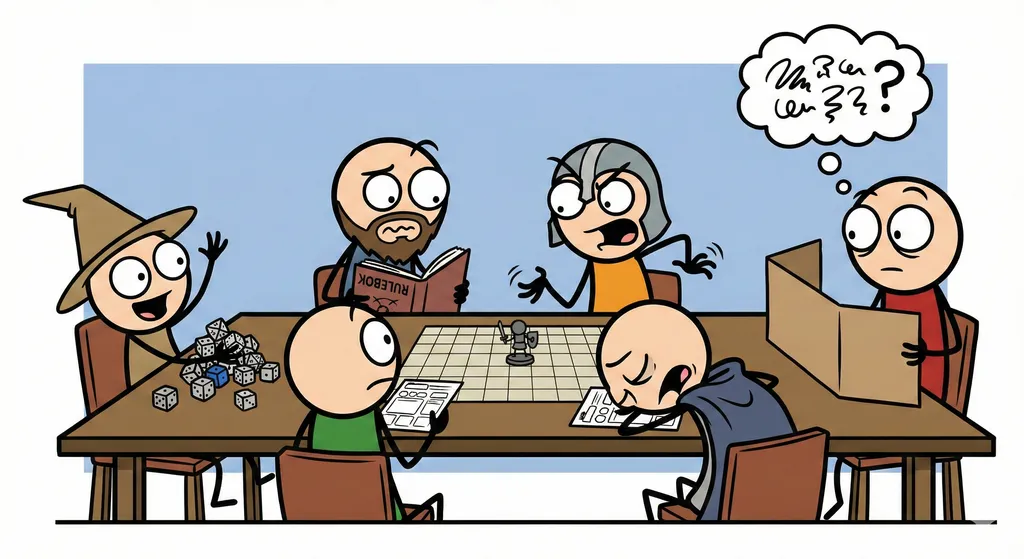
The recent buzz around the Wingspan Pocket Review, a streamlined take on Stonemaier Games' avian classic, isn't just about elegant card play; it signals a profound shift in how players engage with complex systems, a shift with significant reverberations for our beloved tabletop roleplaying games. While Wingspan itself is a board game, the industry-wide push for “distilled” or “accessible” versions—think Terraforming Mars: Ares Expedition or 7 Wonders Architects—is a design philosophy TTRPGs are already embracing, often with powerful results. This isn't about dumbing down our games; it's about intelligent design, focusing the experience, and making the table more inviting.
At its core, the “pocket” philosophy for TTRPGs centers on surgical precision in mechanics. It's about identifying the essential core loop of play—the moments that truly drive narrative and character progression—and ruthlessly excising everything else. Consider the difference between a sprawling, multi-volume 5th Edition campaign setting and a tightly focused, single-session indie TTRPG. The latter often strips character creation down to a few evocative choices, streamlines combat into a handful of unified rolls, and replaces exhaustive skill lists with broader narrative prompts. This isn't advocating for a return to THAC0-level ambiguity, but rather a deliberate choice to prioritize immediate playability over exhaustive simulation. A system like Shadowdark RPG, for instance, offers a masterclass in this, distilling classic dungeon crawling down to its most potent elements: quick character generation, lethal combat, and rulings-over-rules GMing, all without sacrificing tactical depth or player agency. It’s a brilliant example of how 'less crunch' can lead to more impactful decisions and faster, more fluid gameplay.
Lore, or 'fluff' as some call it, undergoes a similar distillation. A “pocket” TTRPG doesn't present an encyclopedia of a world; it offers a compelling hook, a few evocative details, and trusts the players and GM to collaboratively fill in the gaps. Rather than a thousand-page gazetteer, you get a handful of richly imagined factions, a looming threat, and a sense of pervasive atmosphere. This approach fosters emergent storytelling, where the world feels alive because it's being built and discovered in real-time at the table, rather than simply referenced from an external text. It's a return to the spirit of early RPGs, where modules often provided just enough information to spark the imagination, allowing the GM to become a genuine co-creator of the fictional space. This design encourages GMs to improvise, to lean into player ideas, and to make the world truly responsive to the party's actions, rather than adhering rigidly to pre-written canon. The OSR movement has long championed this approach, valuing evocative prompts over exhaustive detail.
The verdict on this trend for the TTRPG table is overwhelmingly positive. Distilled TTRPGs lower the barrier to entry significantly, making it easier for new players to jump in without feeling overwhelmed by rulebooks or lore dumps. They empower new GMs, reducing prep time and shifting the focus from rules mastery to narrative facilitation. For veterans, they offer refreshing palate cleansers, quick one-shots, or even robust frameworks for long-term campaigns that prioritize improvisation and player-driven stories. While some might miss the granular detail of more complex systems, the trade-off for faster pacing, reduced rules fatigue, and increased narrative velocity is often well worth it. This isn't a replacement for the grand, epic campaigns we love, but an essential expansion of our hobby's ecosystem, offering diverse avenues for engagement and ensuring the tabletop remains vibrant and accessible to all.
Related Stories
Shadowdark's New Relics: Power Comes at a Price
Arcane Library's latest Shadowdark RPG supplement introduces potent artifacts with a unique Attunement Burden mechanic. This deep dive explores how these items
A7 Beneath the Despairing Stone: OSR's Infernal Symphony
A7 Beneath the Despairing Stone delivers a potent dose of old-school ingenuity, challenging players with lethal traps, resource management, and a dynamic infern
Aetherbound Expeditions: Charting the Sundered Isles
Arcane Foundry Games' latest crowdfunding effort for Aetherbound Expeditions promises sky-high adventure and deep tactical play. We dissect how its new 'Zephyr